



By Elise Gray
Special to the Alpine Mountaineer
Rural mountain living comes with an even share of natural beauty and challenges, especially when it comes to extreme weather and power outages. Between frequent Public Safety Power Shutoffs (PSPS) or the recent outage caused by wind damage, the San Bernardino mountain communities are in constant need for preparedness. Here are some simple ways to prepare when emergencies strike.
Stay connected and informed
Being connected means more than just having your phone ready. Keep a radio with plenty of batteries, a charged power bank and consider investing in a solar charger for extended periods without power. San Bernardino County also encourages residents to sign up for Smart911, a service that provides first responders with essential information about your household during a crisis. Signing up is as easy as scanning a QR code at local events or visiting their website, www.smart911.com/smart911/registration/registrationLanding.action.
Hunkering down during a power outage is one thing. If told to evacuate, residents are urged to heed that instruction. An evacuation warning means you should be prepared to go; an order means it is time to leave.
Prep the essentials
Having the right supplies can make all the difference during a power outage or natural disaster. Here’s what you should have on hand:
- Fuel for generators: If you have the extra funds for a generator, ensure you have enough fuel to safely run it during an outage. Gas stations can often run out of fuel during emergencies and long-term outages. Whole-house generators are convenient but portable generators can also keep you up and running during a power outage; you will need heavy-duty extension cords to connect your furnace, appliances and devices.
- Find alternative cooling methods: As generators can be expensive, another option is buying a cooler to keep food cold during outages.
- Food and water: Keep at least three days’ worth of non-perishable food such as MREs, canned goods and dry foods, along with one gallon of water per person per day.
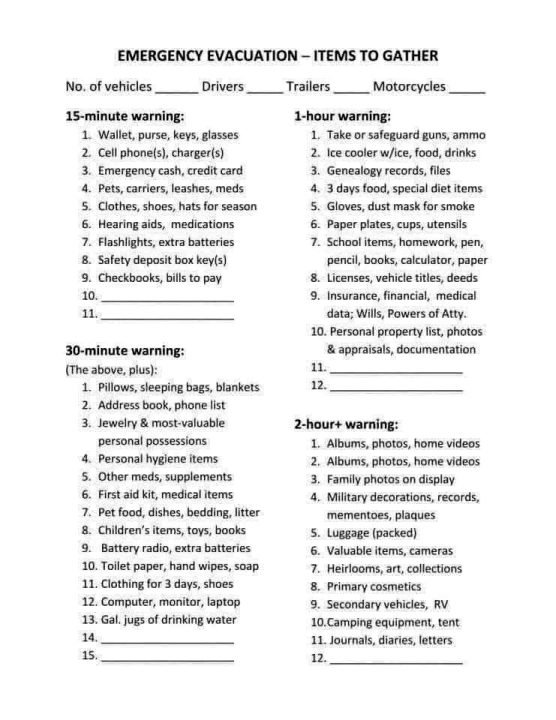
- Know the six Ps of preparedness: After you grab people and pets, pack a “go bag” with essentials like papers, phone numbers and important documents. Then prescriptions, followed by personal items, plastics (credit cards, debit cards, cash), and personal computers and devices.
- Lighting and power: Stock up on lanterns, flashlights and extra batteries.
- Firewood: If you rely on a wood stove or fireplace for heat, ensure you have a stockpile of fresh firewood ready.
Have a safety network
Join a Nextdoor community in your area or browse local Facebook groups for your community, where locals frequently share updates with one another. Be sure to also stay in contact with someone outside the general area, whether it’s friends, family or even colleagues, if you work remotely. This ensures you can relay your status and needs if communication networks are disrupted locally.
Research food safety
Long power outages can spoil perishable food. According to the U.S. Food and Drug Administration (FDA), during a power outage, one’s refrigerator can keep food safe for about four hours if the door is kept closed. After four hours without power, perishable foods like meat, poultry, fish, eggs, dairy and leftovers that have been above 40°F for two hours or more should be discarded. This time period extends if you have access to a full freezer, which can keep its temperature for approximately 48 hours (24 hours if half full) if the door remains closed.
Access community resources and support
Take note of local emergency resources and events in your area. These are vital in helping residents recover from outages and prepare for future incidents with supplies, water and more. To ensure access, visit oes.sbcounty.gov for updates.





0 Comments