


By DOUGLAS W. MOTLEY
Senior Writer
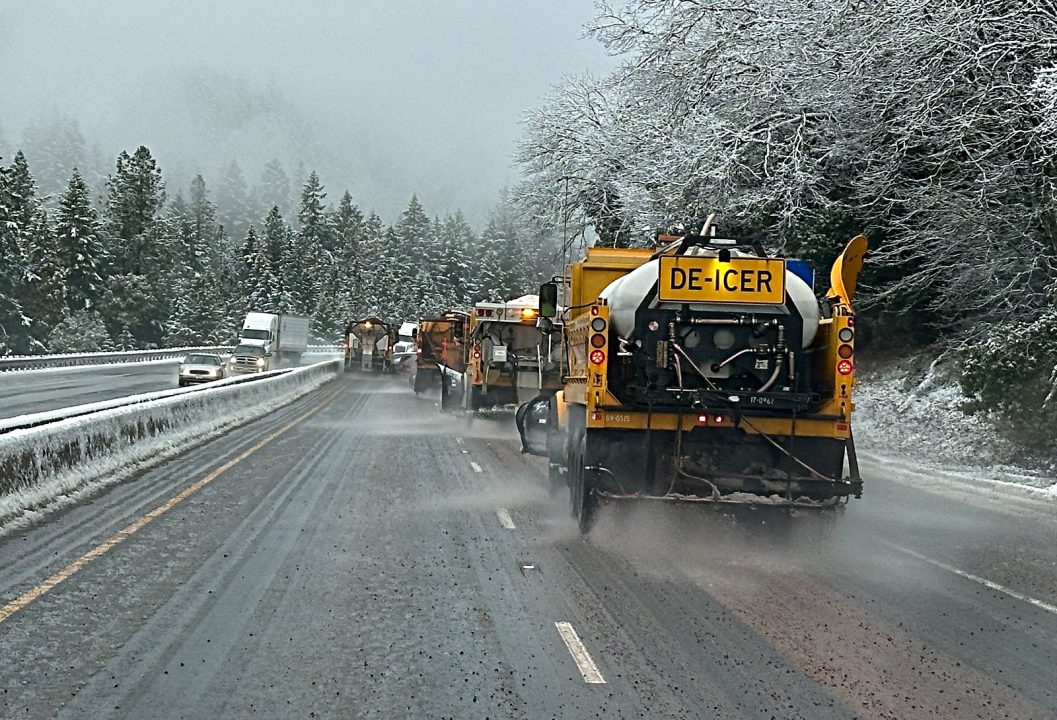
On Jan 24 and 25, Caltrans workers began spraying a salt brine de-icing solution on most stretches of San Bernardino Mountains highways, beginning at the 4,000-foot level, preparing them for travel before the predicted winter storms were to arrive on Sunday, Jan. 26 and Monday the 27th.
Caltrans District 8 has been using this de-icing agent for approximately seven years in mountainous regions of District 8, which encompasses San Bernardino and Riverside Counties. The solution has a lower saline content and is less costly than former methods of treating highways to reduce ice and snowpack. Brine has demonstrated itself to be a highly effective and less invasive method for de-icing operations of highways.
This brine solution is a win-win for everyone. By spraying it on the roads, it makes winter driving safer for the driving public, allowing vehicles more traction on the roads, and it costs four times less to prevent ice from forming than paying to remove the ice after it has formed. With less ice forming, Caltrans officials believe that less black ice will form, resulting in fewer accidents.
Caltrans first began de-icing state highways in the San Bernardino Mountains in 2016 and discovered that the concept of spraying a road prior to a storm can be compared to greasing a pan before cooking to prevent food from sticking. It has been proven in several eastern states that roads and bridges treated with salt brine will resist frost for several days after application and will melt snow faster, since it reduces the chance that ice will form. This may result in reducing the length of time chain controls are in effect and lowering the cost of highway snow removal.
This recent application, which leaves a whitish film on the roadways, attracted the attention of many local motorists on Saturday, Jan. 25. The lower elevations do not usually receive the treatment as much as near the Big Bear area, as rain can wash it off the roadways. Last weekend’s storm, with snow predicted above the 4,000-foot level, required the brine solution to be applied on Caltrans-maintained roads above 4,000 feet.
Since Highway 18 was designed and constructed on the southern face of the mountain for maximum sun exposure and natural snow melt, Caltrans believes this method will keep the roads open longer during storms and may enable them to be reopened sooner. This may result in tourists being able to reach the ski resorts sooner after a snowstorm and residents with winter-equipped vehicles being able to get to and from work with fewer delays.
When chains are needed on roadways, Caltrans uses several methods to alert motorists of chain control requirements. They use the installed signs on roadways that get turned to face traffic when chain control takes effect, as well as the overhead changeable message signs along highways and on the freeways in San Bernardino to alert motorists so they are aware before arriving at activated chain control locations.
The safety of the traveling public is the highest concern of Caltrans. Motorists are responsible for bringing chains for their vehicles and installing or having them installed during chain control. Motorists need to follow the laws when they visit the mountain to ensure that they are driving safely for road conditions and follow all traffic laws.




0 Comments