



BY RHEA-FRANCES TETLEY
Historian
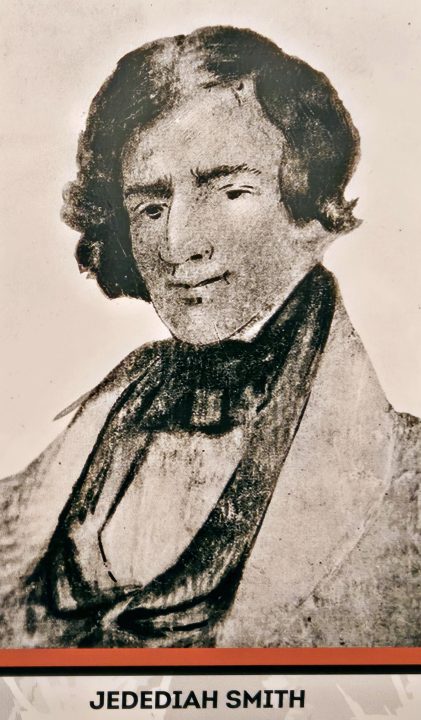
Jedediah Smith was born in 1799 in New York, a descendent of Plymouth settlers. He was a well-educated, soft spoken Christian man, always carrying his Bible. Inspired by Lewis and Clark, in 1822 he joined William Ashley trappers in keel boats up the Missouri River. In 1823, after Smith traded for horses with the Arikara Indians, they attacked, killing 13 trappers.
Smith continued trapping, up to the Yellowstone River, where a grizzly bear attacked him, slashing his body, breaking ribs and tearing off half of his scalp before trappers killed it. Smith, 24, remained conscious, directing James Clyman to reattach his dangling ear with thread, resulting in red neck scars.
Smith hired 17 trappers, exploring the Southwest, suffering hunger and thirst in furnace-like heat, before discovering the Colorado River. Finding friendly Mojave Indian farmers, they traded for horses. Mojave guides showed Smith the Mojave River Indian Trail to the Pacific Ocean.
November 1826 was dry and hot in the desert, so going up the steep Indian Trail through Sawpit Canyon into the green mountains with shade was a relief, but the chilly winds encountered were shocking. When Smith reached the summit (Monument Peak in Cedarpines Park), seeing the green valley below with the glimmering Pacific Ocean beyond, he said a grateful prayer, writing in his diary of their journey’s ordeals, exiting down the divide between Devils Canyon and Cable Canyon.
Smith was warmly greeted at the San Bernardino Asistencia where the priests healed them. The San Gabriel Mission welcomed them with open arms. Jedediah Smith had brought the first Americans to California overland but was illegally in Spanish California.
“Technically arrested,” Smith met in San Diego with Governor Jose Maria Echeandia, who believed they were spies. Smith showed the Governor his trapping diaries. Echeandia required them to leave back through the Mojave Desert, demanding no further exploration, and to never return.
However, Smith believed California was connected to Oregon so, after buying supplies in January of 1827, he traveled back over the mountains until out of sight. Then, turning north, they discovered the lush, heavily animal-populated San Joaquin Valley, where they trapped high-quality beaver pelts. To sell the pelts they needed to attend The Rendezvous near the Great Salt Lake across the Sierra Nevadas. They made numerous attempts to cross the Sierras, but snow forced them to turn back.
Smith left some trappers behind and, with perseverance, in May 1827 they became the first Americans to cross the Sierras from west to east; then they almost died from dehydration crossing the Salt Lake Desert. Friendly Snake Indians found and led them to The Rendezvous.
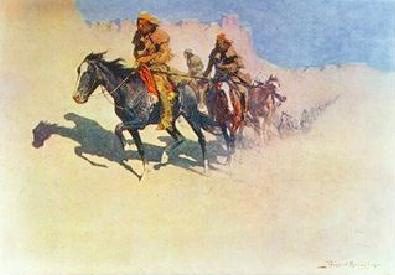
Frederick Remington’s painting of Jedediah Smith and trapping party.
Smith immediately returned to retrieve those he’d left in California. At the Mojave Indian village, they were angry because other trappers had killed several Mojaves and they wanted revenge. As Smith was ferrying supplies across the river, the Mojaves attacked, stealing the horses and killing 10 trappers. Smith and eight men with five rifles escaped across the river. Walking across the desert, eating cactus for water, toward the San Bernardino Mountains, they chose the Cajon Pass route, instead of the steep Indian Trail up to Monument Peak.
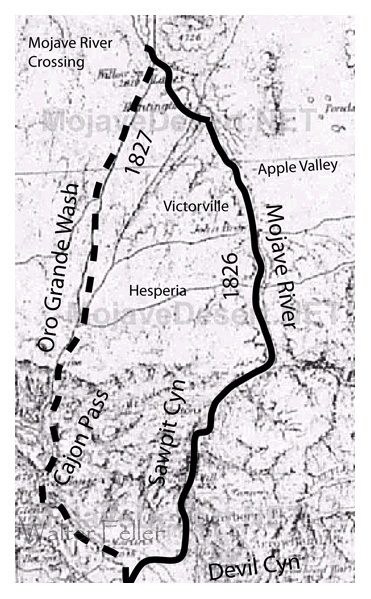
The map of Jedediah Smith’s travel through the San Bernardino Mountains.
Arriving in San Bernardino, the priests were unhappy. When Jedediah arrived at the San Gabriel Mission, he was jailed for breaking his promise to never return. American ship captains persuaded Governor Echeandia to release Smith to find his men in the San Joaquin Valley. The trappers continued toward Oregon, when Umpqua Indians attacked, killing all but four of Smith’s men. Smith safely arrived at Fort Vancouver on the Columbia River.
In 1830, Smith retired in St. Louis, intending to write and draw maps from his journeys. In April 1831, he was persuaded to lead a trading party down the Santa Fe Trail. The 60-mile Cimarron Cutoff was dry and barren, so he searched for water.
Comanche buffalo hunters believed Smith had scared the buffalo away from the watering hole and killed him. He was 32 years old.
Jedediah Smith not only proved California was connected to the USA, but he was the first American to visit Cedarpines Park.


0 Comments