



By RHEA-FRANCES TETLEY
Historian
During the Ranchero Days of Southern California, under Mexican rule, 23-year-old Louisiana-born Daniel Sexton II arrived on Nov. 5, 1841, with the John Rowland and William Workman party. The Rowland-Workman group was among the first Americans to arrive and settle in California. At the time the Indigenous people had much influence in the area.
Colonel Issac Williams was one of the few well-established Americans in the area; he owned the Santa Ana del Chino Ranchero. He was a former fur trapper and had married into a wealthy Mexican land-owning family. Williams hired carpenter Sexton to cut timber and build new buildings at the ranch.
Williams raised cattle and wanted to grow a vegetable garden but needed fencing to keep the cattle out of his garden. He sent Sexton and two Indian workers to the mountain canyons (north of current day Cal State San Bernardino) to cut some wood for the fence.
They had not gone far up the canyon area when one of the Indians was bitten by a rattlesnake and died. The two men continued up the canyon to complete the surveying job. They found a reasonable route up the mountain to create a road to cut the wood.
Returning, the second Indian was also bitten by a rattlesnake and, as he died, he screamed “El Diablo” meaning “The Devil” in Spanish. When Sexton returned to the Chino Ranchero he told and retold the story saying, “That must be the Devil’s Canyon” and thus the canyon received its diabolical name. However, Sexton steered clear of El Cañon Del El Diablo after that.
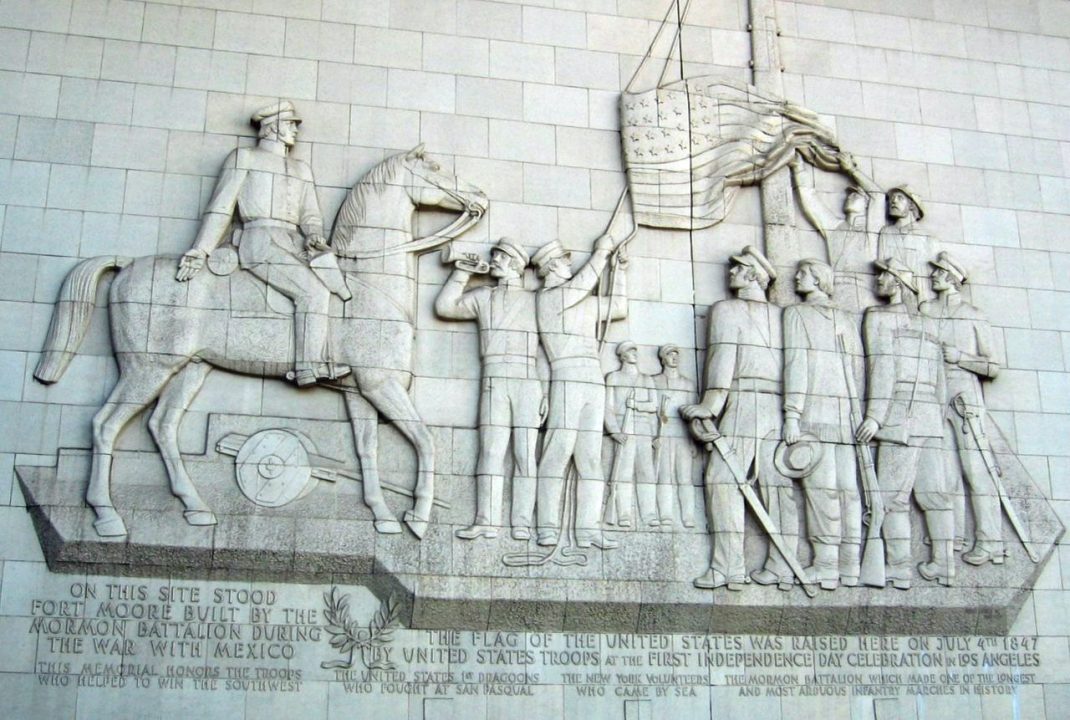
This relief of the raising of the American flag on July 4, 1847, is located in downtown Los Angeles at the location of the former Fort Moore.
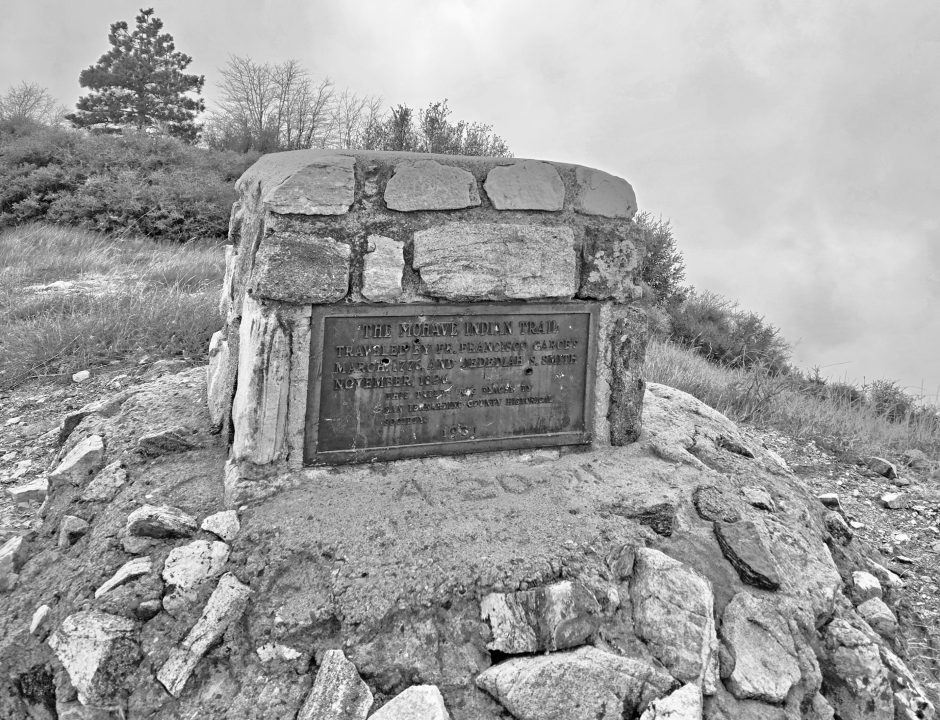
(Devil’s Canyon reaches up to its summit in the current day Cedarpines Park area, where a residential road through the canyon carries that name. Also, the rise between Devil’s Canyon and Cable Canyon was the route used by Jedediah Smith in 1826 as he exited south down the mountaintop, from where he first saw the Pacific Ocean only a couple decades before. It was designated as Monument Peak in 1931.)
Sexton built a sawmill in the Mill Creek area at the base of Mount San Bernardino that became known as the Sexton-Vignes Mill. Befriending the Indigenous people, he hired Indians at 25 cents a day to cut lumber, and they told Sexton where to find the best timber and warned him of the grizzly bears.
Sexton was cutting timber in Oak Glen in 1842 when the Indians asked him about American feasting days. Sexton told them about the Fourth of July. He made an American flag, becoming the first to raise an American flag in Southern California as they celebrated July 4, 1842, together.
Daniel Sexton soon realized the only women available for marriage were Indigenous Californians. Chief Solano, with the promise of riches, convinced Sexton to marry his niece, Serena Pacifica Damian. They settled in Mill Creek Canyon during the years when Sexton ran the sawmill that gave the canyon and the creek their names.
The Mexican-American War ended in 1847. Thirty-one soldiers with two mule-pulled wagons were sent from Fort Moore in Los Angeles out to Mill Creek Canyon to cut trees for a flagpole. After two days of travel, they arrived on June 10th. Two 50-foot-tall trees were cut, stripped of bark at the Sexton Mill and taken by wagons back to the fort. There the trees were attached together using rawhide, creating a 100-foot-tall flagpole. Then, on July 4, 1847, the American flag was officially hoisted over Los Angeles for the first time on that Sexton flagpole, certifying Southern California as American territory.
Sexton continued to be very involved in making early history during those early American years. He lived in the valley until his death on May 5, 1899.


0 Comments