



By RHEA-FRANCES TETLEY
Historian
Weather often changes history. One early story of unappreciated weather occurred in 1862 when the Noachian Deluge wiped out many of the improvements made by the Mormon Colony in San Bernardino and other California areas. The Noachian Deluge was a large, destructive amount of rain falling during a short period of time, creating flooding conditions named after the biblical Noah, now considered an atmospheric river.
John Brown Sr. was born in 1817 in Massachusetts. He was at the battle of San Jacinto where Mexican President Santa Anna was taken prisoner and was a fur trapper in the Rocky Mountains. He became a storekeeper and hotel owner during the gold rush days of Northern California, before arriving in San Bernardino in 1852. He and his wife, Louisa, had eight children.
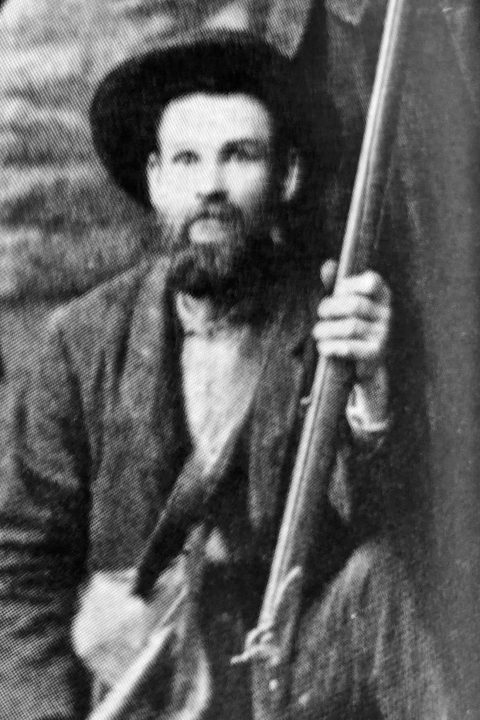
John Brown Sr.
When Billy Holcomb discovered gold in 1860 (near today’s Big Bear), Brown knew it would be necessary to haul tons of equipment and supplies to the gold fields, so a good wagon road up the mountain would be needed. Brown understood the southern face of the mountains was too steep, so he proposed building a wagon road over the Cajon Pass and up the mountain’s northern shallower grade slopes to reach the gold in Holcomb Valley.
After receiving permission from the state legislature to improve the trail over the Cajon Pass, he hired 30 to 40 men to build a toll road to pay for the improvements and its upkeep. He believed those using the Santa Fe and Mormon Trail routes would pay to use his improved roadway. By the end of 1861, Brown’s Cajon Pass toll road was in heavy use.
Brown hired fellow spiritualist David Noble Smith (future owner of Arrowhead Hot Springs infirmary) as his toll keeper and to maintain the road, performing all necessary repairs.
Then, in 1862, the Noachian Flood, the largest on record in the middle of a 40-year drought, affected the Pacific coast from British Columbia to Baja California, even turning California’s central valley into a lake. Locally, the Noachian Deluge washed away much of the San Bernardino Colony and John Brown’s Cajon Pass toll road. The road had to be totally rebuilt. (Toll keeper D.N. Smith finally quit his toll road job after being roughed up by toll road haters and attacked by Indians.)
The Noachian Deluge destroyed the water-powered sawmills and washed out the mountain lumber roads. David Seely had led part of the Mormon settlers’ wagon train, which came from Salt Lake City in 1851, as part of Brigham Young’s plan to establish a Mormon Colony to be used as an “outfitting post for overseas missions.”
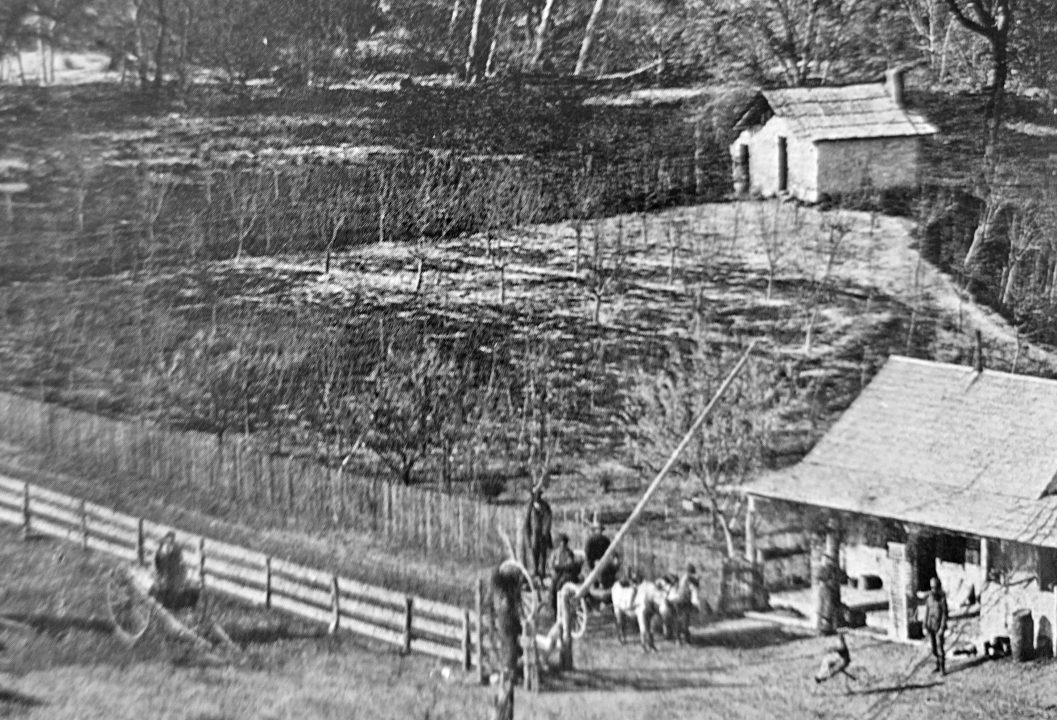
The toll house on John Brown’s Cajon Pass toll road.
The 1852 Mormon Road was built with some sections having a steep, 49-percent grade through Waterman Canyon. The Mormon Road was built to construct sawmills to build the fort around the colony in San Bernardino and to cut lumber to sell in Los Angeles to pay off the mortgage on the San Bernardino land the Mormons had purchased. The Seely Brothers built the first water-powered sawmill on the mountain’s crest in a sugar-pine and cedar tree-filled valley in Seely’s Flat (now Valley of Enchantment), where Camp Seeley is today.
The Seely Sawmill could cut about 2,500 feet of lumber per day, operating day and night from spring’s thaw until the creek dried up. In 1854, the drought was so bad that Seely Creek dried up, forcing closure in mid-summer. That encouraged the newer sawmills to use steam power.
The 1862 Noachian Deluge washed out the Seely Sawmill and many sections of the Mormon Lumber Road, resulting in the construction of other lumber roads in other canyons, with lesser road grades. The Mormon Road was totally abandoned in 1867, after another flood roared through Waterman Canyon.


0 Comments