



The investors in the Arrowhead Reservoir Company, which will create Little Bear Lake, (aka Lake Arrowhead) in 1891, were very optimistic. They saw a water project they liked transferring water from the mountains to the valley, which had a budding orchard and agriculture business and was rich in additional agricultural potential and a growing population. California was perceived as the land of opportunity and they were happy to invest.
That is when they decided that, if some water transferred to the San Bernardino Valley would be good, even more water with a steady year-round flow would be even better. That is what enlarged the water project from a three-lake project, diverting some water from flowing to the desert side of the mountain, to diverting all the water away from flowing to the desert with a seven-lake project. The plan was to irrigate land as far
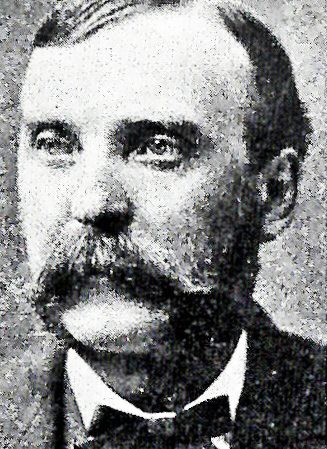
Colonel Adolph Wood from Ohio was the major proponent of the Arrowhead Reservoir project.
west as Pomona and south to Riverside’s orchards.
It was this desire that irritated the residents on the northern side of the mountain, aka the desert side. They needed their waterflow for their crops and residents.
Digging the tunnels to collect and move the water was hard work, using pickaxes, drilling and using debris cars along tracks along the bottom of the tunnels to remove the rubble. Even though there were injuries, only one man was killed and that was from a runaway rubble car.
Then, a national recession hit in June 1893. The “gilded age” was collapsing. The bank panic of 1893 closed many banks across the nation as the government considered going off the gold standard, which also caused the price of silver to drop, affecting the silver mines at Calico. Some banks in the Inland Empire also had a run on their funds, but they closed for only a couple of days, calming their panicked depositors by proving they had enough funds.
The Ohio investors were worried because the railroads in their area were affected, which led to disillusionment in the Arrowhead Reservoir water project. They had already overspent the investment and they had anticipated the project would already be completed with water flowing to the valley. The reality was, if the irrigation project had been completed as initially presented, the investors would already be getting dividends. However, by 1893, the construction of Little Bear Dam itself hadn’t even begun when Adolf Koebig, the chief engineer, quit. Then, the recession completely stopped all further construction. The ugly abandoned construction holes just sat there.
By 1897, the suppliers and contractors were suing to get paid, since the one-million dollars invested in the reservoir had been overspent.
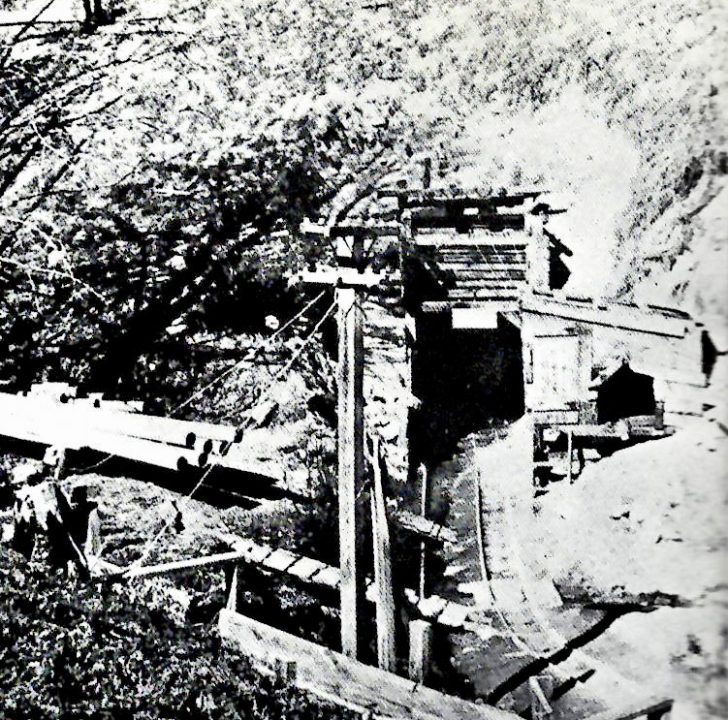
The entrance to the Grass Valley tunnel; only 6.5 miles of the proposed 60 miles of tunnels were ever finished.
The world was also in turmoil when the Spanish-American War began after the battleship “Maine” was sunk in Havana Harbor as Cuba was attempting to separate from Spain. Although it was a short war, April to December 1898, including fighting in the Spanish Philippines, it ended Spanish colonial rule in the Americas, transferring Puerto Rico and some Caribbean and Pacific islands, including Hawaii, under American rule, making the U.S.A. a global power.
Technology was quickly advancing; radio was making long-distance information transmission a reality and telephones made two-way communication possible. Plus, electricity began to change lifestyles all over America, as electrical wires arrived in each community.
Then, the major proponent of the Arrowhead Reservoir project, Colonel Adolph Wood, was in a runaway buggy accident, which gave him a heart attack on April 15, 1900, resulting in his death. The Arrowhead Reservoir project’s future was as bleak as the Depression.
After Woods’ death in 1900, the Arrowhead Reservoir project sat abandoned, with no viable future. This relieved desert residents who now believed that their water wouldn’t be stolen from them. But Lake Arrowhead does exist, so what changed?



0 Comments