



By RHEA-FRANCES TETLEY
Staff Writer
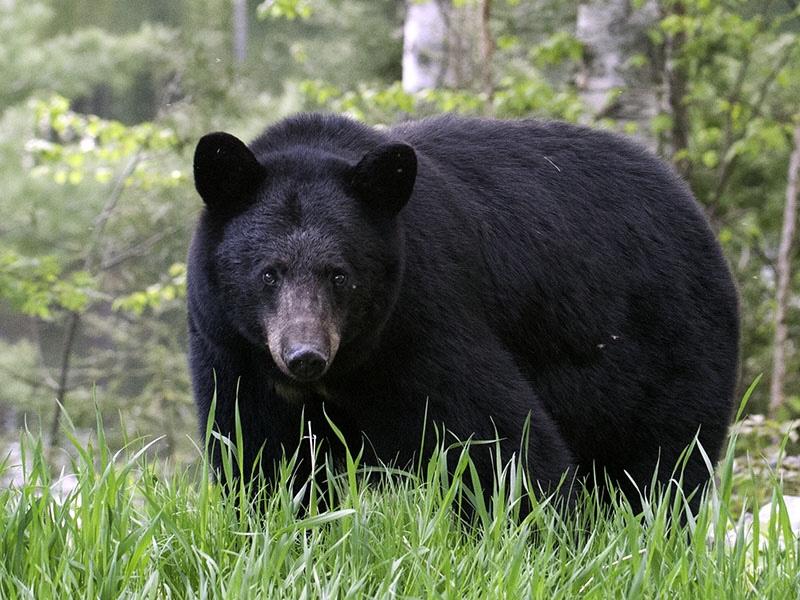
Last week a Crestline community member had an interaction with a bear when it scratched him in his sleep after it reportedly came in through a window. That incident is currently under investigation. A bear has been seen in the area, by many people over the past month, but this was this was the first reported negative interaction.
Bears live within our forest but our interactions with them do not need to be negative. The bears are a natural part of the forest’s ecosystem and, since humans have decided to live in the forest, humans must learn to peacefully coexist with them and the other forest critters.
Most times, negative interaction is the result of humans having accidently lured the bears into the living areas of the community. Some inadvertent behaviors by humans sometimes lead to negative interactions with the bears, such as this one.
“People have a responsibility to the wildlife whose habitat they are sharing,” says the California Department of Fish and Wildlife (DF&W). “Anything that is edible or smelly will attract a bear.
“A bear’s behavior will not stop voluntarily; the food sources must be removed,” says the DF&W. The popularity of the Ring security camera systems has unfortunately led some people to try to attract bears for photos, enabling them to show off on social media. Some short-term rental owners have been known to attract and then show off local wildlife in their ads to encourage bookings. This behavior is not healthy for the bear nor the community. Attracting bears ultimately leads to their death. “A fed bear is a dead bear,” is a well-known DF&W truism.
Two years ago, there were two well-documented sightings of two bears. One male black bear with a white chest was tagged on both ears and wearing a radio collar so it had previous official contact. It was spotted in Top Town, Valley of Enchantment and the Cedarpines Park areas of Crestline. The tagged bear was seen on decks and near homes, attacking a bird feeder and trash cans.
The smaller bear, obviously still a juvenile, was found hit by a car in the Skyland area of Crestline. There was trash strewn all over the street around it, so it must also have been seeking food in trash cans. Because of its smaller size, it was likely less than 2 years old. Mother bears keep their cubs with them for about one-and-half years while the cubs are taught how to survive; then they are abandoned and left to fend for themselves. It is those yearling bears, as they try to explore the world and seek easy food, that tend to come near the communities. They must be discouraged from foraging in trash cans and being in the neighborhoods.
Bears have a keen sense of smell, which attracts them from miles away to explore those scents. Smells that attract bears are trash cans with food residue, bird feeders, suet, pet food left out, greasy uncleaned barbecue grills, baked goods left on windows to cool or other delicious smelling foods that exit out a kitchen’s exhaust vents.
Disinfecting trash cans with ammonia or spraying them with pine-scented cleaners often, and washing the cans out with bleach regularly, will encourage bears to go elsewhere. These actions are especially important when bears have been seen in the area, as they dislike those smells.
Bears are intelligent and, once they learn an area’s trash pickup schedule, they have been known to arrive on trash day to see if people are careless in the way they dispose of their trash. The DF&W recommends a way to eliminate meat smells is to freeze meat discards before disposing of them and only put trash outside on the morning of trash pickup.
This why it is especially important for those with short-term rentals to have immediate trash pick-up after the tenant leaves, and not leave the trash for pickup several days later. Short-term rentals are required to have trash service as a part of their business plan.
The DF&W recommends if you find a bear in your trash to use bear spray and an air horn to scare him away. If confronted by a bear in your yard, don’t stare at them but stand tall, yell and throw small stones near him, but not at it. If possible, spray them hard with a garden hose or use a super soaker water gun filled with water and vinegar and bang pans together to scare them away. Make that bear feel very unwelcome but do not attack them, as they outweigh you. Never try to outrun a bear as that triggers their chase instinct and, despite their large size, they can run up to 35 miles per hour when chasing and can climb trees faster than humans can.
If you come upon a bear in the wild, back away slowly and, although they prefer to not have a confrontation, they may still be dangerous, especially a mom with cubs. Allow them space to avoid you; do not corner them. When they are frightened, bears will climb trees and will not come down while humans and dogs are present.
Homes with ponds with koi and other fish make the bears believe they are in their own habitat, as do fruit-bearing trees and berry bushes, which are a part of their natural omnivore diet; 80 percent of a bear’s diet in the wild is plant based.
Around your home, be sure there is no under-the-house crawl space where bears can sleep or they may remember it as a potential hibernation location. Also, motion detector lights discourage bears from walking through yards at night; if those don’t work, consider a motion-activated sprinkler or electric fencing wires. If the problem is persistent recommends the DF&W.
Other good suggestions are to not leave food and half-eaten fast food and wrappers in a car overnight; bears have been known to break into cars by ripping off the doors to get to the smelly items. Also, vacation homes only used occasionally should not store aromatic food items in the house as that may also attract bears. Bears are strong and can easily break though doors or windows to get to attractive smelling food, especially when humans are not nearby.
When there is a bear problem in an inhabited area, such as bears causing damage to property, contact the DF&W. They do not relocate bears, but will suggest proactive ways, many mentioned above, for the humans to use to stop attracting the bears. Unless the nuisance behaviors can be corrected, the DF&W will eradicate the problem bear.




0 Comments