




By RHEA-FRANCES TETLEY
Historian
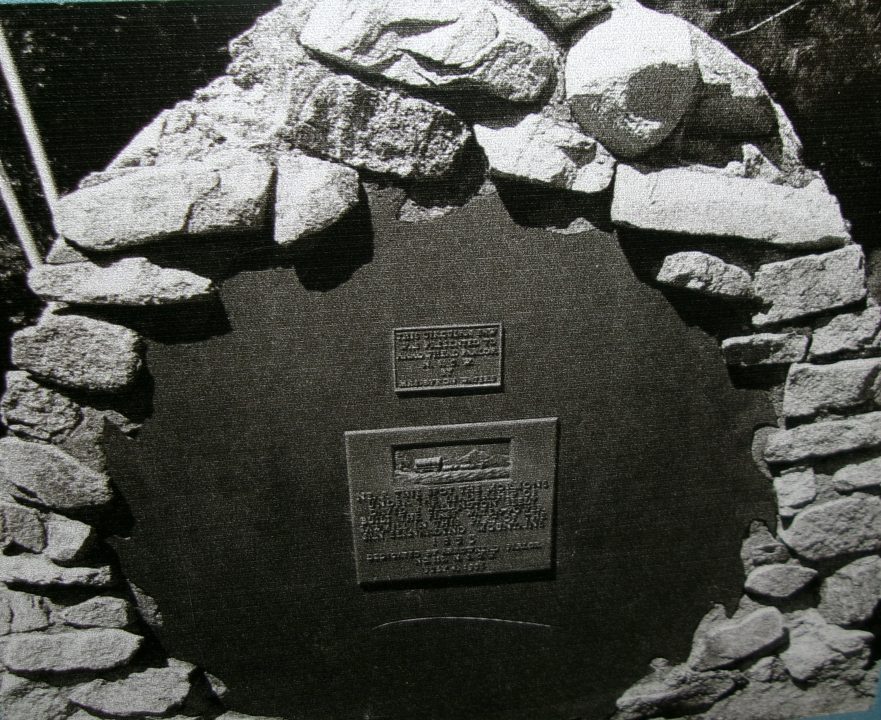
This circular sawmill blade monument honoring the Seely sawmill is located in the parking lot at Camp Seeley, in Valley of Enchantment, Crestline.
Historically, the name Seely/Seeley has been attached to several local areas of the San Bernardino Mountains. There was Seely Flat (now Valley of Enchantment), Seely Flat Road (now Highway 138), Seeley Lane, Seeley Creek and Camp Seely. Who was this Seeley/Seely guy, and why do people keep misspelling his name?
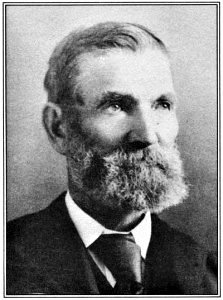
David Seely
David Seely was born in Canada on October 12, 1819, and moved to the U.S. at the age of 18, along with his brother Wellington. He worked in the freight business on Iowa’s rivers and eventually moved westward with other Mormons to Salt Lake City.
Seely made his first trip to California in 1849. During the journey, his wagon train met up with nine members of a group who unfortunately diverted to Death Valley, where they perished. It was named Death Valley after this ill-fated trip.
David Seely first saw the San Bernardino Valley early in 1850 while traveling to the docks at San Pedro on his way to the Northern Californian gold fields to do some prospecting. When his ship docked at San Francisco, Brigham Young requested he return to Salt Lake City to lead a wagon train to the new colony to be built in southern California. During his travels, California became a state on September 9, 1850.
Mormon leader Brigham Young sent 437 Mormon colonists out to California to start a colony. Its purpose was to be an outfitting post for overseas missions for the Latter-Day Saints Church.
The large, oxen-drawn 140-wagon train was separated into three smaller groups to travel to the new colony. The groups traveled about one week apart, partly so the grazing and water resources along the way wouldn’t be over-stressed. Captain David Seely became the leader of the second group of 50 wagons migrating to California from Salt Lake City. The other wagon group leaders were Captain Andrew Lytle and Captain Jefferson Hunt.
The entire colony/wagon train under the direction of Amasa Lyman and Charles Rich arrived near the Cajon Pass in March of 1851. The wagons and all 437 people camped at Sycamore Grove until Rich and Lyman purchased the Lugos’ 35,000-acre Ranchero de San Bernardino on June 20, 1851, for $77,500 to establish the colony.
In the spring of 1852, the Mormon Lumber Road was built up West Twin Creek to the top of the mountain near today’s Crestline. The purpose of the Mormon Road was to access the timber the colonists could see along the mountain ridge, which they referred to as the Sierra Nevadas. They needed lumber to build homes and to sell, to pay off the high-interest mortgage.
The road led directly to an area soon called Seely Flat where brothers Wellington and David Seely built the first water-powered sawmill in the San Bernardino Mountains. The creek that powered the mill was instantly called Seely’s Creek, and the area around the mill was called Seely’s Flat. The road leading to the area became known as Seely Flat Road.
The Seely Mill was built on the creek near the lower end of the flat, (where the City of Los Angeles later built Camp Seeley in 1914, when apparently the name was misspelled on the new maps and on the sign at Camp Seeley).
An almost endless supply of straight-grained sugar pine trees was found at Seely Flat. The sawmills were almost perfect money makers because the trees were plentiful in both Seely and Huston Flats (now under Lake Gregory). Because of inconsistent creek water flow and heavy winter snows, the mills could only operate about six months of the year.
David Seely impacted many aspects of mountain history for decades.
~~~


0 Comments