



By Dr. Ginger Gabriel
Special to the Alpine Mountaineer
A recent homeowners’ workshop hosted by the Crest Forest Senior Citizens Club could easily have been named “Protect Your Biggest Financial Asset.” The clue was in the instructions: “Bring a copy of your 2025 homeowner’s insurance policy.”
The workshop moderator was Laura Dyberg, president of Mountain Rim Fire Safe Council. The presenter for the workshop was Paulette Bunyapanasarn, a Farmers insurance agent in Ontario.
This two-hour workshop was packed with important information. A concern for the workshop lies in the wording of “who is the current property owner and who receives the insurance payout in the case of a claim?”
You may assume you are the owner because you just paid the insurance bill. Yes, you are the owner if the renewal declaration page says you are. Have you put your property into a trust? Are you listed as the trustee for your trust? Is the Trust listed as the “name insured?” Is the “name insured” the same name as on your grant deed?
If, at some point you have transferred your property to a living trust or a trust of some kind, then the trust is the owner of the property. Your name as trustee and the name of the trust should be on the renewal declaration page as “name insured.”
One attendee commented they were “so glad to get a renewal notice, I hadn’t bothered to read further. I will be calling my insurance provider tomorrow, to make sure my trust and my property deed match.”
A second concern was clarified on the “current property reconstruction report” on the renewal declaration page. The first question this report raised was, “Do you have any idea what it would cost to rebuild your home today, in the event of a catastrophe?” Your insurance company pays attention to that and makes sure that your insurance bill reflects that information.
We can get so caught up in a medical emergency, or other life event, that we neglect to keep current with insurance issues. Just as you prepare your yard for summer (think weeds and dead branches on your roof) and your car for winter (thinks snow shovel and ice scrappers), at least once a year, when you receive your renewal contract, read it.
Throughout the workshop, Bunyapanasarn repeated several times, “If there is a problem with your property and you are unsure who to talk to, talk to your agent first, before you talk to the claims adjuster.” If you want more information, talk to your agent. Do not allow the operator to give you to an adjustor. The adjustor can put you on the “bad list” and you are more likely to get your claim denied.
Often included on your renewal page is an example of a minimum estimated rebuild cost for a 2,000 square foot house from 11-12-2024:
Labor, materials and supplies: $330,649
Contractor overhead and profit: $75,568
Permits and architect’s plans: $35,788
Demolition and debris removal: $11,405
Estimated rebuild cost: 4453,411
These estimates are based on average construction costs and labor costs for California. At the workshop attendees were reminded that the figures given on the pages following the declaration page may not include the unknown of inflation costs.
This report is useful in that it shows you the information the insurance company has for your home. Check it out against the information you have for your own home. It uses detailed information about your property (square footage, construction type, number of bathrooms, roof type, etc.) to generate an accurate reconstruction cost estimate. This will be reflected in your bill.
Keep in mind that this report doesn’t reflect current market value but is strictly about rebuilding costs, including labor, materials and local construction costs. As homeowners found out after recent disasters, “lack of supply met higher demands and higher costs of rebuilding due to shortage of skilled carpenters and supplies.”
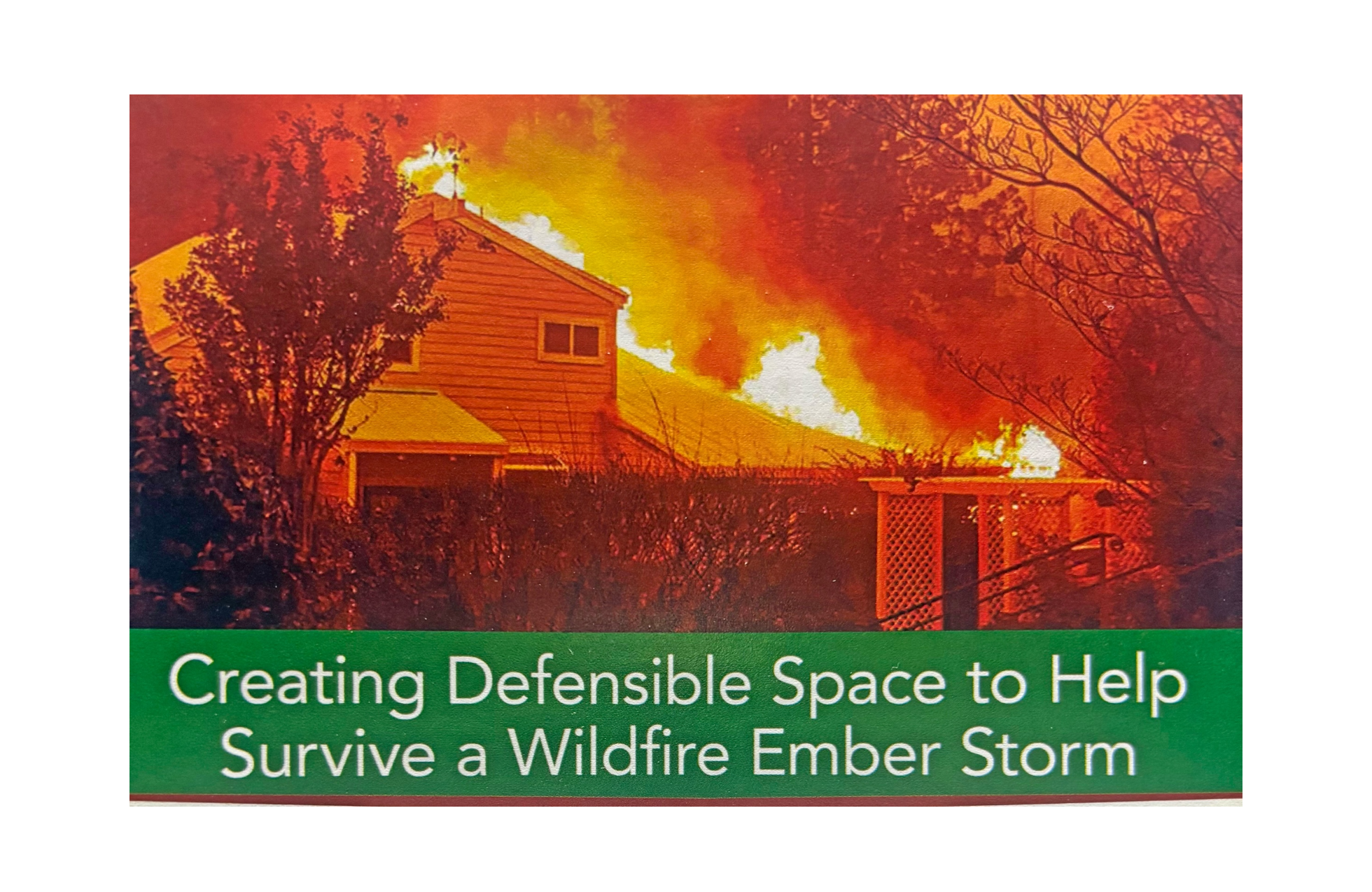
Now is a good time to know how your insurance policy reads. Know if you are insured against earthquakes, windstorms, snow, fire, etc. The California FAIR Plan does offer discounts for hardening your structure. Many insurance companies offer discounts because, by following their suggestions, you make your home safer from a disaster. By preparing your home to resist a wildfire, you not only receive a discount on your insurance, but mitigate the chance of losing your home to the wildfire.
For more information on hardening your homes, visit www.FireSafeNow.org and click on “programs.”
Dyberg concluded the workshop by saying, “An informed community is a better community.”




0 Comments