



By Mary-Justine Lanyon
Editor
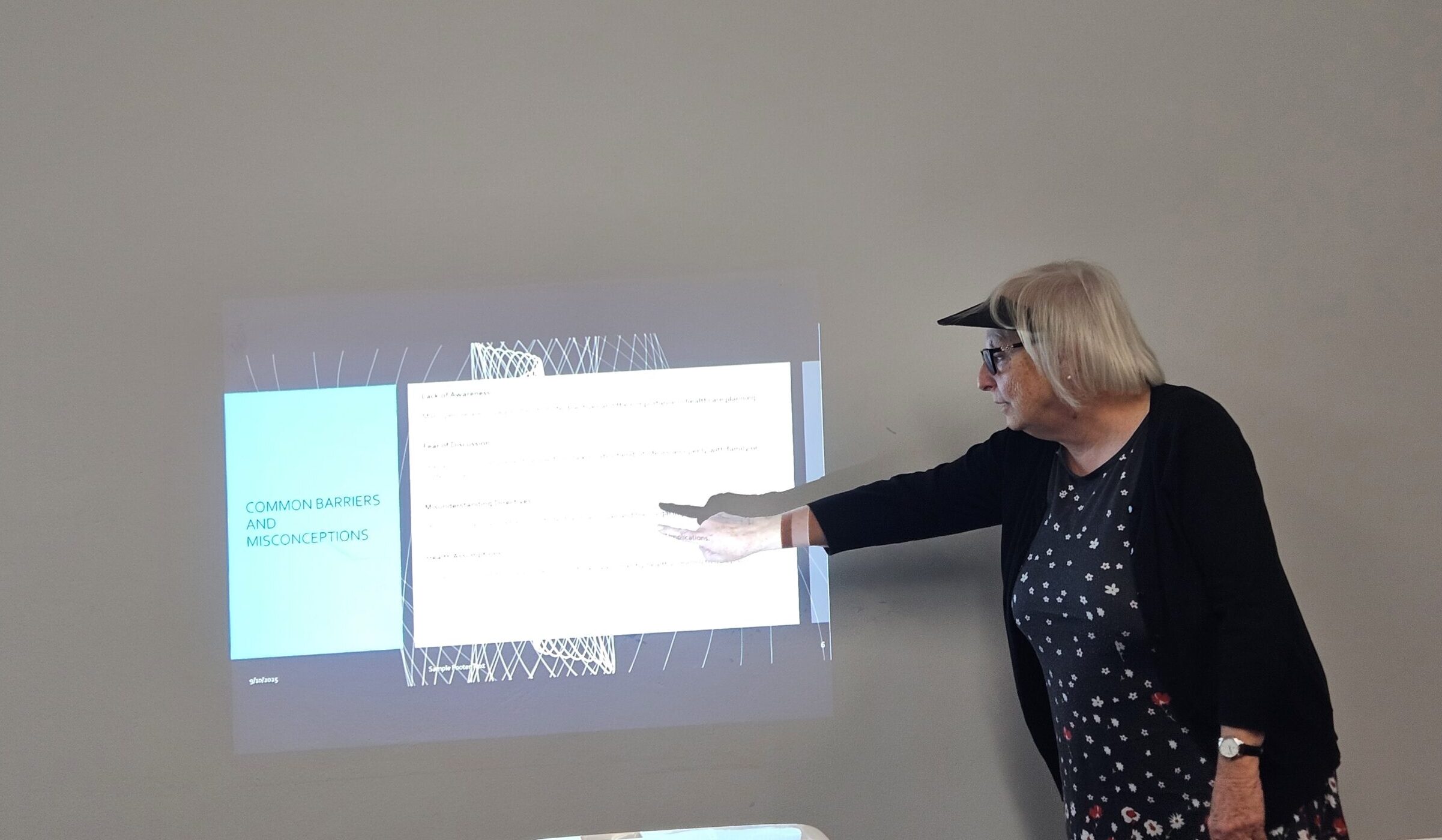
That was the question posed by gerontologist Jacque Lauder at her third presentation about challenges faced by the mountain’s seniors.
The answer: Anyone over the age of 18. “Anything can happen at any time,” Lauder cautioned.
“In our culture we don’t value aging. I am passionate about talking about it. We need to bring it out in the open. This is about all of us, no matter how old you are,” she said.
There are several types of advance directives: living wills, medical power of attorney and the 5 Wishes document.
Living wills, Lauder explained, specify patient preferences for medical treatment in situations where they cannot communicate their wishes. Medical powers of attorney designate a surrogate to make healthcare decisions on behalf of the patient when incapacitated. And the Five Wishes document addresses personal comfort, dignity and spiritual needs alongside medical treatment preferences.
Why is it important to have an advance directive in place?
“What are doctors trained to do?” Lauder asked. The answer: To save lives. “In general, that’s a good thing,” she said, “unless you don’t want extraordinary measures taken.”
Creating an advance directive is something you do for yourself but also for your family and those who care about you. “It gives them guidance, makes decision-making so much easier, even when it’s hard,” Lauder said.
Speaking personally, she said that when her husband’s mother was actively dying in the hospital, it was very difficult. But she had an advance directive so he understood what she wanted.
“Let’s make it a gift to those we care about and who care about us,” Lauder said. “You’re telling them, ‘This is what I want. You’re doing the right thing.’ So many people struggle with guilt over making a decision. Make it less traumatic for them.”
One common misconception is that a person named as an agent in an advance directive will be financially responsible for any expenses incurred by the patient. “This is not about being financially responsible,” Lauder said. “It’s about helping the person receiving care to get the care they want and need. There is no financial or legal responsibility.”
Much of her presentation focused on the Five Wishes document. It is, she said, a legal document to make sure your healthcare is provided in the way you want it to be provided.
In the first wish, you name the person – the agent – you want to make healthcare decisions for you. You also list a second and third choice. There are guidelines as to who you should and should not choose. It is important, Lauder stressed, to get permission from the people you list.
What responsibilities do they have? “To follow your instructions in the directive,” Lauder said. “It’s a personal obligation to the individual – a commitment, a promise.”
The second wish outlines the kind of medical treatment you want or don’t want. There are options listed that you can circle or cross out.
The third wish – how comfortable you want to be – is the one most important to her, Lauder said. How much pain medication do you want? Do you want music played? Do you want to be bathed?
Wish four establishes how you want people to treat you. Do you want people with you? Do you want your hand held? Do you want photos of your loved ones nearby?
And the final wish is what you want your loved ones to know – how you feel about death, how you want your body handled after death.
Lauder suggested that everyone complete the Five Wishes document and make copies of it. Scan it in and email it to your named agent, to your family members and friends. Your physician should have it. You should revisit it every so often and update it, Lauder said.
For more information on the Five Wishes document and to order a copy, visit www.agingwithdignity.org.
Lauder’s final presentation in this series will be on Medicare on Sept. 24 at 2 p.m. at the Lake Arrowhead branch library in Blue Jay.





0 Comments