



By RHEA-FRANCES TETLEY
Staff Writer
Seventy-five third-grade students and their parents from Lake Arrowhead Elementary School classrooms visited the Mountain History Museum in Lake Arrowhead on October 21. After the visit, they went over to Rock Camp to explore and learn more about the Native Americans who lived in the mountains before the loggers arrived.
The students have been studying the mountains, Native American lifestyle and local history, so special exhibits and activities were prepared for them, such as grinding acorns on actual metates. When they arrived at Rock Camp, they saw the metates that the Yuhaaviatam, also referred to as the Serrano people, used.
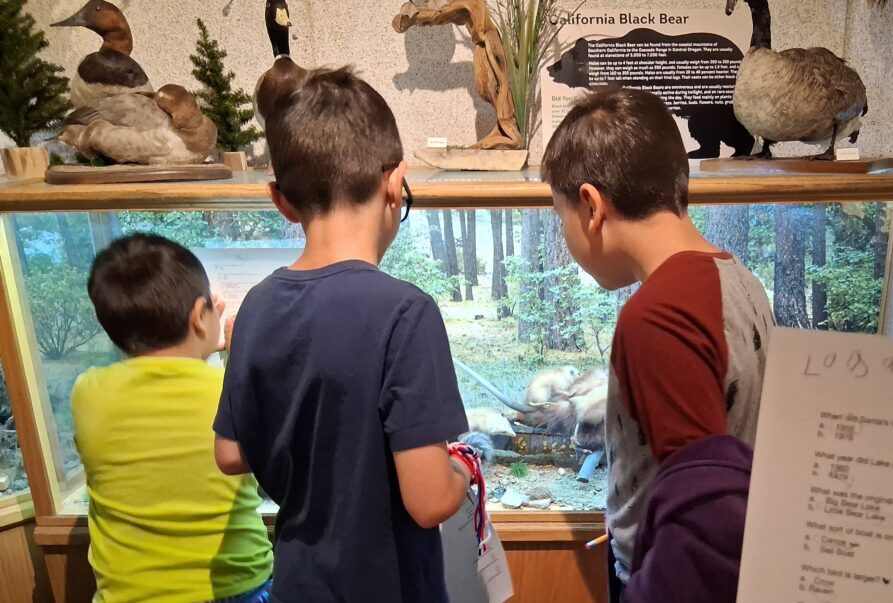
At the Museum, the youth saw some natural history, including local animals, up close, and they could compare their own size to that of a bobcat, deer, bear or raccoon. They enjoyed the Museum’s vast display of birds, nests and feathers. They were given the opportunity to touch various animal furs, such as opossum, skunk, racoon, bear and fox. They were also given the opportunity to share their own stories of their encounters with forest animals with the docents and their fellow students.
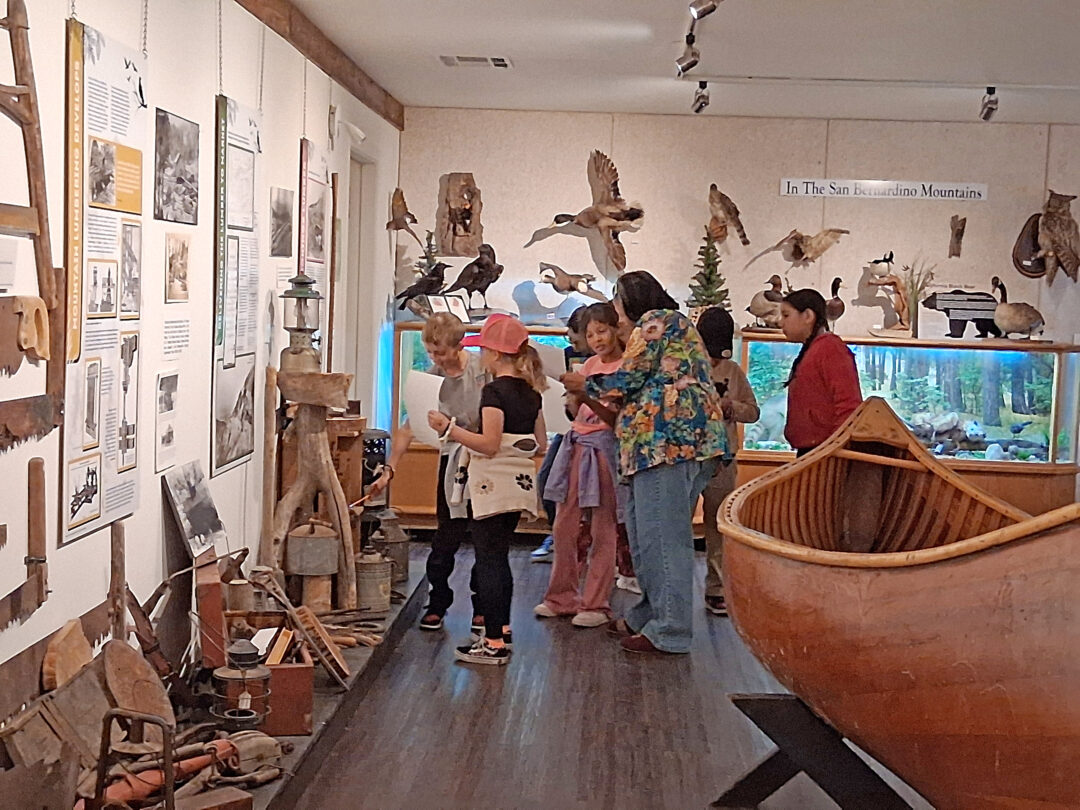
A group of third graders during the field trip.
The lumbering era of the mountain began in the mid-1800s, and there are displays in the museum that showed the children the huge saws used, with docents explaining why oxen yokes are made of wood, and why the agriculture of growing hay was done to benefit the work animals, such as mules, horses and oxen. Before steam power was used, animals, pullies, winches and humans cut and transported the trees that were sawed into logs and lumber. The kids learned about the power of pulleys through a hands-on demonstration provided to the museum by the San Bernardino County Fire Department.
Every area of the museum had a docent showing the students different aspects of local history, including the building of Lake Arrowhead Dam and the general stores that were the centers of the towns. Each docent encouraged the students to ask questions. The questions were on the various displays in the museum, such as the one comparing crows and ravens, and funny displays, such as the Canada Goose with a lollypop in its beak and the fox wearing glasses.
The children then went on a scavenger hunt so they could explore the museum independently, and those that completed the hunt received a small prize.
After eating lunch in the patio of the museum, the bus took the students to Rock Camp where they walked the U.S. Forest Service trails used for thousands of years by the Yuhaaviatam on their yearly migrations through the mountains to their summer village near where Big Bear Lake is now located.


0 Comments