




By RHEA-FRANCES TETLEY
Historian
There are no historical plaques at Heaps Peak Arboretum, but there should be. This place has history. Located on the crest of the Rim of the World Highway (Highway 18) between Skyforest and the Heaps Peak Transfer station, it’s a wonderful opportunity to experience nature. Heaps Peak is named after an early resident, Fred Heaps, who had built his hunting lodge nearby in the 1880s.

The information kiosk at Heaps Peak Arboretum.
The Oct. 21,1922, fire that started in Waterman Canyon, near the third Arrowhead Springs Hotel, burned the south face of the mountain, blackening 16,380 acres from Crestline to Heaps Peak. Winds drove that fire north through the forest, all the way to the desert, burning for three months, until a rainstorm extinguished it in early 1923.
The Baker Sawmill was permitted to open on forest service land in the Heaps Peak area to salvage the usable timber killed by the fire. The mill operated for three or four years during the summer months, eliminating the dead snags and trees unexpectedly falling and injuring people. Many of the log cabins built from the mid-1920s were made from these salvaged logs. Those cabins built to house the mill workers in the Heaps Peak area lasted longer than the mill itself, as they were then used on and off through the 1940s.
The mill was reopened in the 1930s when the State Highway Department needed to clear the trees from the new highway route through Skyforest. It operated for several years processing these trees into lumber often used for local building projects, such as movie sets on Movie Point on the Lake Arrowhead shore.
Many areas of the forest were devastated by that 1922 fire. Ranger Buel of the U.S. Forest Service was teaching lessons to Mary Putnam Henck’s Lake Arrowhead School classroom on the varieties of trees in the forest and the importance of Arbor Day to the students. Buel persuaded the USFS to donate trees. The students brought shovels and, on Thursday, Feb. 23, 1928, at Heaps Peak, Buel taught them how to plant the trees. Members of the Lake Arrowhead Women’s Club, who sponsored the event, and their husbands, helped the students with the plantings. This became an annual Arbor Day event into the mid-1930s, despite February’s snowy weather.
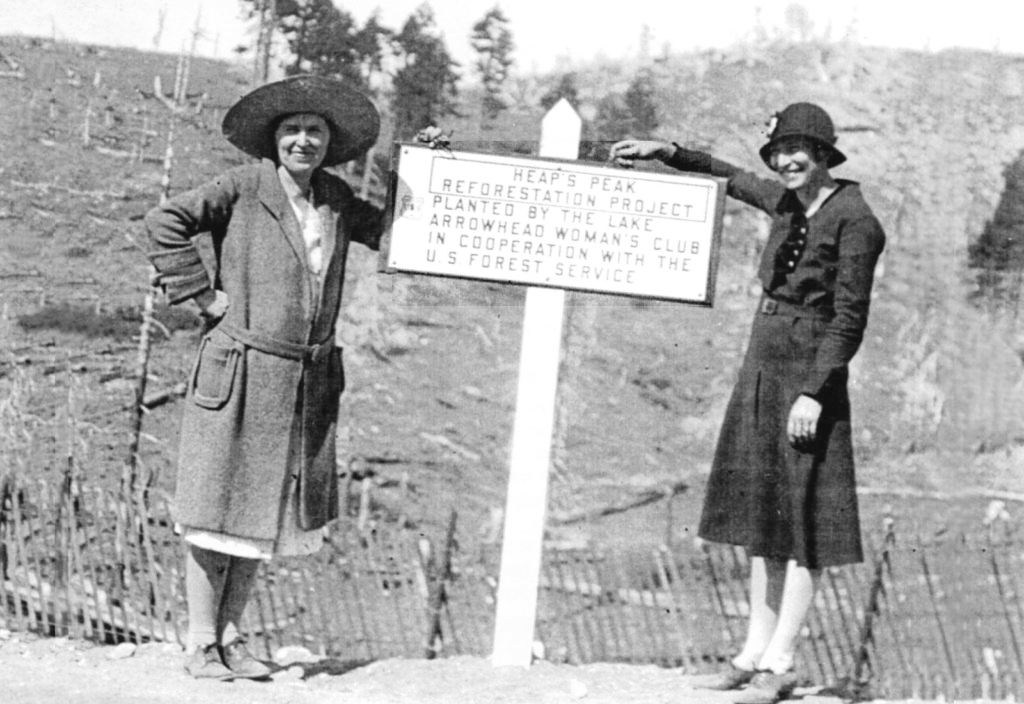
Members of the Lake Arrowhead Woman’s Club worked with students to reforest the area following the 1922 fire.
In the later 1930s, there was an over-abundance of trees in the Forest Service tree nurseries. By then the school had stopped the reforestation project at Heaps Peak, so the CCC came in and planted large numbers of trees in the area, some not indigenous to the San Bernardino Mountains environment. The forest was rebounding and regrowth was seen everywhere.
After WWII, around 1947, Joe Henck and his son Putnam filed a mining claim on 80 acres in the Heaps Peak area, where the Arboretum is today. This property was adjacent to the Hencks’ Skyforest property. They used the lower 40 acres for the rocks they found, using them to build fireplaces and rock walls. The upper 40 acres had decomposed granite, which was used by local contractors as they put in paved roads and driveways in the various subdivisions around the Lake Arrowhead and Skyforest areas, during the boom years after the war.
Joe Henck enjoyed using his bulldozer, creating ponds and little roads on the property. Since the Forest Service was suggesting the planting of Sequoia Gigantica Redwoods, several were planted around the ponds. Subsequently, the Arboretum has one of the largest Sequoia groves in Southern California, attracting thousands just to see the Sequoias.
During the 1950s, the U.S. Forest Service remembered the Heaps Peak area again, beginning proceedings to cancel the Hencks’ mining claim. The 1956 Bear Fire again burned the area as the fire burned from the south, north to the desert, as it had in 1922. The forest this time had to regenerate itself.
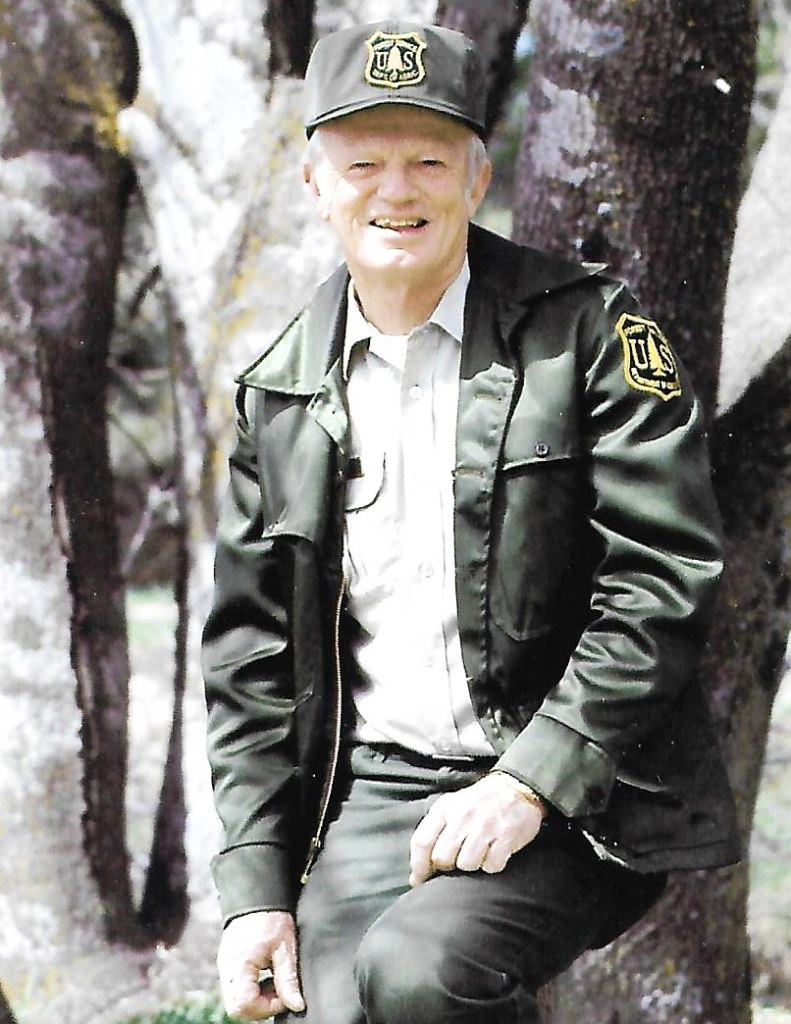
George Hesemann opened the area that is now Heaps Peak Arboretum to the public to teach them about the local plants and animals.
In 1983, former school teacher and forest service worker George Hesemann choose this USFS reforested area of Heaps Peak, seeing the potential to create an Arboretum there. He wanted to preserve the local natural habitat and open the area to the public to teach them about the local plants and animals. Under the Forest Service direction, the area was thinned so the trees were at least 10 to 12 feet apart and the undergrowth cleared. Local ground plantings were used in experimental gardens at various locations throughout the site.
Hesemann cut in the trail, personally identifying the plant species, installed signage and created a trail map for informed public access to the area. He started the Rim of the World Interpretative Association (ROWIA) to maintain the Arboretum.
The trails had to be completely rerouted after the 2003 Old Fire burned through the Arboretum. Now it has two handicapped accessible interpretive trails. The front, short, paved nature trail has an identified natural plant garden. The longer, dirt Sequoia Trail is 7/10ths of a mile in length, through the Arboretum, but is stroller accessible, with a trail guide listing 25 things to see. An Adventure Pass is required and, for safety, it’s only open during daylight hours, since forest animals such as bears, deer, bobcats and mountain lions visit the Arboretum’s streams and waterfalls beginning at sunset. The 30-acre Heaps Peak Arboretum at a 6,000-foot elevation is one of the most popular destinations in the San Bernardino National Forest.
During the 35th anniversary celebration in 2019, it honored its history and the volunteers who created it, revealing a display honoring founder George Hesemann. Those decades of volunteers also deserve a recognition plaque for restoring this natural wonder from the destruction of fire.
ROWIA is always seeking additional volunteers, so consider joining ROWIA; visit their website at www.hparboretum.com. The Arboretum, at 29358 Rim of the World Highway 18, is open daily, weather permitting. The kiosk is open weekends, seasonally.

Visitors will find information about the Arboretum as well as maps to follow as they walk the Sequoia Trail.



0 Comments