



By RHEA-FRANCES TETLEY
Staff Writer
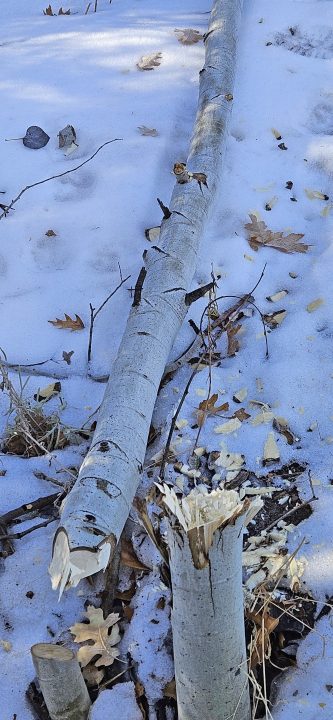
On Nov. 21 when Joe Gutierez, the trail maintenance lead for the Rim of the World Interpretive Association, was at Heaps Peak Arboretum, a visitor reported to him they had found a cut tree in the snow on the ground. Upon initial investigation, Gutierez saw that someone had walked the trail, away from the parking lot area, and committed the severe vandalism. The vandal had succeeded in mangling and cutting down a beautiful aspen tree near the first bridge on the trail. It looked like a hatchet was used, since the cut was not clean and the trunk base is mangled. Then the vandal left the tree lying in the snow. It is suspected the tree was cut within 24 hours of the Thursday discovery.
There was snow on the ground at the time of the vandalism, so the photos show the efforts made in this destruction. Since the arboretum is on San Bernardino National Forest land, this has become more than just simple act of vandalism; it is a federal offense. Christine Smiley, president of ROWIA, immediately contacted Casey Shaffer of the Forest Service who has now notified the U.S. Forest Service’s Law Enforcement division to conduct an investigation.
Aspen trees have a unique type of plant biology with some experts saying that aspen trees are among the oldest and largest living things on earth. At the very least, aspens challenge current human understanding of the definition of an individual organism. There are only a few groves of aspen trees in the San Bernardino Mountains and the arboretum’s two groves are part of these few.
Aspen trunks may live for a hundred years, but the root system is unique. So, what appears to the human eye as many trees may all be the same tree with many trunks, or clones of the same tree. The interconnected root system may be hundreds or thousands of years old. Under the right conditions, a single aspen clone may cover over a hundred acres. According to the U.S. Forest Service, one aspen clone in Utah was found to be 80,000 years old, although 5,000 to 10,000-year-old clones are more common. It is not known how old these San Bernardino Mountain aspen trees are, but such damage with the splintered trunk can invite fungus and other organisms into the root system, affecting the underground network of communication and connections these trees have developed over the years.
The Heaps Peak Arboretum is operated by ROWIA volunteers. ROWIA celebrated its 40th year of this dedication to others this past October. The arboretum is free to visit during daylight hours.
Anyone with information about this disrespect to nature and vandalism is asked to visit www.HPArboretum.com, click on “Support us” and comment on the incident. Those who wish to volunteer may also express their desire there.
Heaps Peak Arboretum is located at 29358 Rim of the World Highway (Highway 18) between SkyPark and the county refuse transfer station. It has a large parking lot next to the highway, where the America the Beautiful or a USFS Adventure Pass may be used to pay the $5 daily pass parking fee.



0 Comments