



By Mary-Justine Lanyon
Editor
The third time, as they say, is the charm. The Lake Arrowhead New Friends of the Library intended to kick off their monthly gathering with historian Russ Keller on Jan. 16. However, power outages on that day and then on Jan. 23 forced the postponement of Keller’s presentation.
The power was on, the sun was out and Keller was finally able to give his presentation on Little Bear Valley on Jan. 30.
“I’ve always been a collector,” Keller told the sizable crowd, noting he started collecting coins at the age of 10. After he moved to the mountain in 1998, he started collecting early images of The Cliffhanger. That collection then expanded to all of the San Bernardino Mountains.
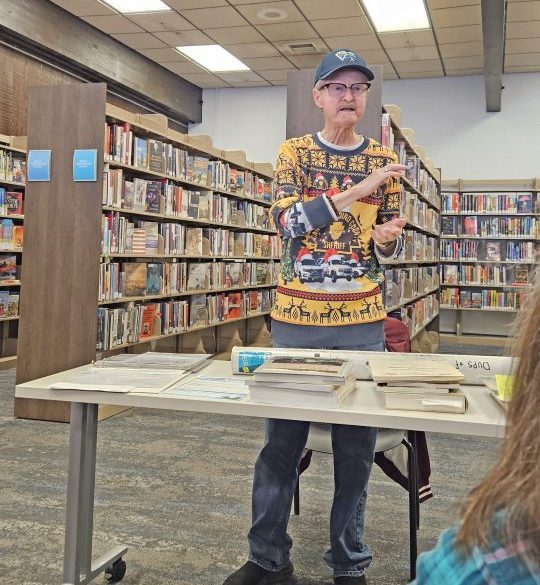
Historian Russ Keller took his audience on a trip through time as he talked about the development of Little Bear Valley. (Photos by Mary-Justine Lanyon)
Now, he said, his collection of images, postcards and maps exceeds 25,000 images and copies. Those images have allowed him to write his books on the mountain communities.
This first historical presentation was to be about Little Bear Valley. But first Keller took us back to the first inhabitants – the Native Americans, the Serranos.
In 1493, the Pope divided the New World between Spain and Portugal. Cortez came, Keller explained, to make sure the inhabitants of Mexico – the Aztecs – knew they were a Spanish colony. He then “wiped out the Aztecs as they performed human sacrifices,” Keller said.
In 1821 Mexico had a war with Spain and gained its independence. The area we now live in became part of Mexico. When Indians began raiding the Mexican ranchos, stealing horses and cattle, the ranchers hired Benjamin Davis Wilson to go after the Indians and eliminate the raids.
Wilson followed the Indians up the Santa Ana River and discovered a valley he named it Big Bear as he encountered a dozen grizzly bears. Wilson was the first mayor of Los Angeles and was the grandfather of George S. Patton. Mt. Wilson is named after him.
In 1846 California declared its independence from Mexico and became a state in 1850.
Meanwhile, the Mormons in Salt Lake City were trading through the port of Los Angeles. Brigham Young wanted to establish a settlement halfway between Salt Lake City and Los Angeles. He sent a party of Mormons to establish that community, expecting perhaps 100 people to volunteer; more than 400 volunteered.
Keller shared many of his photographs and maps during his presentation. Among those were images of the many lumber mills that sprang up on the mountain due to the plentiful timber. The most famous of these was the Talmadge mill in Little Bear Valley.
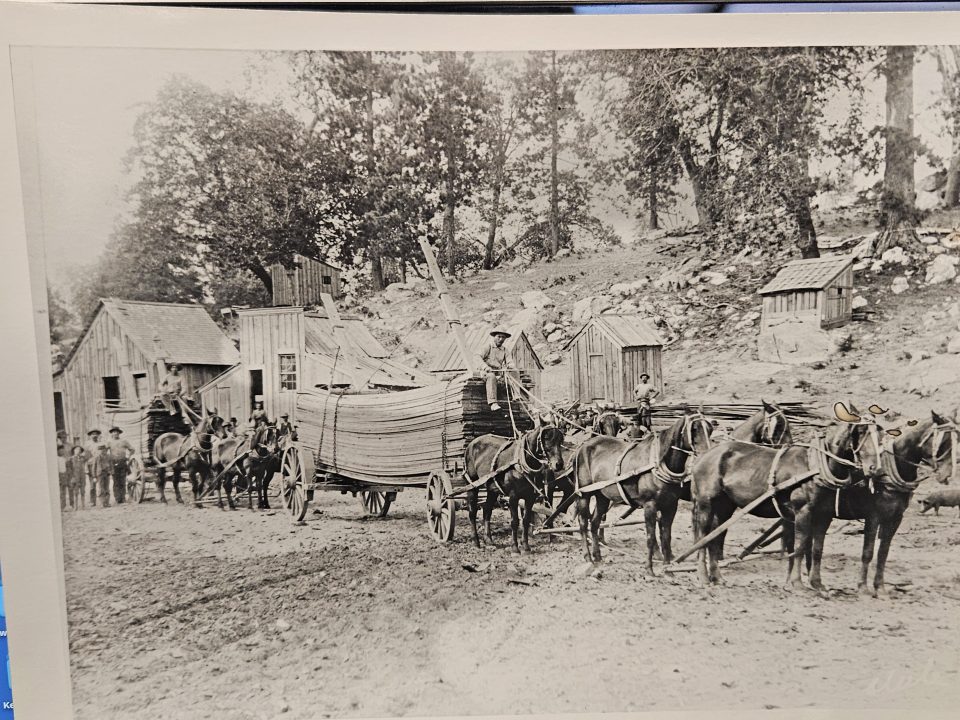
This photo of milled lumber ready to be taken down the mountain is part of Russ Keller’s large collection.
Several of the photos Keller passed around depicted lumber being hauled, cattle and horses grazing at the bottom of what is now Lake Arrowhead.
As for what happened to the Mormons, Keller said that Brigham Young feared an attack from the U.S. government so he recalled the mountain group in 1857 to help defend Salt Lake City. About three-quarters of the mountain group left, selling their properties for pennies on the dollar. However, the attack from the U.S. government never came.
And what happened to the grizzly bears? The last bear was killed around 1907 by hunters, Keller said. In the 1930s the resort owners thought it would be cool if there were bears on the mountain. They arranged to have 34 black bears imported from Yosemite.
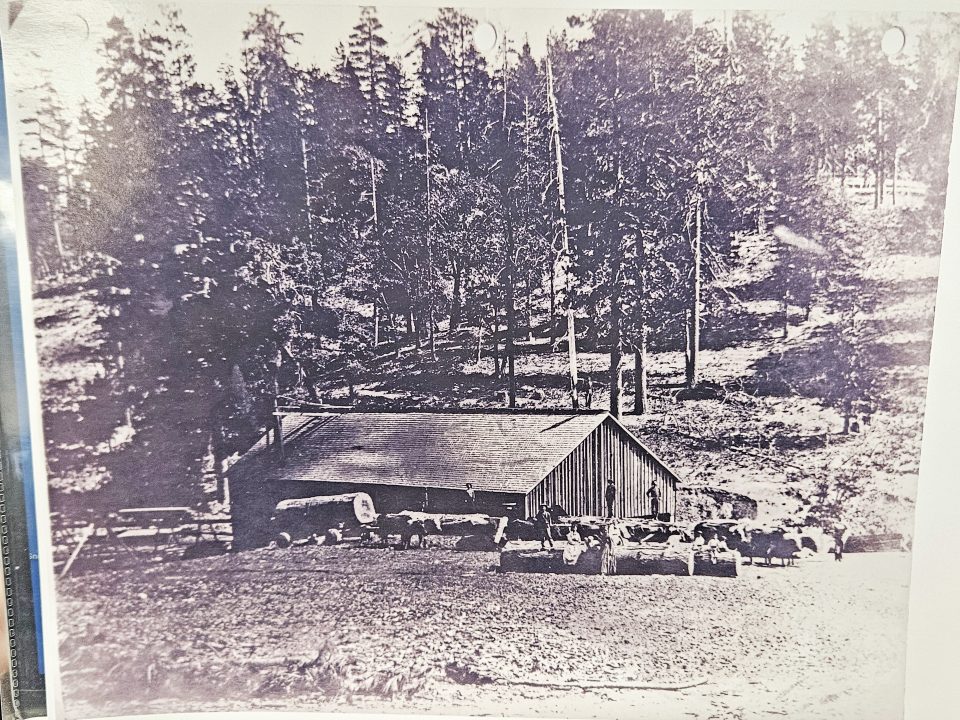
The Grass Valley steam sawmill, just to the left of Lake Arrowhead. Charles and Joseph Tyler were the owners of the valley from 1872 to 1891.
“All the bears you see today are descended from those bears,” Keller said.
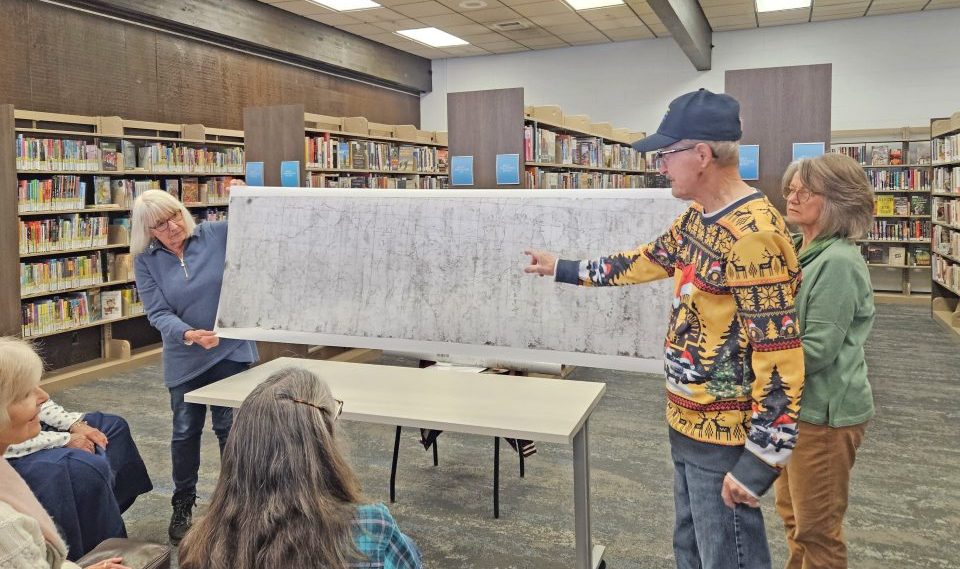
Keller brought with him an early survey map of the Arrowhead Reservoir Company which depicts the locations of various lumber mills.
When asked about competition between the mills, Keller said there were a lot of mills but there was also plenty of timber. He noted the mill owners marked out their territories to mill. “They got along – they would get together and have dances.”
So how did Little Bear Lake become Lake Arrowhead? To learn the answer to that question, folks will have to attend Keller’s next historical presentation at the Lake Arrowhead branch library in Blue Jay on Feb. 20.


0 Comments