



By Rhea-Frances Tetley
Mountain Historian
The mountains were a favorite vacation destination for a century, entertaining generations of Californians. Of course, the cooler summer weather in the mountains was the first appeal before the use of air conditioning.
The old Lake Arrowhead Village, which opened in 1924, was designed as a tourist mecca from its inception. It had a little theater for performances and concerts during the summer season, with many specialty shops that appealed to lake visitors.

The Village Cottages were very popular in the 50s and 60s.
Hotels and campgrounds offered accommodations for a short visit or one that could last for weeks. August was the biggest month for visitors, as the temperatures down the mountain got sizzling. Labor Day weekend always drew huge crowds. The lake excursion boats were very popular, beginning with the Blue Jay in 1924, the first Arrowhead Queen after WWII and the current Arrowhead Queen.
For many years, Lake Arrowhead Village had a dance pavilion where the big bands of the era played (Ozzie Nelson’s Orchestra played there) and the Lake Arrowhead Orchestra entertained. More than one well-known local couple met at those dances as visitors came up and met the locals who went to the dances. Sometimes those couples would fall in love and get married.
One such couple (there are several) was the MacKays. Alan grew up in Twin Peaks, and sometimes in the winter would ski down to the schoolhouse next to the Lake Arrowhead Village. He met Audrey at a dance at the Pavilion in 1937 and they married in 1939. They moved to Lake Arrowhead and remained there all their lives, as she worked for the Arrowhead Lake Company.
The Audrey MacKay Dam that supports Papoose Lake was named after her. Mackay Park above the Papoose Lake is named for both her and her grandson Jeremiah Mackay, who while a sheriff’s deputy was ambushed in 2013 and killed in the line of duty at Seven Oaks, protecting the residents of the mountains. A statue honoring him is on the Village peninsula next to the flagpole.
Lake Arrowhead itself was a summer draw, with the sailboats, motorboats, fishing and the sandy beach, plus the floating sun platforms. The summer breezes made those who came from the hot summer in the valley believe they were vacationing in heaven. The golf course which expanded from a nine-hole to an 18-hole course became very popular.

Lake Arrowhead, especially from the 1950s to 1990s, advertised extensively to attract visitors.
Some years in the 1950s there was a small locomotive that went out and around the peninsula next to the village. The Sportsland Penny Arcade, the movie theater and bowling alley were popular places for teens and young adults. The Village had the beach, swimming floats, excursion boats, water skiing, boating and fishing for the tourists. The swinging gyms, mechanical cages that, with the right momentum and strength, led to bragging rights for those who could get them to flip over the top. The Mackinzie Water Ski School has taught hundreds of thousands to ski on the lake. Most hotels also had pools.
Camp Fleming Auto Camp on Lake Arrowhead’s shore had tents and cabinettes for rent. It was popular for decades, beginning in 1922. Of course, hiking along the lake’s shore and into the forest was a favorite inexpensive adventure for visitors.
Blue Jay was just on the other side of the lake and ice-skating was a favorite summer pastime for many decades. The outdoor rink began as a wintertime activity along the shores of the lake but, by the 1940s, a rink was a summertime staple for mountain visitors. Thousand of skaters came each summer to skate outdoors.
Horseback riding stables were also in Blue Jay, with many trails into the forestlands above the lake. All these activities along with arcades, lake and stream fishing (and a pay-to-fish trout farm) could keep visitors busy for weeks, all in Blue Jay. Blue Jay had begun as a private campground. Most campgrounds also had amenities such as arcades and snack bars.
The national forest campgrounds for many years offered campfire activities, including talks by the ranger about the natural history of the area, and sometime skits about the local history. The Children’s Forest offered many nature hikes and activities for years.
Santa’s Village in Skyforest opened in time for the summer of 1955. It had mechanical rides such as their roller coaster, bumblebee monorail, carousel, Ferris wheel and car ride, as well as reindeer-pulled sleighs, burro rides, hayrides through the meadow and more. Wonderful memories were made at the amusement park, according to those who were either visitors or employees of Santa’s Village. The park also had that international shopping angle, with shops containing items from around the world, which were otherwise not available. Of course, Santa lived there, and Mrs. Claus’ Spice Kitchen featured a wide variety of spice mixes not available elsewhere and sadly missed by many.
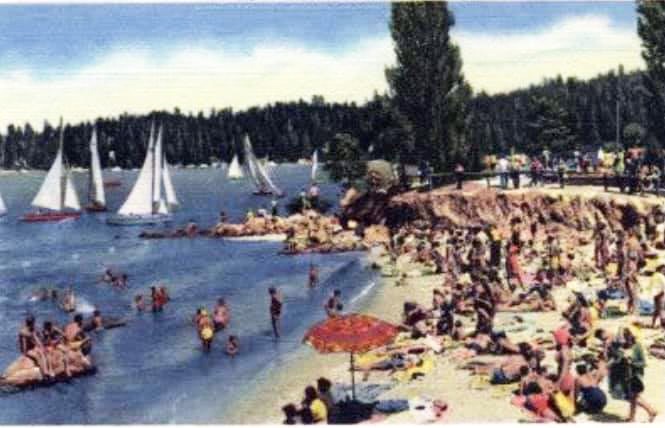
The swinging gyms were in the fun zone of the old Lake Arrowhead Village, which was replaced in 1979.
The Enchanted Forest, located alongside the highway in Fredalba, near Running Springs, was open for several summers. It had a post office and, although it appeared to be in competition with Santa’s Village on the mountain, both seasonal parks were actually in competition with Disneyland which was better advertised and easier to reach and was open year-round. The Enchanted Forest was fairytale-based theme park, set in the Black Forest of Europe with a castle and the memorable Magic Slide and other rides.


0 Comments