



By Mary-Justine Lanyon
Editor
So, you are a high school student who plays the trombone (or flute or drums). What can you do with that talent after high school and after college?
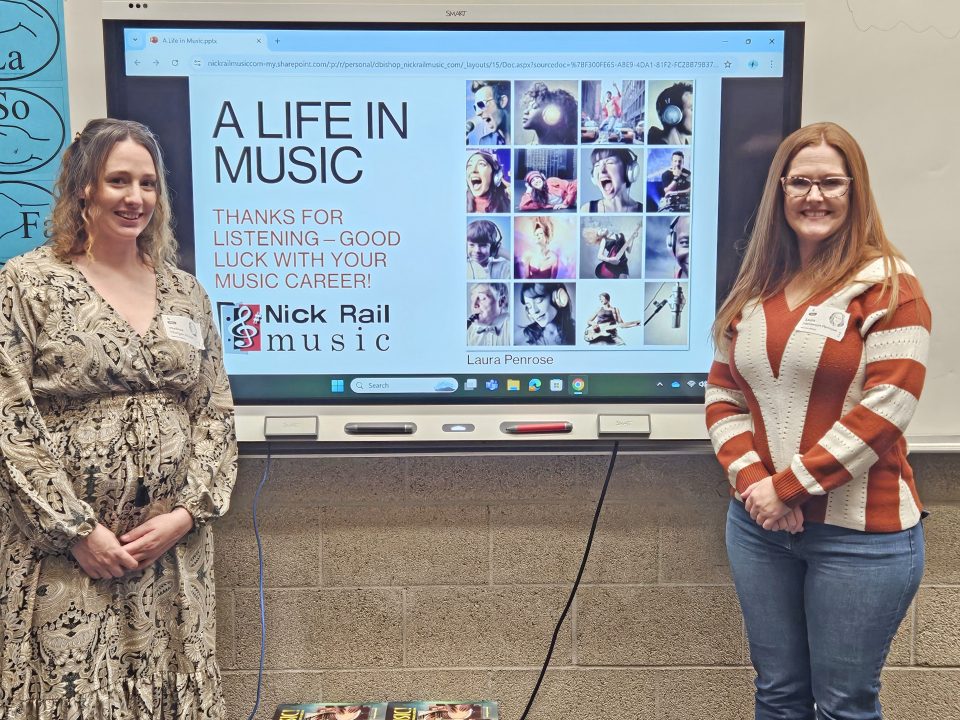
That was the question answered by Laura Penrose and Melissa Hulett at a special presentation at the music classes at Rim of the World High School on Feb. 3.
Penrose is the owner of Nick Rail Music, which provides band and orchestral instruments to students and professional musicians. Hulett, who graduated from Rim High in 2009, manages the Nick Rail Redlands store.
Why do music careers matter? Penrose asked the students who are in the Rim High concert band. Music is everywhere, she said – on our cell phones, our car horns (yes, someone decided the pitch for them). Penrose said she even knows someone who creates the music for slot machines.
When you go to the movies, watch a show on TV, even go grocery shopping, you hear music. Someone, Penrose said, studied what music will make people shop.
Because the music industry is always changing, it is a thriving industry. Technology has led to career paths that did not exist a few years ago. “When I was growing up,” Penrose said, “people didn’t have their own recording studios in their homes.”
What strikes her as incredible about artist Billie Eilish is that she recorded her first album in her bedroom – and won a Grammy for it.
Today there are diverse opportunities to work in the music industry – in digital marketing, data analytics, social media, research and development. And the traditional roles – like sound engineers – are evolving to reflect the new technologies.
What are the professional skills you will need to be successful in music? As a musician, you are creative but you have to expand that creativity to come up with solutions to problems on the fly.
Networking is huge, Penrose said, adding she cannot emphasize that enough. “You cannot make it in the music industry if you don’t know people,” she said. “You have to know repair people, people who can get you a gig. You have to be personable. We tend to isolate ourselves but that won’t work. Don’t be afraid to put yourself out there.”
Penrose also noted you have to be adaptable as the music industry is constantly changing. “Be flexible,” she said.
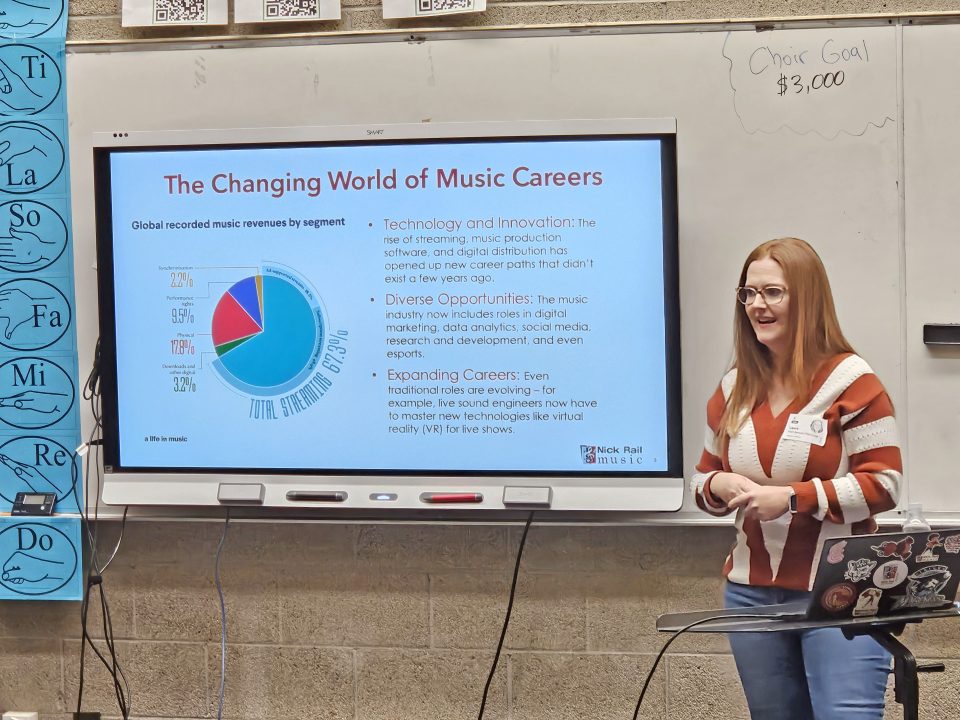
The music industry is always changing, Laura Penrose told the students.
Your creativity only gets you so far, Penrose told the students. “At the end of the day, people want someone pleasant to work with.” Other characteristics you should have: reliability (you need to show up and show up on time), strong work ethic, professionalism (people are getting more and more casual – don’t show up for a job interview in ripped jeans), positive attitude, treat people including yourself with respect. And be proactive – don’t wait for opportunities to fall into your lap – take the initiative. Be open to new ideas.
So what career paths are open to musicians after college? How do you find the right fit for yourself?
- Performing: You can be a gigging musician, playing at concerts, weddings, proms, in coffee shops. Or you can be a session musician, backing up artists when they record a CD. Both types of performing require huge amounts of networking, Penrose said.
- Producing: As a music producer, you can write, record and produce songs, working with artists or labels. This job requires a lot of self motivation as you spend a lot of time by yourself.
- Business: You can help bring music to other people by developing new products or selling products. There are millions of jobs on the business side, Penrose said. There are roles in distribution, marketing, management, legal, accounting and more. Every instrument has teams of specialists for research and development which involves science and math. What kind of felt works best for pads on an instruments? What level of humidity affects pads?
- Repair: This, said Penrose, is the holy grail of music and music careers. “The music industry is in dire need of repair technicians,” she said. There are four or five repair schools across the U.S. where students can get certified in repairing particular instruments. “You could pick any city in the U.S. to live in and walk into a job,” she added.
“There are many pathways to a career in music,” Penrose said.
To get started, you have to figure out what your interests are. Look for volunteer opportunities at conferences or festivals, where you will meet people who can become part of your network.
Penrose herself has a degree in commercial music and plays piano. She worked as a manufacturer’s representative, selling instruments across the country. In 2019 the opportunity to purchase Nick Rail Music presented itself. Penrose had to employ her flexibility during the pandemic as schools were not having their music programs and students were not coming in for lessons.
“We focused on repairs and cleaning,” she said. That summer they cleaned 12,000 instruments, as compared to a more typical 3,000 to 5,000.
Hulett, who played flute at Rim High, was awarded a full scholarship to Cal State Long Beach, where she received her performance degree. She also received a master’s degree from Cal Arts. She continues to play and teach flute.





0 Comments