



By RHEA-FRANCES TETLEY
Staff Writer
The Crestline Sanitation District (CSD) is very concerned about the 100-year contract that Hesperia Venture One, LLC (HV1), which owns the property where their treated effluent outflow is distributed, wants them to sign. Over the past few years, the condition of the property has changed significantly from its previous condition, and they are worried the state may fine them for a potential testing condition out of their control, if the cows are not returned.
Since the 1880s, the property was agricultural land known as the Las Flores Ranch, with horses and cows. It was still very rural when the district was formed, and contracts were signed to release their treated effluent on a 500-acre area. CSD had a 20-year contract, which has been continued yearly since 2017. Recently, HV1 removed the cows that had resided there since the 1880s. This has changed the entire ecosystem of the area, allowing overgrown brush, creating a fire danger and the effective control of nitrogen, nitrates and water on the property has been disrupted.
The CSD’s contract to spread treated effluent over the 500-acre meadow area doesn’t allow pooling of the water, but the plants and grasses grew from the watered soil, using that nitrogen. Then the cows and horses ate the grasses, which removed the nitrogen from the soils. Without the water pooling, the mosquitos were controlled. This nitrogen cycle has been beneficial for all and met the state standards. It is adjacent to a habitat management plan area.
Hesperia Venture One wants a 100-year contract with the Crestline Sanitation District to guarantee their treated effluent continues to flow to the area. HV1 wants 400 acre-feet a year, which would guarantee the treated water flowing to the green belt the HV1 must establish for their housing development to be approved. HV1 plans to build homes on the mesa, and this green belt must be guaranteed for their housing development project to move forward. The CSD plans to continue sending their treated wastewater to the site, so both agencies have similar goals; both thought they were moving forward toward complementary and mutually beneficial goals.
However, Crestline Sanitation was not happy recently when HV1’s lawyers wrote to the district. This emergency Crestline Sanitation board of directors meeting was called because the district’s board of directors is concerned over rising nitrogen numbers, over which they have no control, as they have no legal access to the land owned by HV1. One of the discharge requirements is that the discharge site “shall be managed and operated in a manner to prevent ponding of wastewater, which would promote the breeding of mosquitos.” But the CSD board members are concerned the district will be greatly fined by the state if those nitrogen number readings in the soil and growth of mosquitoes increase.
The lawyers’ letter said the HV1 was not in charge of those requirements and the CSD is not permitted access to the land, so it appeared that a confrontation was ahead.
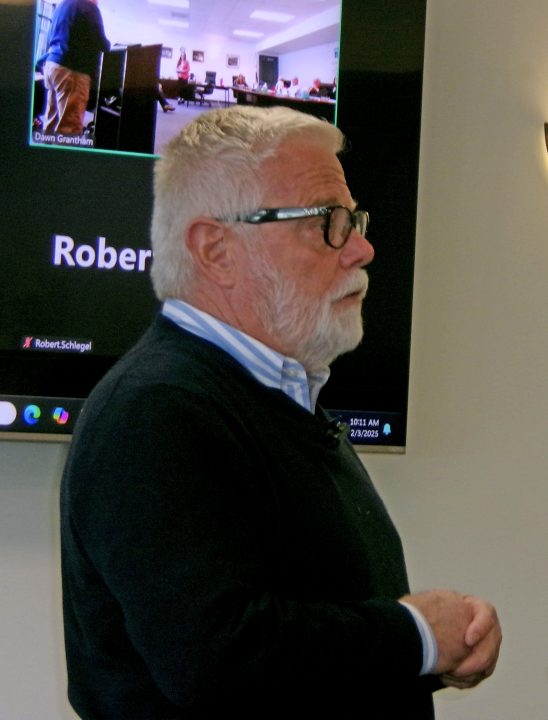
John O’Hanian addresses the Crestline Sanitation District board of directors. (Photos by Rhea-Frances Tetley)
Last summer several fires burned in the area because the cows had been removed by HV1 and the brush had not been cleared, so mechanical clearance by humans was not lowering the nitrogen numbers. HV1 claimed the cows were removed due to the presence of the arroyo toad, which could be stepped on by the cows. Crestline Sanitation board of directors member Sher Fairbanks pointed out the cows and the toads had been living on the property for over 120 years, in apparent harmony, and that removing the cows had upset that apparent balance, as well as the brush clearance aspect of the agreement.
Hesperia Ventures One wants CSD to sign a 100-year contract. The CSD will sign a 20- to 50-year contract and maybe a 100-year contract when their fears of liability and fines from the state are mitigated and their ratepayers are relieved from that financial pressure, as long as they conform to their requirements of providing the flow.
The CSD has built a treatment plant and is fulfilling their end of the deal, they said, but HV1 is not fulfilling its side at this time and apparently not accepting their responsibilities of the contract. So, until those elements are fulfilled by HV1, the CSD will not sign a 100-year contract with them, as HV1 has not proved yet to be responsible in fulling those contract elements they’ve already signed. They feel they are not getting any responses from HV1. Until this confusion is cleared up, the CSD has no intention of being in a 100-year contract with HV1.
John O’Hanian, the general manager of Hesperia Venture One, said he now realized how and why the lawyers’ letter created this misunderstanding and, since he wants to be partners with the CSD, for their mutual benefit, these issues must be cleared up. He agreed to go back and get a clearer understanding of needs of CSD and what the HV1 contract said.
“It appears we have had a failure to communicate,” said O’Hanian. They agreed to meet again in public session soon to clear up this confusion and to get these contracts which do benefit both sides defined and effective.
CSD board member Mike Harris said, “I would like to see action from Hesperia One and milestones met, as this is the year this needs to be solved.”
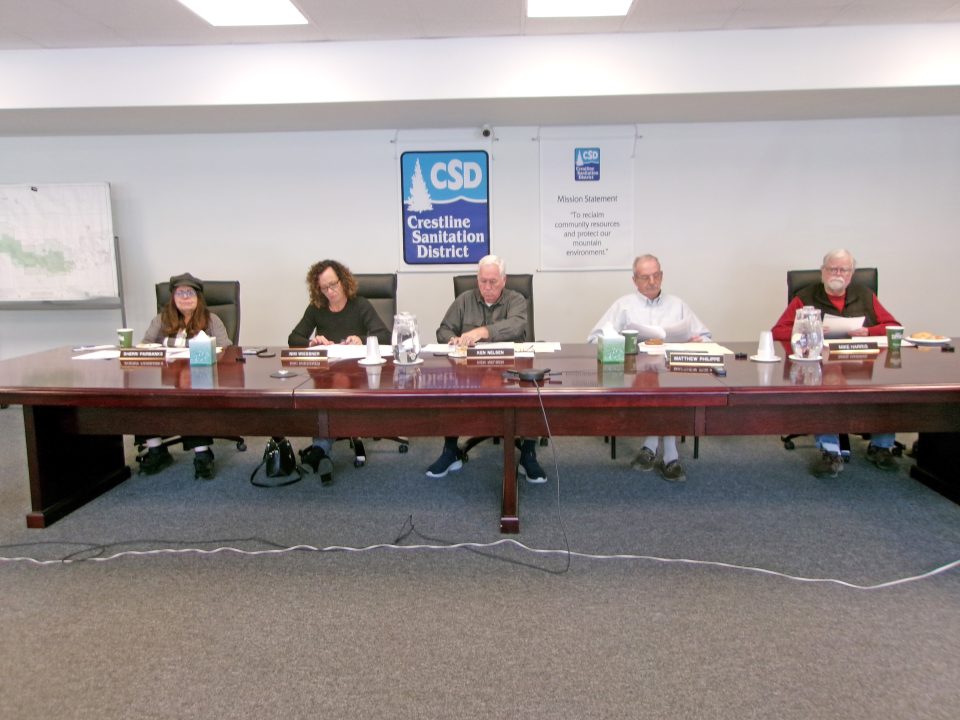
The CSD board of directors includes Chairman Ken Nelson and board members Sherri Fairbanks, Niki Wiessner, Mathew Phillippe, Mike Harris and General Manager Dawn Grantham, all of whom were in attendance. The room had numerous spectators and community members attending, as well.
The mission of the Crestline Sanitation District is to reclaim community resources and to protect the mountain environment.


0 Comments