


By Mary-Justine Lanyon
The South Coast Air Quality Management District has been looking at changes to its rules governing hot water heaters and furnaces for more than a year.
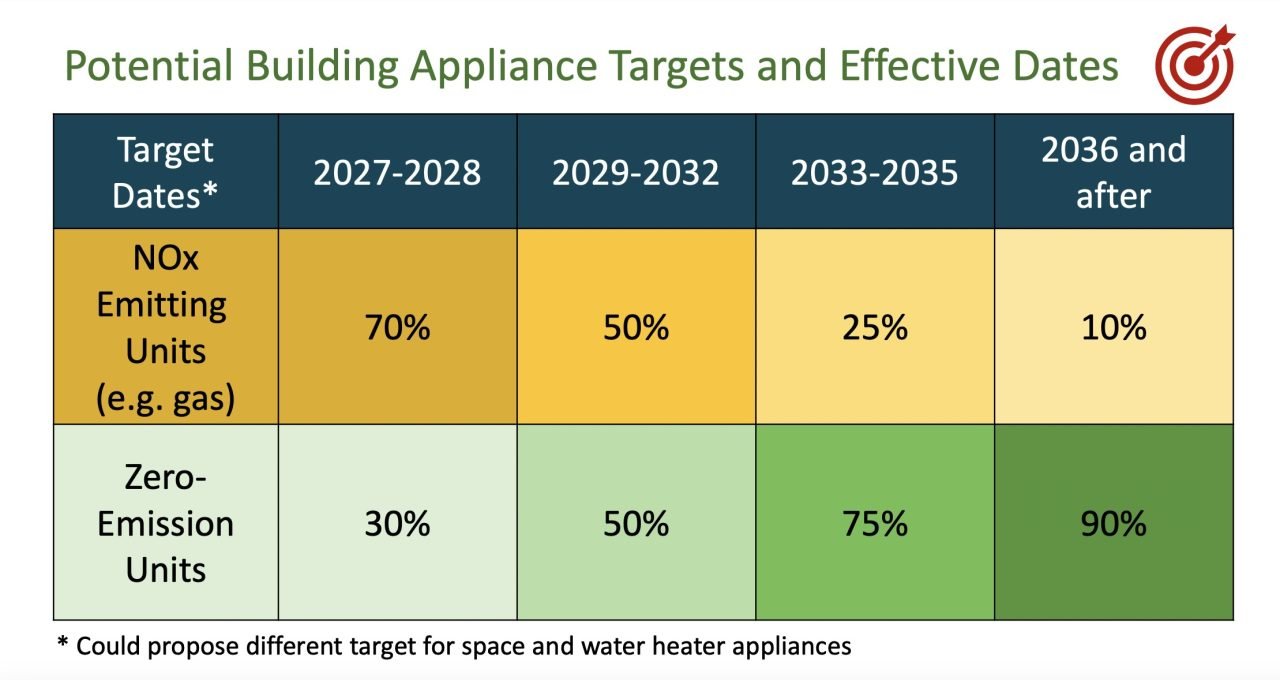
The target dates and percentages for switching to zero-emission units.
Last November, the Alpine Mountaineer published an article outlining the proposed changes to Rule 1111, which applies to residential and smaller commercial furnaces, and Rule 1121, which applies to residential water heaters.
The proposed changes would be made in an effort to comply with SCAQMD’s proposed zero emission limits, reducing NOx emissions. Under the changes, homeowners in the district’s boundaries would be required to replace gas furnaces and water heaters with electric units when the existing ones failed.
The air quality district heard from a lot of stakeholders about these proposed changes. In response, they pushed back the vote on those changes and have held what they call working groups to discuss alternatives.
A working group held online on Feb. 13 had 230 people log on to hear from the SCAQMD staff and express their thoughts and opinions.
Noting the district was formed in 1947 to “look into what was causing air pollution,” Michael Krause, the assistant deputy executive officer, said the “folks have been raising concerns on the approach we are taking. We take them to heart.”
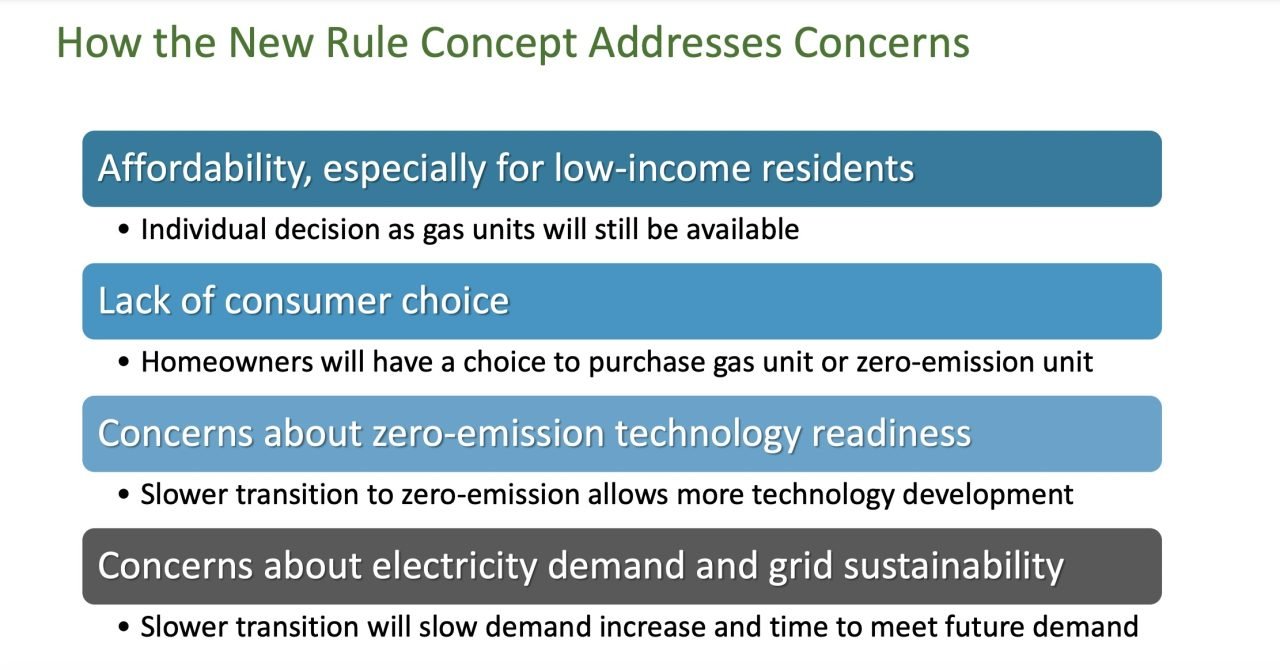
The overarching theme of those concerns, Krause said, was people felt the approach they were taking did not allow for consumer choice. There were also concerns about the affordability of installing the electric units and making the possible electrical upgrades that might be required.
Of the 250 comment letters received since a public workshop held last October, 20 percent supported the rule concept, 70 percent opposed it and 10 percent raised concerns and provided feedback.
“The way we initially proposed the changes did not address consumer choice,” Krause said. “We have to take a different approach, which is what we are doing now.”
The ultimate goal of the rules is public health. “We want to involve stakeholders, we want good rules, we want things that are reasonable and feasible,” Krause said.
During the Feb. 13 working group, Krause said, “we will present new ideas to regulate this equipment going into the future. We are bringing back consumer choice – the type of unit you want to install, what you think is affordable, what you want to purchase.”
The SCAQMD has also compiled a chart of target dates and percentages of gas units and zero-emission units sold.
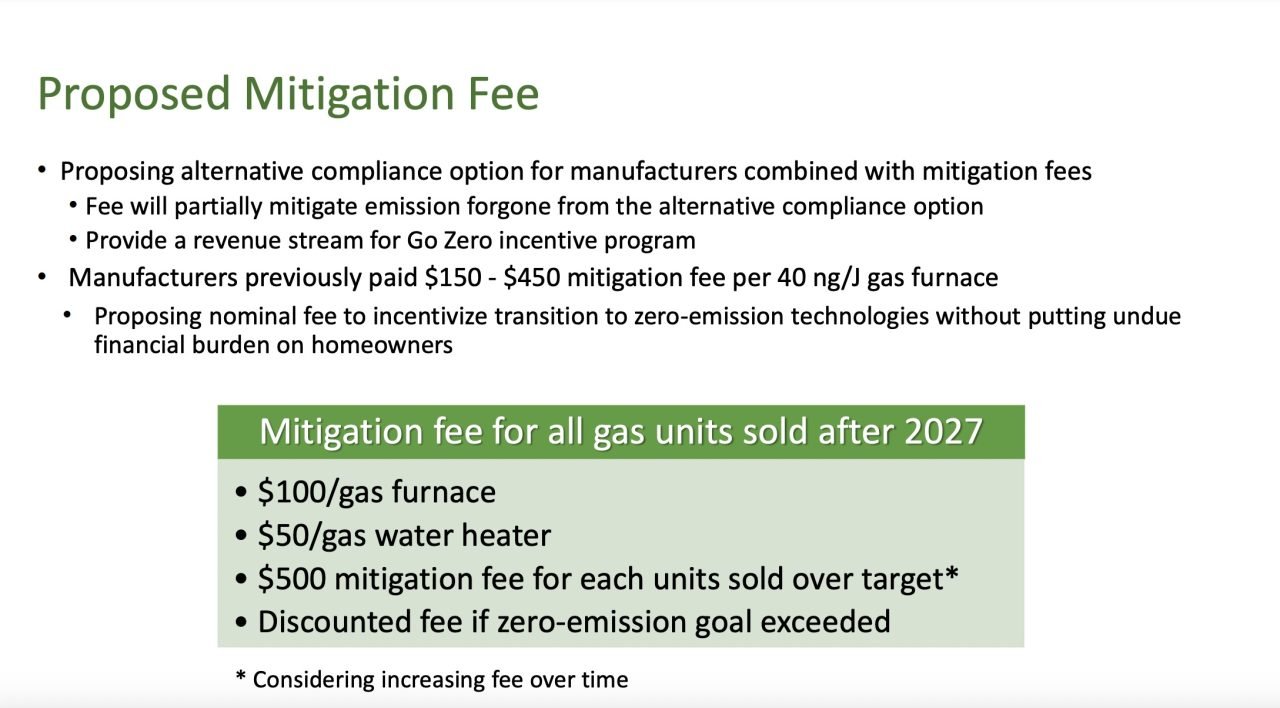
The proposed mitigation fees for replacing units with gas ones.
Hand in hand with consumer choice come proposed mitigation fees for gas units sold after 2027: $100 for a gas furnace and $50 for a gas water heater. In addition, they are proposing a $500 fee for each unit sold over those target percentages.
To help offset the cost of the zero-emission units, SCAQMD is launching a pilot rebate program called Go Zero. For a single-family residence, there would be a rebate of $1,000 to $3,000; for multi-family residences, $1,000 to $4,000 per unit up to a $300,000 cap; and the small business rebate would be $4,000 per unit.
For the past four or five years, the district has been charging manufacturers mitigation fees for higher NOx units as an incentive to get lower units in place. They are still charging those fees, Krause said, and will continue to do so. Those fees will fund the Go Zero program.
Opinions were sharply divided among the participants in the working group. Many applauded the district for compromising on the rule changes. Others expressed disappointment in them.
“You are to be commended for making the changes you have,” said one man. “The public has no idea of the impact the cost would have on them.”
But a representative from the Coalition for Clean Air said it “is disappointing to see we’re going for fewer emission reductions over a longer period of time. This was to be one of the largest emission reductions this agency has undertaken.”
And a representative of the Sierra Club urged the staff to “put a strong proposal before the board. Changes make the rules weaker. We’ve been educating people on these rules, which will move us toward the healthier community we all deserve.”
Local contractor Kory Griggs of Indoor Weather Heating, Air & Refrigeration noted that most people don’t know about the mitigation fees. “I know you have assumed the manufacturers pay those fees but that has never been my experience when mitigation fees have been charged. My distributors charge me and I pass them on to the customer. Are you going to set up a system where the manufacturer will pay? The public should know the fees are generally passed on to them.”
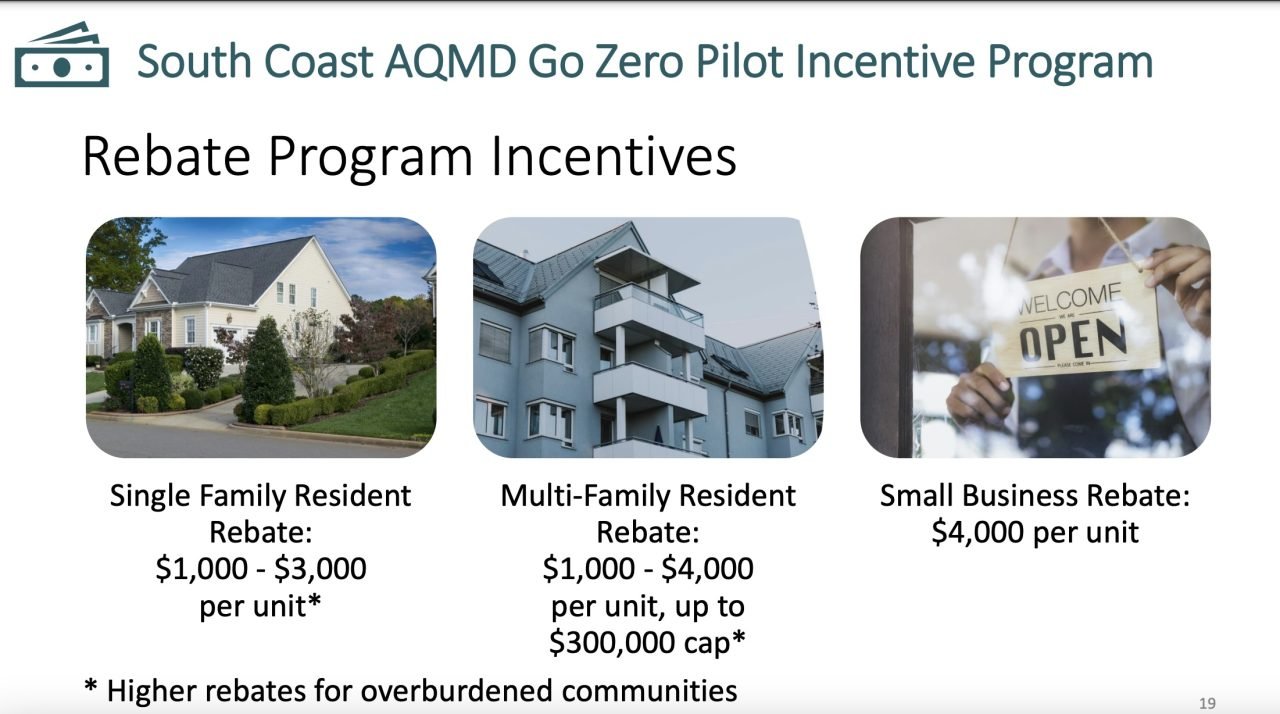
The Go Zero rebate program.
Another participant expressed concern about Southern California Edison being able to meet the increased demand for electricity. He suggested a low NOx natural gas option be offered.
And another said that SCAQMD is “putting the onus on the manufacturer to sell the consumer something they don’t think they need and will cost them more money. There is concern about how long these units will last and how reliable they are for the homeowner.”
Repeatedly during the working group, Krause reiterated that these new proposed rules “put the choice back in the consumer’s hand.”
Currently a public hearing is scheduled for May 2. For more information, visit https://www.aqmd.gov/home/rules-compliance/rules/scaqmd-rule-book/proposed-rules/rule-1111-and-rule-1121.



0 Comments