



By John Soares
Special to the Alpine Mountaineer
Nestled in the San Bernardino Mountains, Lake Arrowhead is a picturesque destination known for its scenic beauty and serene atmosphere. While it has long been a favorite retreat for nature lovers and outdoor enthusiasts, the area’s charm has also made it an ideal backdrop for a variety of films.
The combination of the lake, surrounding forests and mountainous terrain offers filmmakers a versatile setting that has captured the imagination of directors and audiences. From sweeping dramas to quirky comedies, Lake Arrowhead’s cinematic legacy continues to grow.
Though not widely recognized today, The Squaw Man (1914), directed by Cecil B. DeMille, was the first feature film shot in California and helped establish the state’s dominance in the film industry. The story follows James Wynnegate, an English aristocrat who flees to Wyoming to escape a false charge of embezzlement. He rescues and falls in love with Nat-U-Ritch, the daughter of a Ute tribe chief. Their love story captivated audiences and helped cement Lake Arrowhead’s place in film history.
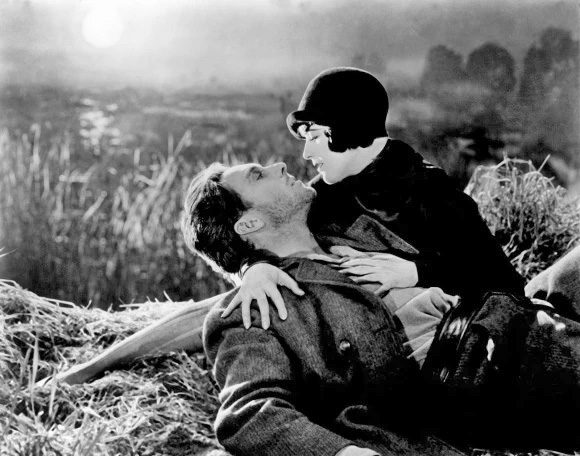
Not every film made in Lake Arrowhead is as unknown as The Squaw Man, however. Easily the most iconic film of the silent era, Sunrise: A Song of Two Humans (1927), directed by F.W. Murnau, is widely considered one of the greatest films ever made. Set against the picturesque landscapes of Lake Arrowhead, Sunrise was groundbreaking for its cinematography and use of the Fox Movietone sound-on-film system, making it one of the first feature films with synchronized music and sound effects.
Murnau, a leading figure in German Expressionism, already known for 1922’s Nosferatu, designed enormous, stylized sets that create a fairy-tale world, with the city street set alone reportedly costing over $200,000 to build. Much of the film’s exterior shots were filmed at Lake Arrowhead. The film is celebrated for its innovative tracking shots and the extensive use of forced perspective, where normalsized people appear larger than smaller sets in the background, creating a dream-like quality.
Sunrise won the Academy Award for Unique and Artistic Picture at the first Academy Awards in 1929, and it remains one of the most influential films in history.
While Sunrise used Lake Arrowhead to create a dreamlike, expressionist world, Shirley Temple’s Heidi (1937) turned the landscape into a picturesque stand-in for the Swiss Alps. During production, Temple faced a challenge when filming a scene in which her character is butted by a goat. Temple initially performed the scene herself but, after a few takes, her mother intervened, insisting that a double be used for safety. A young boy, an extra on set, was dressed to look like Temple, but his father was so upset by this that he prohibited his son from acting again. The incident gives us a window into how little oversight existed in the 1930s concerning child safety in the film industry.
Decades later, using the same landscape to set the stage, another film would capture a different kind of family story. One of the most beloved films associated with Lake Arrowhead is Disney’s The Parent Trap (1961), starring Hayley Mills in a dual role as twin sisters. Filming took place in various locations in California, with key scenes shot at Bluff Lake and Cedar Lake Camps in the San Bernardino Mountains.
The house set for the Monterey home was built at Golden Oak Ranch in Placerita Canyon. Its iconic design continues to attract attention, with the Disney Archives frequently receiving requests for its plans.
For over a century, Lake Arrowhead’s stunning landscapes have served as a canvas for Hollywood’s imagination from the beginning of the art form, and this trend shows no sign of slowing down. From the silent era’s grand experiments to comedies, family classics and modern productions, its serene waters and towering pines remain as captivating as ever. As long as filmmakers seek settings that blend untamed beauty with cinematic magic, Lake Arrowhead will continue to leave its mark on the silver screen – just as it has since the dawn of California’s film industry.
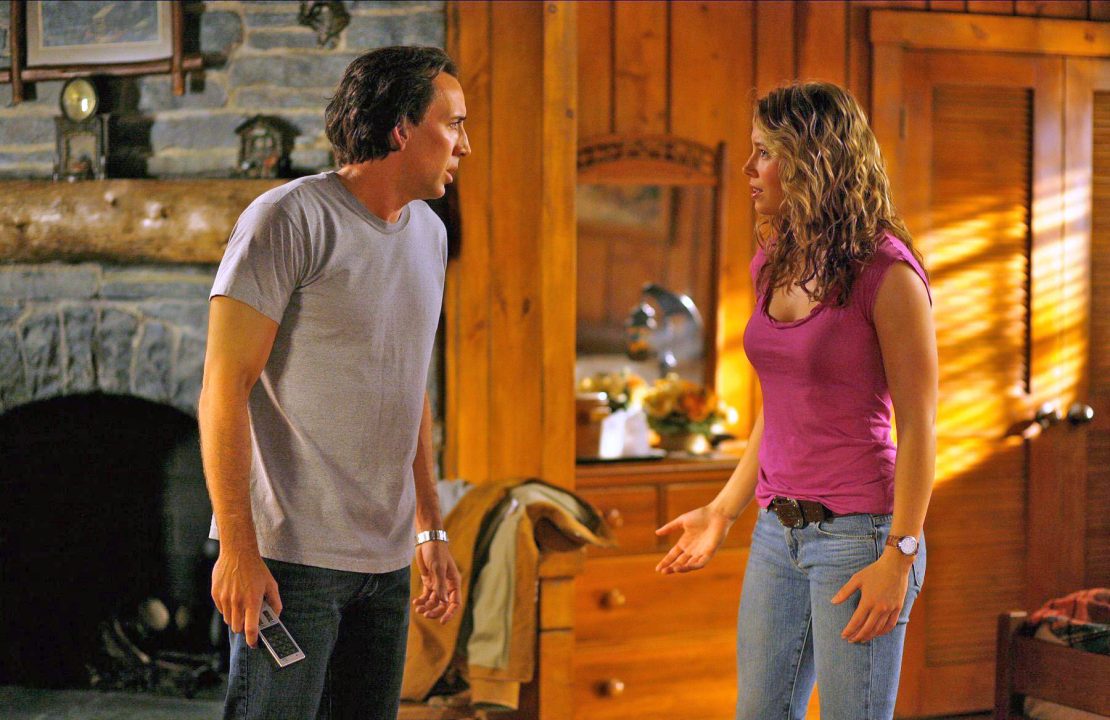
Nicolas Cage and Jessica Biel in NEXT (2007)
Lake Arrowhead’s stunning landscapes have found their way into many other films – early films like The High Hand (1926) to more recent projects like Nicholas Cage’s NEXT (2007). Its natural beauty has made it a go-to location for filmmakers seeking the perfect backdrop for over a century, and this shows no sign of slowing down as Lake Arrowhead continues to attract film productions. It’s clear that Lake Arrowhead will remain a cherished filming destination for years to come.
John Allen Soares is an Emmy-nominated animation editor, independent filmmaker and Catholic religious consultant for film and television. He is also the writer and director of ultra-low-budget films such as The Danger Element and Eonblade.




0 Comments