


By RHEA-FRANCES TETLEY
Historian
Henry Guernsey died 101 years ago, in March 1924. Well-known during his lifetime, which was fraught with disasters and spectacular highs, he bought and sold sawmills, got injured, healed, lost lawsuits and named a town.
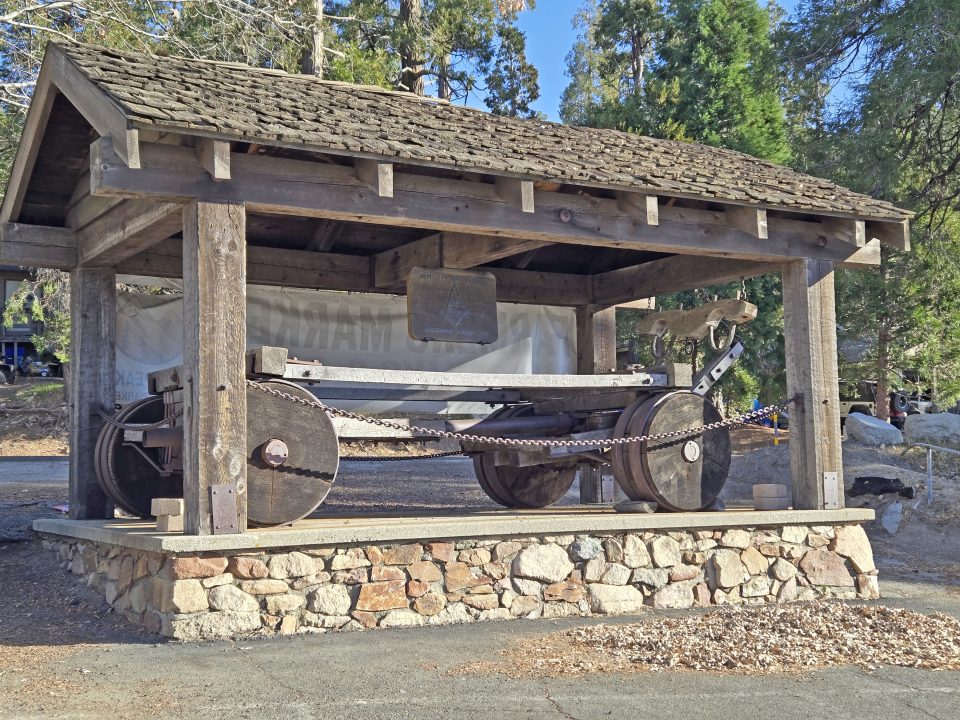
The style of lumber transportation wagon that Guernsey probably was driving when he crashed is on display on Highway 189 in Twin Peaks; the wagon was restored by John Dexter. (Photos from Rhea-Frances Tetley’s photo collection)
Henry Allen Guernsey was born in 1844 in Pennsylvania. After serving in the Union Army in the Civil War, Guernsey moved to Oregon, where he learned the logging industry, then moved to the San Bernardino Mountains in the 1880s.
Guernsey spent the four decades he was on the crest, owning or leasing property from the Cajon Pass to Little Bear Valley. Guernsey’s reputation was for cutting and delivering high-quality lumber, used for construction, furniture and later the popular fruit crates for transporting fruit from the valley’s orchards.
However, operating lumbermills and box companies with mills in Little Bear Valley, Seely Flats, Huston Flats and Dark Canyon (aka Dart Canyon) was not without occasional challenges. All the mills were frequent victims of fires, from their own chip and sawdust burners or from wildfires. The wildfires in 1896 and 1900 destroyed or damaged several of Guernsey’s mills.
Unfortunately, in 1903 Hans Pearson, one of Guernsey’s workers, was severely injured by a broken chain in one of the steam-powered sawmills, causing Guernsey distress. Pearson was eventually awarded $2,000 by the courts (approximately $72,000 today). Guernsey also went through a couple of insolvency hearings but he still managed to pay and to survive, by selling sawmills and tracts of land to stay afloat. It was common to sell timber tracts between the lumbermen, as they cut different tree types, various pines, cedar, oak, for different uses, such as firewood furniture, shingles, boxes, etc.
Henry Guernsey himself was badly injured when a load of lumber he was driving down the Twin-Creek Mountain Turnpike overturned.
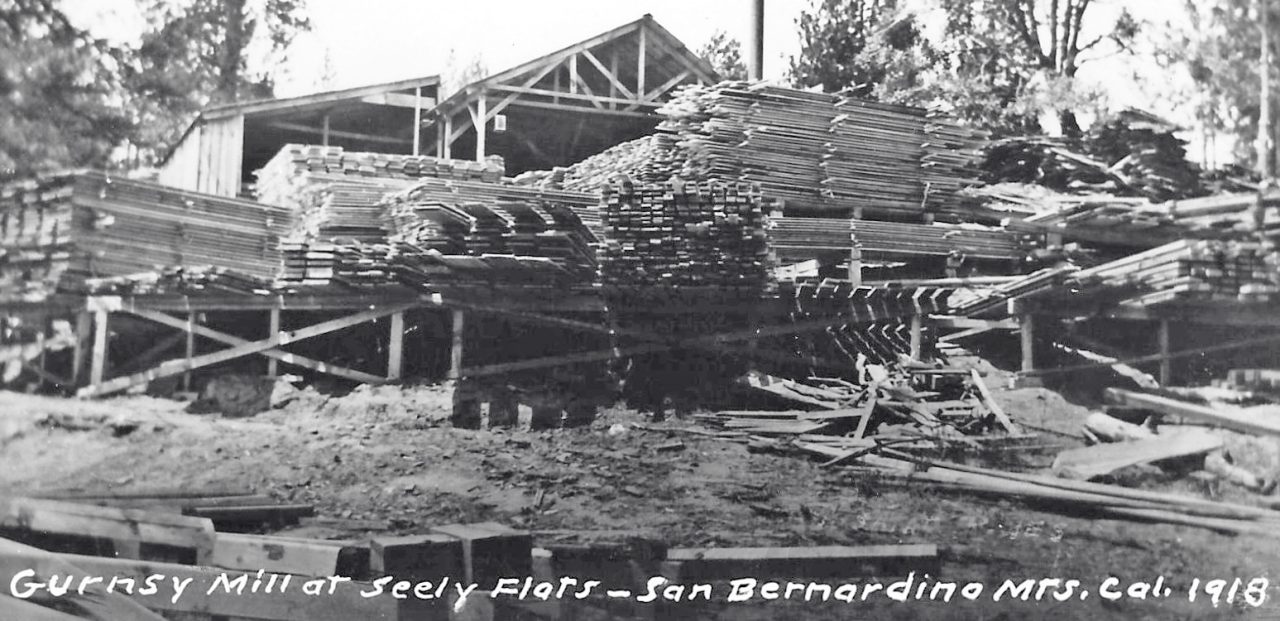
The Guernsey Sawmill in 1918 on Seely Flats in current day Valley of Enchantment.
In 1905 San Bernardino County purchased the logging toll roads from the various lumbermills, including the Arrowhead Reservoir Toll Road from the Arrowhead Reservoir Company, which was building the reservoir that become Lake Arrowhead, that went through Waterman Canyon to the crest. This encouraged a group of Redlands businessmen, headed by Arthur Gregory, to purchase Henry Guernsey’s San Bernardino Lumber & Box Company and some of his land in the mountains for about $12,000.
In 1906, the county opened the former Arrowhead Reservoir Road as a free public road to reach the crest. This free access road encouraged Henry Guernsey who had some “sawed-over” lands on the crest near the new road, to decide to sell his land to “vacationers” for camping. He laid out roads, cabins and campsites. He held a contest to rename his crest area, which was then known as “Fly Camp” (for the corrals located in the area creating manure aka fertilizer, which supplied the floral green houses in the valley), as that nickname was unappealing to vacationers.
Dr. Wesley Thompson won the contest by submitting the name “Crestline” for Guernsey’s “Summer City in the Pines.” That name “Crestline” was later chosen by Skyland Heights Postmaster Samuel Dillin when he relocated the Skyland Heights post office to his store on the crest in 1919, bringing pride to Guernsey.
The devastating wildfire of 1911 burned the mountain’s south face up to the crest, destroying the abandoned incline railway to Skyland, incinerating Guernsey’s Skyland home and some of those new “Crestline” cabins, Horseshoe Bend, the main lodge at the private Squirrel Inn and threatened Dr. Baylis’ new Pinecrest buildings, burning down its South Park Lodge. However, Guernsey saved his Dark (Dart) Canyon sawmill by lighting backfires during that 11-day-long 1911 wildfire.
Henry Guernsey died in March of 1924 after a life full of achievements, with a positive overall reputation, changing the mountaintop landscape, including choosing the name for Crestline.



0 Comments