


By Rhea-Frances Tetley
Historian
Part 3 of 3
Frank (Francis LeBaron) Talmadge operated a successful lumbering business in the San Bernardino Mountains from the latter 1860s into the 1890s.
In the 1880s, an agreement was made between the lumbermen to set prices that would be fair to all. In 1881, the price for common lumber was set at $27 per 1,000 linear feet and the price for clear lumber was $35. That year was very successful as the mountaintop sawmills milled about four million feet of lumber, with most of it sold before it ever reached San Bernardino.
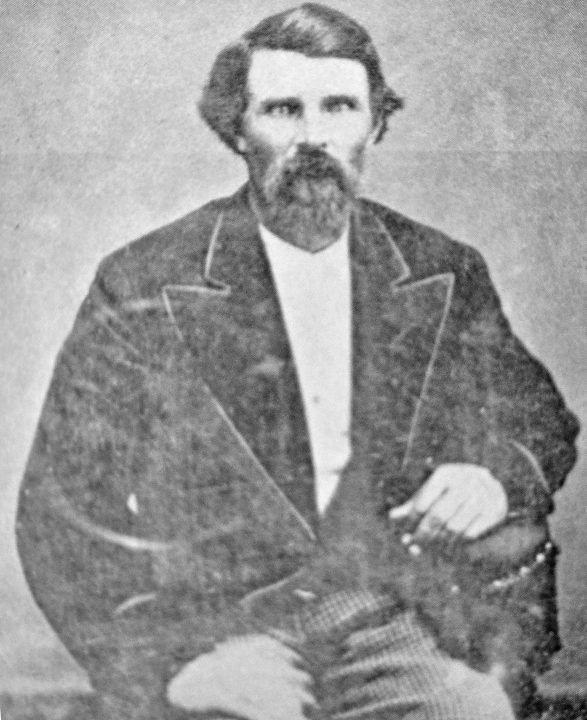
frank talmadge 1
The sawmills of William La Praix, Ernst Somers, Hudson & Taylor, the Tyler Brothers and the Talmadge family produced over six million feet of lumber in 1883.
Getting the lumber to market was still a significant issue because of the poor access roads. In 1887, a railroad for transporting lumber down the mountain was proposed. Talmadge, along with La Praix, the Tyler Brothers and John Waters, formed a company to build a rail line down to San Bernardino from Little Bear Valley. The first two miles of the narrow-gage line was constructed in San Bernardino, paralleling Baseline Avenue. It was designed to go up Waterman Canyon to the crest, then turn east to Little Bear Meadow, where the Talmadge Mill was located.
The project was not successful, not even a rail bed up the mountain was ever constructed. The problem was Waterman Canyon. Robert W. Waterman, who was then California’s governor, didn’t want any roads built up his canyon and possibly polluting his water.
It was only a couple of years later, in 1891, after Governor Waterman had retired and died, that the Arrowhead Reservoir Company (ARC) announced they had purchased all the land in Little Bear and Grass Valley and intended to create a water project on the land. The financially flush company also purchased a right-of-way through Waterman’s canyon and built a toll road to the crest of the mountain.
Talmadge’s property was included in the ARC land deal, ending Frank L. Talmadge Sr.’s logging business, and he retired to Victorville. His reputation as a pioneer lumberman, Indian fighter and wagon train scout preceded him. He and Nettie were welcomed and became well-respected members of the community, until her death in 1910 and his, at the age of 88, on Nov. 12, 1918.
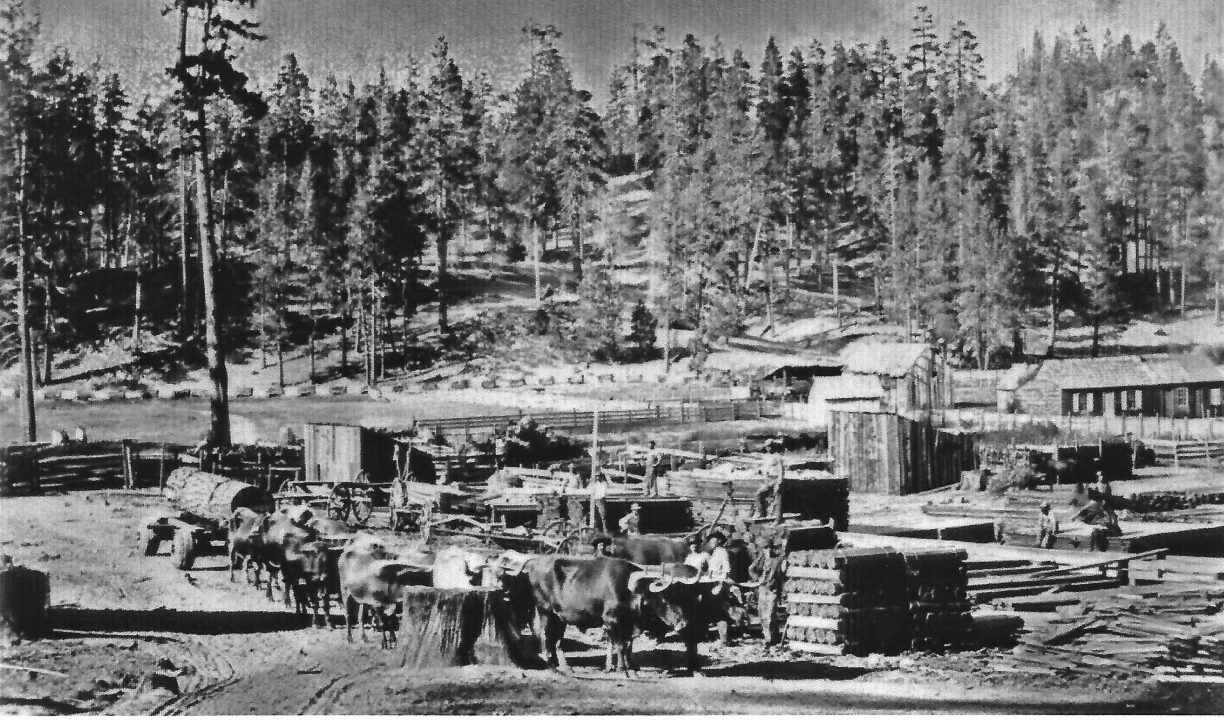
The Talmadge mill in 1892.
Talmadge’s sons stayed on the mountain, running herds of cattle in Big Bear until the area became too populated for grazing. All the family was respected. When Will’s two sons drowned in Big Bear Lake, in 1909, over 600 people attended the funeral in San Bernardino. In 1923, the brothers sold part of their 750,000-acre IS Ranch to developer Albert Spalding, who developed the area now known as Moonridge in current-day Big Bear.
The IS Ranch houses were located at what is now the intersection of Big Bear Boulevard and Tulip Lane. It was retained until 1943, when John (Peg) Talmadge sold it. The family continued to ranch by leasing grazing land. Through the mid-1950s, the cattle drives collected the cattle from across the San Bernardino Mountains, drove them down the north side, through the Cajon Pass and over to Whitewater, near Palm Springs, for winter. The roundups continued the family tradition of big parties and fun, including daytime cattle branding and nighttime dancing.
The Talmadge sons lived long lives in the San Bernardino Mountains. Oldest son Will (Teet), was 83 when he died in 1945. Middle son John (Peg) lived to be 91, dying in 1955, and the youngest son, Frank Jr. (Fish), died at age 83.
The Talmadge family lived in the San Bernardino Mountains for almost 100 years, impacting its history significantly.
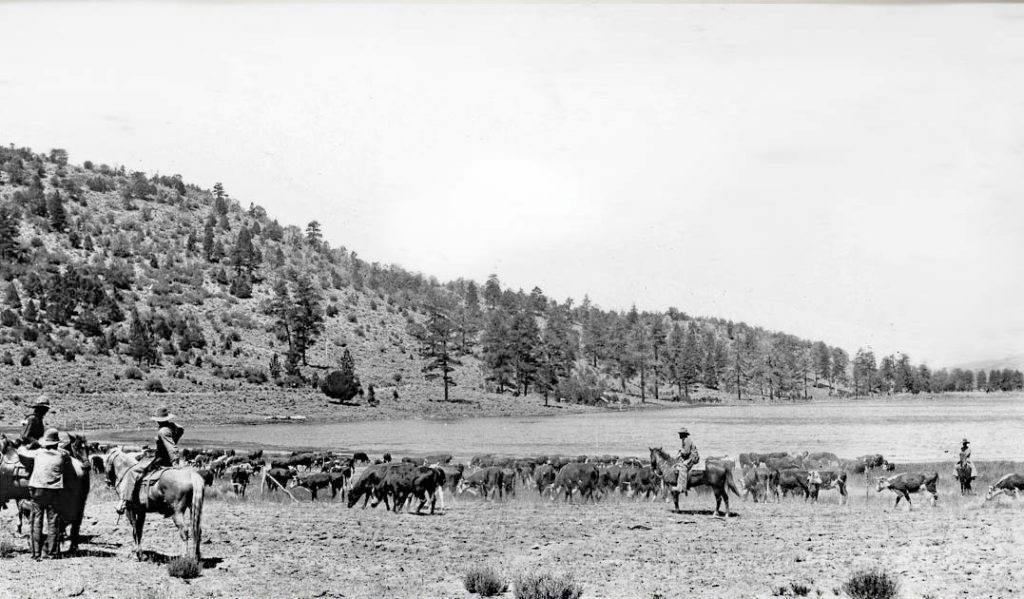
The Talmadge sons raised cattle on the IS Ranch in the Big Bear area, here at Baldwin Lake.



0 Comments