




By RHEA-FRANCES TETLEY
Historian
The Little Bear Reservoir project by the Arrowhead Reservoir and Power Company (A.R.&P.C.) was moving forward despite Hesperia, located on the northside of the mountains to where the water naturally flows, suing them, asserting its water was being stolen.
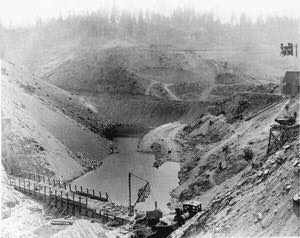
Building the dam
The project had overcome numerous setbacks since 1891, but work had been accomplished. By 1907, the dam was 90 feet tall. The 189-foot-tall outlet tower to connect to the Willow Creek tunnel began in 1907 and completed in July 1908.
In 1908, the Miller-Lux court decision, based on riparian water rights, said water could not be diverted from a natural watershed for any reason. This motivated another lawsuit by the Hesperia Land and Water Company to stop all the diversion of water that would naturally flow to their area to San Bernardino.
In 1911, Victorville’s Appleton Land and Water Company also sued, saying A.R.&P.C. was usurping downstream property owners’ water rights. The landmark 1913 decision, ironically by San Bernardino’s Superior Court, ended the A.R.&P.C.’s 20-year-long irrigation water project, just as the dam reached the 160-foot height. The tunneling projects were immediately halted as water diversion was now prohibited, but the lake was already half-filled.
James Edmund Mooney was the only original Cincinnati water project financier who had seen it through to completion. Because of Mooney’s advanced age at 82, he did not have the time or ability to completely fight that 1913 decision.
Instead, Mooney decided to develop the lake into a prime recreational and private fishing resort. He then leased the boating and other concessions to local businessmen, including Gus Knight of Big Bear, creating a recreational destination.
The 1915 fishing season at the lake began just as Rim of the World Drive opened to auto traffic, resulting in thousands of anxious fishermen lining the shores of the private lake, breaking down fences. Twenty-seven were charged and fined $131 each and a compromise was reached to allow the public to fish on one-and-a-half miles of shoreline.
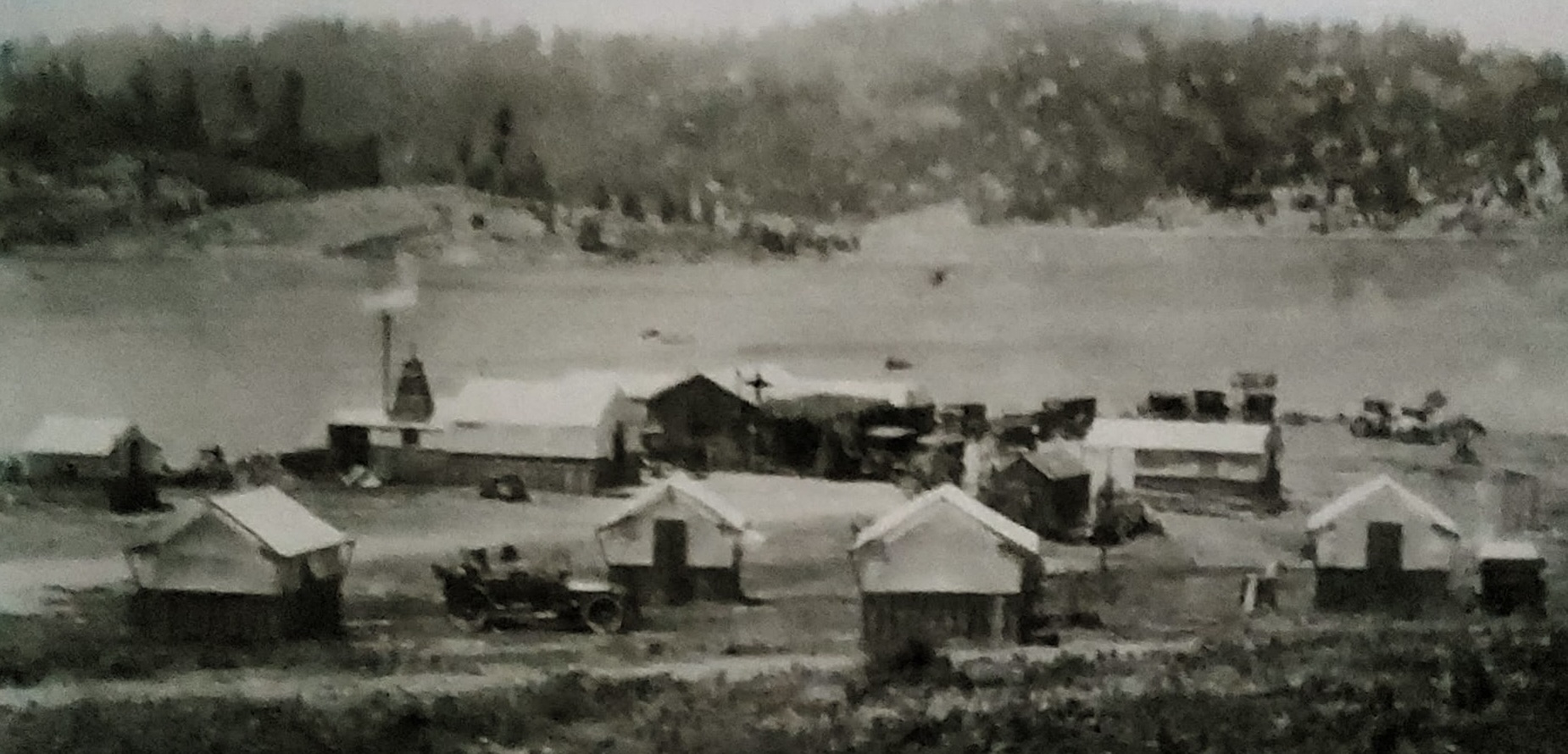
Little Bear fishing resort 1916
In 1916, Mooney capitalized on fishing, opening a 150-bed hotel, a campground and rental cabins, while the A.R.&P.C. began selling excess land purchased for the large water project, including the Huston Flat area, to Arthur Gregory to build fruit crates. The Little Bear Lake post office opened in 1917. By 1918, the rustic Little Bear Fishing Resort was the most popular in Southern California with five miles of shoreline open to the public. Financial return was finally a possibility.
James Mooney’s background: He was born in 1832 in Indiana and began working at his father’s leather tanning business at age 13, saving his earnings. Later he established a successful general store, eventually buying out the family’s leather business. In partnerships with family members, he expanded his vision, founding the First National Bank of Columbus, Indiana.
Mooney’s investments continued to grow as he moved to Cincinnati, Ohio, the center of the business world in 1875. Mooney believed in the American ideal of honest hard work and personal responsibility, known in his day as “Industry and Integrity.”
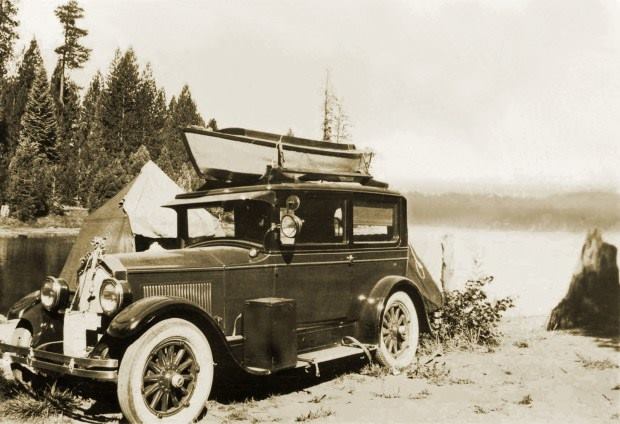
Camping at Little Bear Lake 1915
Mooney, 43, invested in Cincinnati’s Mount Adams Incline and Railway Company, which was completed in 1883, one of the first cable car companies, an idea he tried to adapt for use in California. Mooney also invested in the Union Gas and Electric Company of Cincinnati, an early electric company in America, later engineering the Little Bear dam to produce electricity. He would apply whatever he learned to other industries, increasing his fortunes.
Mooney visited to supervise the Little Bear Lake project many times over his 35-year involvement, building a cabin at Squirrel Inn. He felt a special relationship with the project, eventually investing $20 million, despite receiving no financial return on his investment.
Overall, Mooney was involved in about 50 diverse and profitable business ventures during his lifetime. His death on September 5, 1919, at age 87 in Cincinnati was from the 1919 worldwide flu epidemic.



0 Comments