




By RHEA-FRANCES TETLEY
Historian
Several families are traveling together in heavily laden wagons to take a multi-week camping trip to Kuffel Canyon near Little Bear Valley to escape the sizzling late-summer, early-fall days of 1905. The horse-drawn wagons are fully packed with everything they might need.
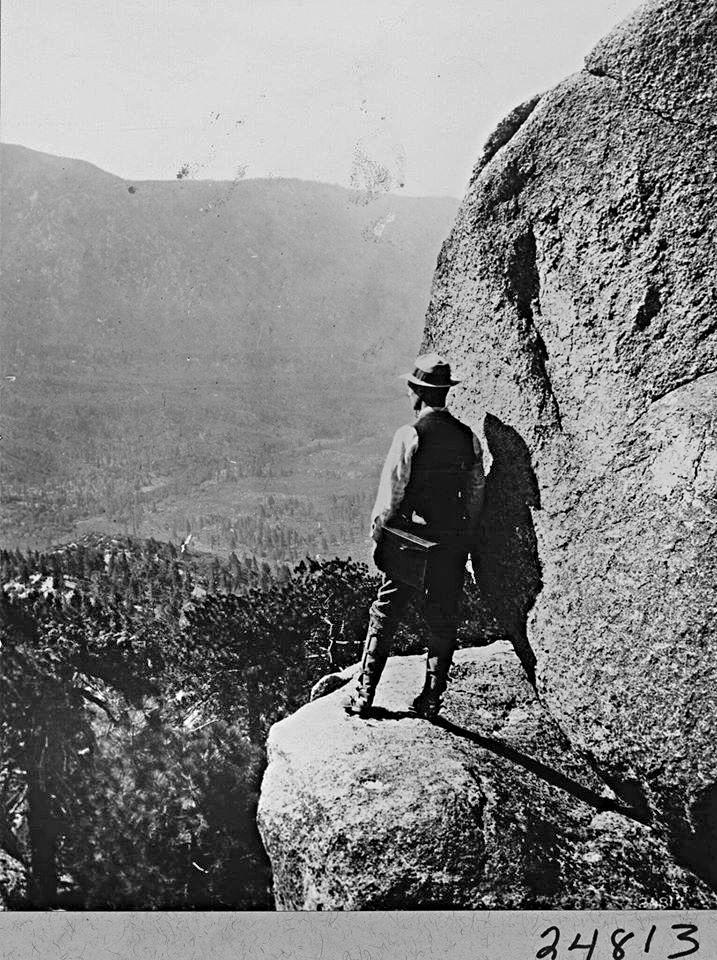
View of the valley from Sphinx Rock
They’re traveling up upper Waterman Canyon, where Laurel Turn and Panorama Point were favorite spots to rest, along the switchbacks, both for the view and to feed the horse teams pulling the wagons. Everyone stopped at Oak Flat, which preceded the final steep grade before the summit, which required at least four horses to pull each wagon, sharing their teams alternating going up the grade.
It would be 7 a.m. the second morning when they reached the crest at Mormon Springs, with water troughs, shade, areas to feed horses, plus near the cool creek was a great location for breakfast.
After breakfast the children would continue walking alongside the wagons while doing things kids do, such as throwing rocks at squirrels, birds and lizards. The grade was strenuous until Skyland was reached. By 1905, there were already a few private summer cabins in the Skyland/Horseshoe Bend area, as it was the first to be developed into a vacation destination.
The road met the crest at Sphinx Rock. They stopped to enjoy its magnificent view of San Bernardino, its streets and other landmarks, easily identifiable with the ocean beyond. The road now veered back into the forest, traveling past the Squirrel Inn, that exclusive club for the rich, then slowly passing Strawberry Flats tent cabins, where another watering trough awaited. After resting, the journey continued carefully down the long Applewhite Grade and into Blue Jay Canyon, finally reaching lower Kuffel Canyon by late afternoon after 40 hours of travel.
Their camping destination was a beautiful flat-floored canyon area, with a stream and a spring not far away, with a meadow for the horses to graze. However, it would still be a long time before relaxation could begin. Quickly, before it got dark, tents were set up and essentials were removed from the wagon, before taking a well-deserved night of rest.
The next morning one wagon was taken to the sawmill to get boards for tent floors and even walls for some of the tents. This multi-family community would last several weeks, intending to outlast the sizzling valley heat, returning for harvest time.
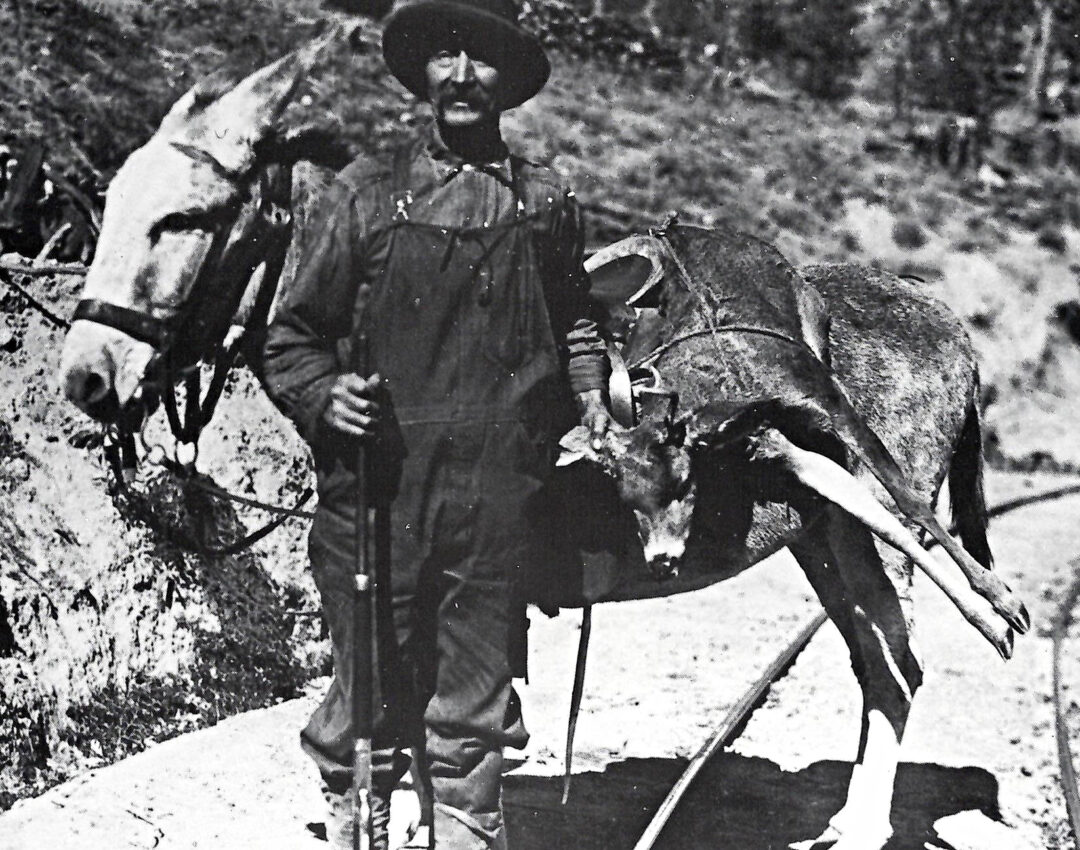
The end of a successful hunting trip
By the time camp was fully erected it would be almost nightfall again. The younger children spent the day collecting firewood for the cook stove, with the older ones getting logs for the big evening campfire.
Those mountain days were spent learning about plants, animals, survival in the wilderness, performing chores to sustain the group and relaxing, a genuine rare pleasure. During the evening’s campfire, everyone would sit around singing songs; adults might tell their family history of getting to California and share family heritage from generation to generation.
Deer would be hunted by the men which could provide food for everyone for several days and then be dried into jerky. Fishing was for food and the fishing teens might spend days away from the watchful eyes of the adults at camp. The older boys often spent their days horseback riding and hiking, sometimes going down to the sawmills, watching the lumbermen clear the land that would someday be under the water of the future lake.
After several weeks of relaxation, everything they brought would be packed back into the wagon, and the return trip down the mountain attempted. The return trip took almost as long as the uphill trip, plus there was the danger of a runaway wagon on those steep grades.
This 1905 wagon vacation trip into the mountains, despite the travel time and hard work, was considered a relaxing, fun time, out of the sizzling valley heat, much envied by others – a delightful vacation.
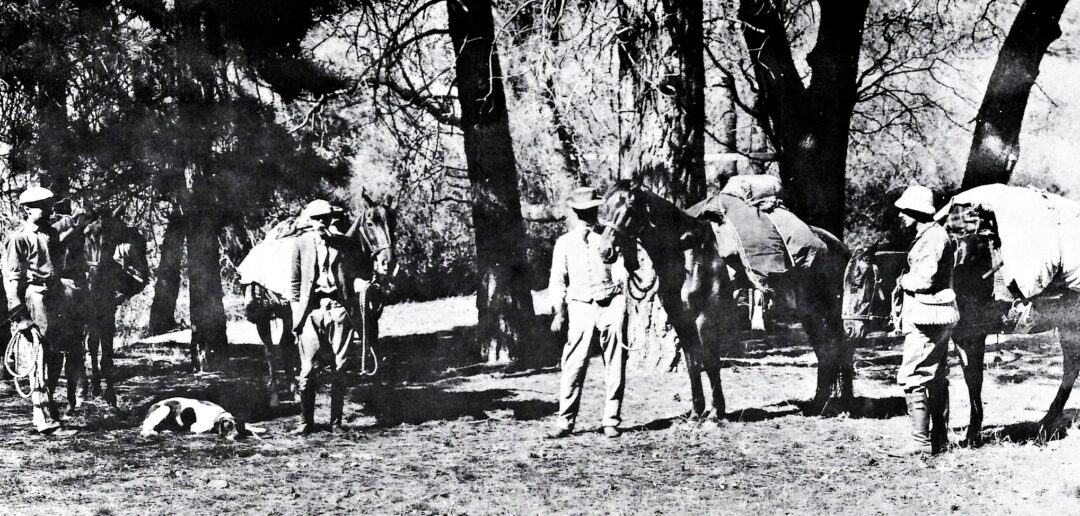
A fishing trip to Deep Creek



0 Comments