




By RHEA-FRANCES TETLEY
Historian
Camping, vacationing, lumbering and water resources were the main ways the forest and mountains were expected to be used, according to John S. McGroarty’s 1914 book, The History of Southern California. The book describes the mountains as a perfect location for resorts, camping, fishing, vacations and as a natural resource for the growing county.The History of Southern California was published the year before the 101-mile ‘Rim of the World Drive was opened to full-time auto use, but access by auto stage and some hours of travel in personal motorized vehicles on the dirt roadways were already in progress. The mountains were a resource for water and the incomplete Little Bear Reservoir project (Lake Arrowhead) was expected to send water to San Bernardino.
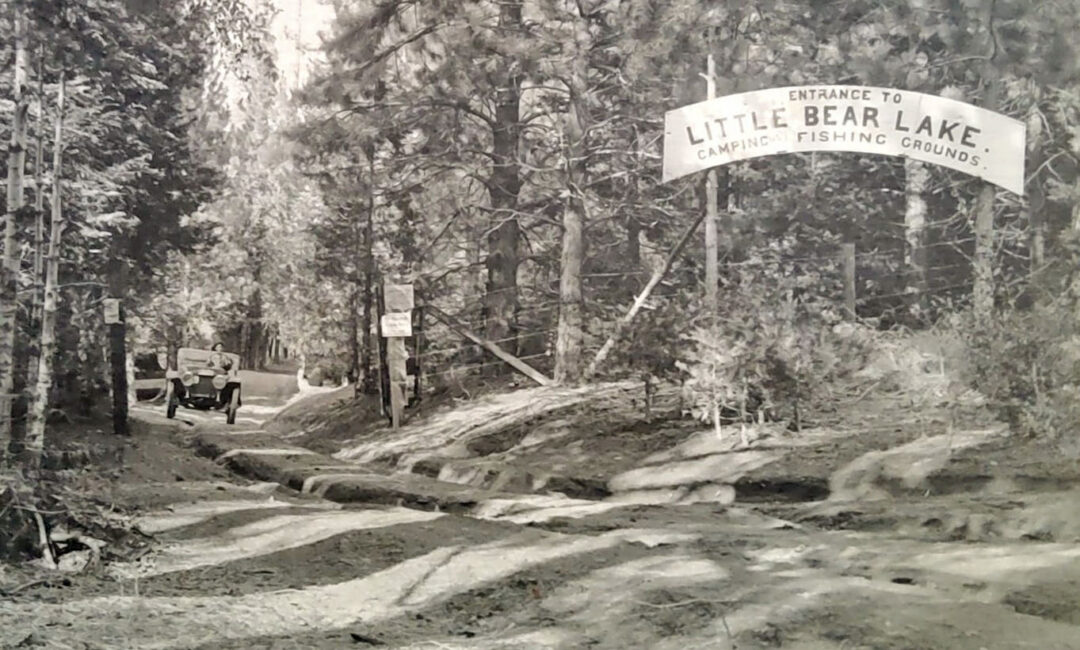
The sign to Little Bear Lake welcoming visitors
San Bernardino County was an agricultural area focusing on the production of cattle, fruits and vegetables, and wine. The county had a growing population of 56,706 people, and boasted over 15,000 horses, 25,000 sheep and it produced 770,000 dozen eggs a year. Those hard-working residents wanted relaxation and to escape during the sizzling summer heat.
The mountain districts, McGroarty said, “are but sparsely settled and no great attempt at their development has been made, although there are 600 acres of apple trees producing as fine apples as are grown anywhere. When the problem of transportation is solved, hundreds of pioneers may find homes in the valleys and meadows of the mountains.”
Many campgrounds and resorts had been established including Thousand Pines, Pinecrest, Squirrel Inn, Skyland Campground and Resort, Fredalba and several in the Big Bear Lake area. Numerous tent campgrounds spontaneously sprang up each season, with 1914 as the summer that the Strawberry Flat summer tract was opened by the Forest Service for the first time.
The mountains provided a close recreational get-away. The county supervisors had purchased the toll road routes and commissioned Crest Drive wagon road to be built along the mountain’s southern rim. The San Bernardino Mountain Crest Drive was to extend from west to east along the summit with scenic views from 5,000 to 11,275 feet above sea level.
The next year, after lobbying by Dr. John Baylis, owner of Pinecrest Resort, its name would be changed to Rim of the World Drive, when it opened to private automotive use.
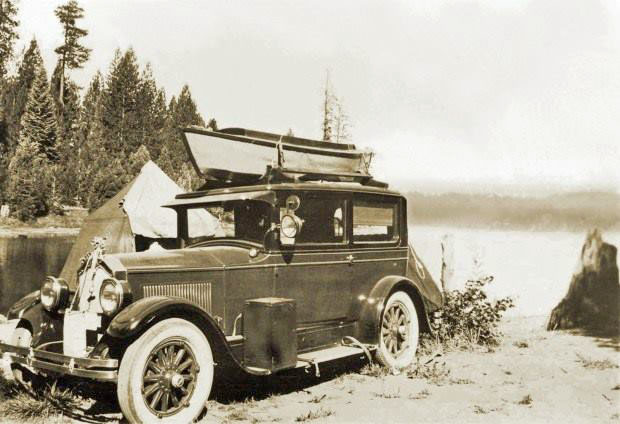
Car with tent camping at Little Bear Lake.
“The county supervisors have expended thousands of dollars to reach the crest of the mountain, reaching many of the magnificent summer resorts which are located there,” the book extols.
“The drive is open all the year to all vehicles. One may leave San Bernardino by automobile and in an hour or so traveling over this magnificent road, be enjoying such vistas as can be found nowhere else in the world!” Auto stage lines began running in conjunction with the Pacific Electric and Santa Fe Railroads, making daily trips over this drive. Those who have traveled all over the world have repeatedly stated that, for grand and beautiful mountain scenery, the San Bernardino Mountains viewed from “Crest Drive” are unsurpassed. “No visitor to California should fail to make the trip.”
Campers in those days experienced the “real out of doors” using sleeping bags on the ground or in tents. Others came with mattresses from home, tied to the side of their wagons, as most stayed for weeks after making the long 20 to 25-mile trek up the mountain.
To experience “upscale” out-of-doors camping, tourists made or rented outdoor beds. These off-the-ground beds were considered the ultimate in fresh-air sleeping satisfaction. These beds (wood or metal cots really, with a two-inch cotton mattress) were a great improvement over a sleeping bag.
Fresh air, rustling leaves, maybe a brook nearby coupled with the scurrying feet of furry forest creatures made mountain camping the ultimate in vacation relaxation.
Rim of the World Drive to Big Bear went through Green Valley until 1924.



0 Comments