



By DOUGLAS W. MOTLEY
Senior Writer
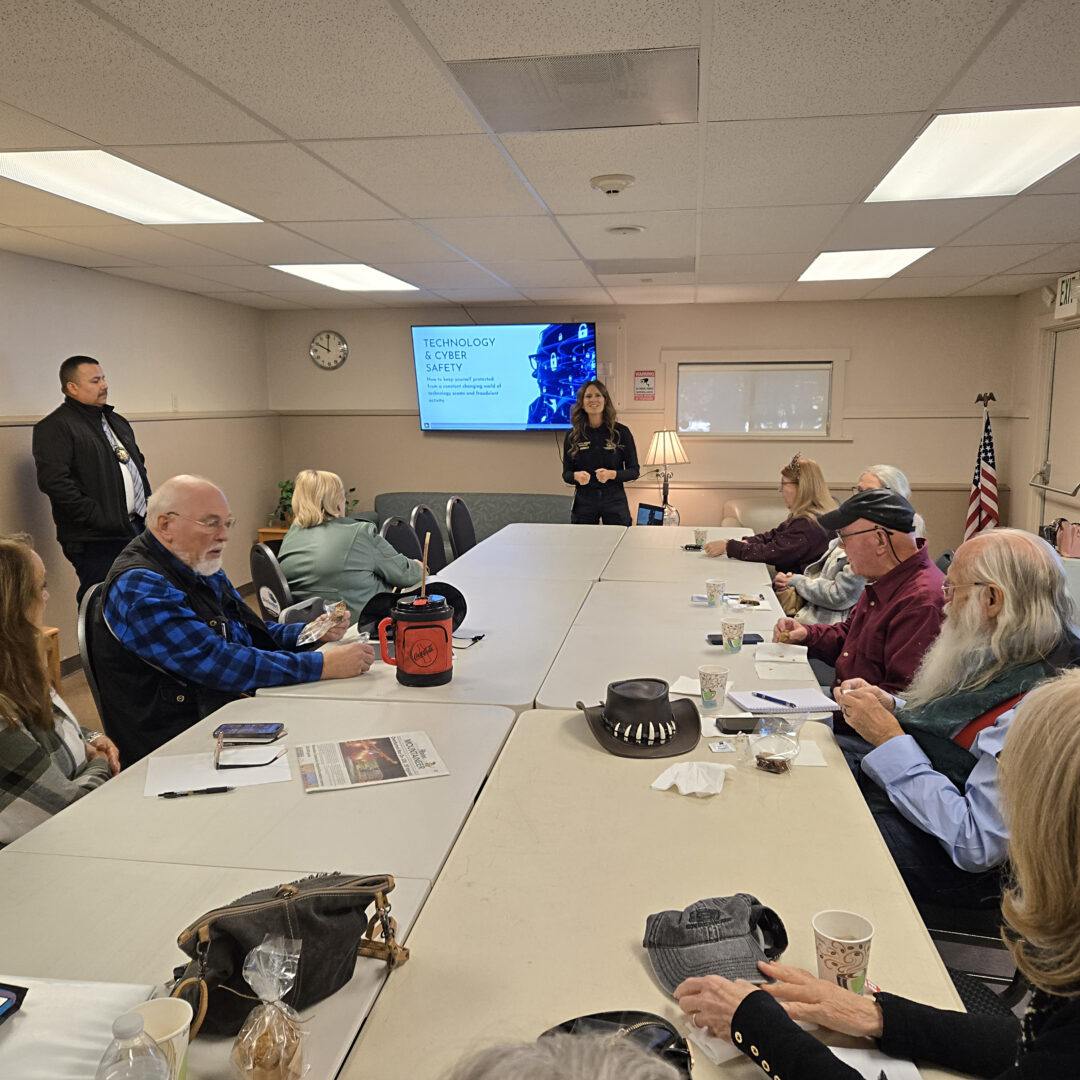
Representatives from the Twin Peaks Sheriff’s Station came to the Crest Forest senior center on Wednesday, Nov. 19 to warn the public about the recent epidemic of scams and other fraudulent activity spreading throughout the mountain communities.
Deputy Robert Maestas recalled a recent incident in which a local couple got a phone call from someone who told them that their son had been arrested and they needed to post $100,000 for his bail. The parents (victims) said they couldn’t come up with that much cash. When the unknown suspect called back and told the victims that $20,000 would be enough and that an Uber driver was waiting for the money, the couple became suspicious and reported the crime.
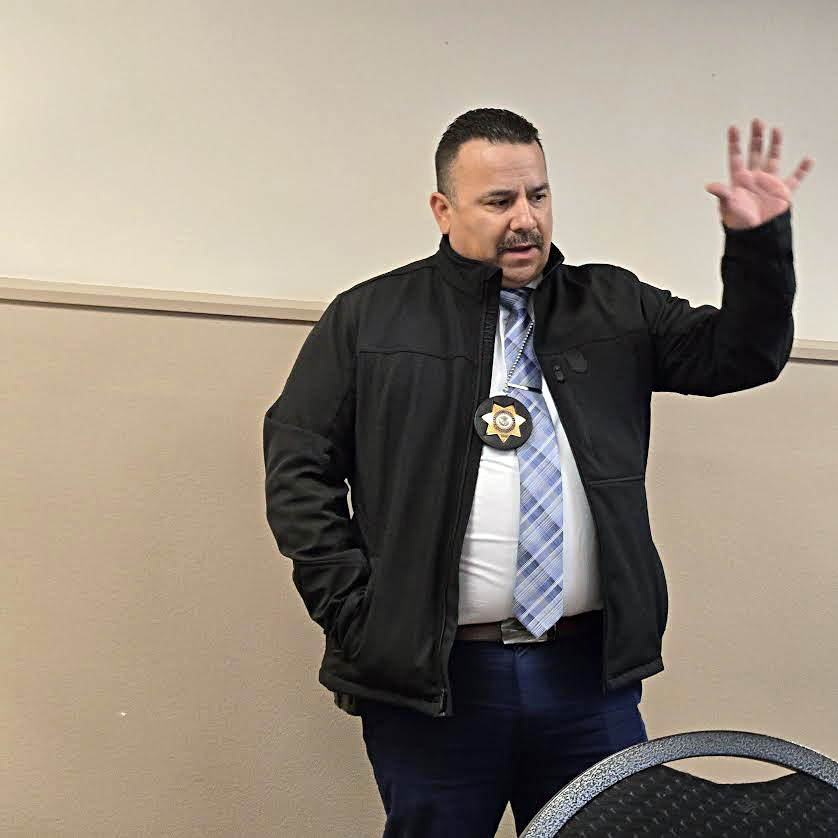
Sheriff’s Deputy Robert Maestas was one of two speakers at the meeting in Crestline.
Sheriff’s Service Specialist Lyndsi Garrett spoke next and advised the dozen or so attendees, many of whom were senior citizens, to be mindful of posting personal information and sensitive data on social media. Garrett added that QR code scams are another threat where criminals use fake codes to steal personal information, such as financial details or to install malware on your device. “Report scams using personal, identifiable information and sensitive data that is often targeted by identity thieves immediately,” Garrett said.
Deputy Maestas, who has been with the San Bernardino County Sheriff’s Department for 18 years, 13 of which at the Twin Peaks station, suggested staying away from people-search websites such as Spokeo, which is often described as a scam due to unclear subscription terms and unexpected price hikes.
Garrett advised changing passwords regularly and using different passwords for each account. “Put your own password on your router and don’t share your WiFi with others, keep your credit cards locked up so others can’t use them and watch out for card skimmers when you buy gas,” she said.
Others at the meeting complained that they are bombarded with scam phone calls that promise to help lower their credit card interest rates to zero percentage. These so-called “robo” calls, which purport to come from nondescript entities such as “card services” or “cardholder services,” tend to make people believe they are from their own credit card company. Many others are convinced that some of these calls are made by criminal enterprises whose intent is to obtain personal financial information in order to commit identity theft. Identity thieves can use this information to gain access to personal accounts or open new accounts without the owner’s permission. By doing this, they can make unauthorized transactions by stealing from other people.
The Identity Theft Research Center reported that 2023 had a record high number of data compromises reported in a single year in the U.S. According to the report, at least 353 million people were scammed, as per statistics provided by the FTC (Federal Trade Commission).


0 Comments