




By RHEA-FRANCES TETLEY
Historian
As the summer of 1910 progressed, the mountains were filled with campers, who arrived in their wagons. Skyland Campground, with its new water source, was a popular because 1910 was the year Haley’s Comet was visible and what better location to view it than from Skyland? It made for a great story afterwards.
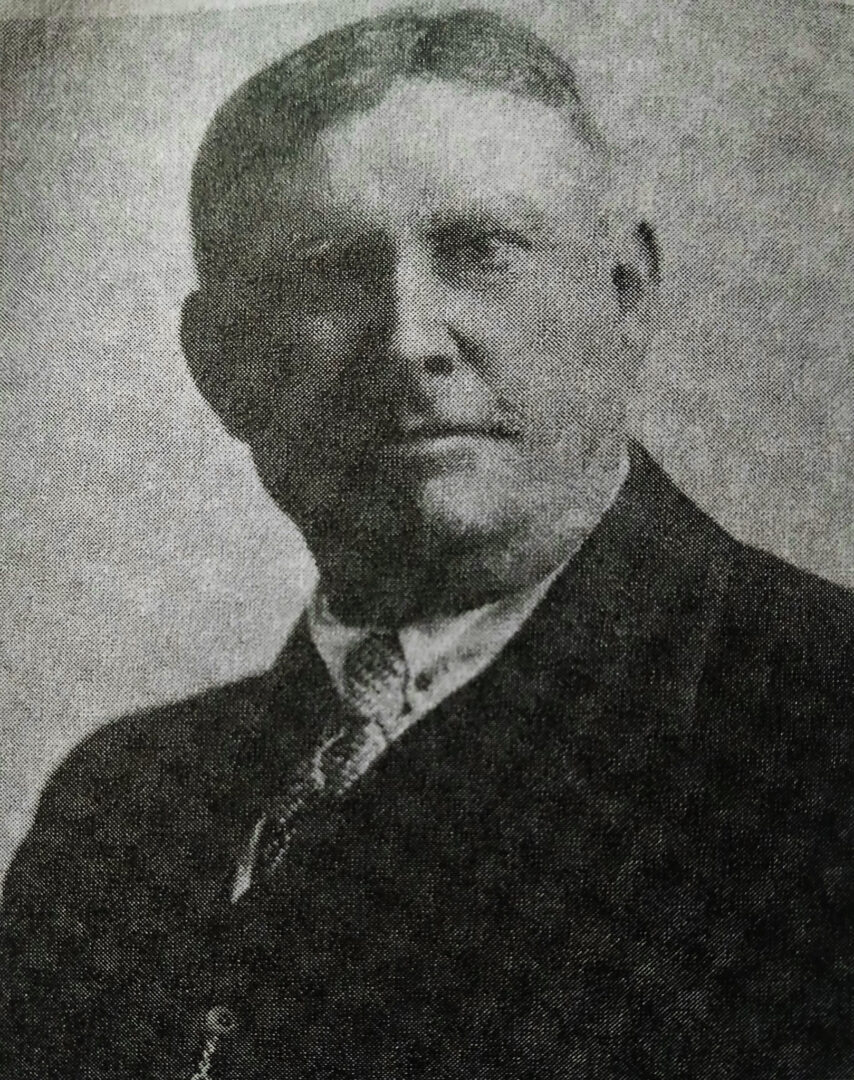
Gus Knight
The city of San Bernardino’s centennial celebration was in 1910. For the huge parade through the city, the Brookings Mountain Lumber Company sent down a parade float pulled by 10 mules, carrying 10,150 board-feet of lumber, which was the record at the time. Following that wagon were 10 more mule-pulled wagons filled with lumber, with a banner proudly declaring, “One Day’s Sales.”
Arrowhead Reservoir and Power Company (ARPC) financier James Mooney’s nephew Frank Mooney had just graduated from an Indiana engineering college. Frank came out to observe the progress on repairing the leaking dam. He directed crews as they strung transmission wire from the incline in Skyland along the ARPC’s right of way to the dam site. The timbers used to build the frame towers for the span across Grass Valley were from the company’s sawmill, now managed by Henry Guernsey.
Mooney rode out daily to the work site where the work crew with a chuck wagon and all their work gear camped. Mooney stayed at the ARPC’s gatehouse and commissary with Max and Perry Green, who were hauling food between tunnel camps 1 and 2 that summer. Eighteen teamsters delivered freight to the ARPC, including Mr. Knight, Bemis, Newcombe and the Wixom brothers. Beginning on Oct. 7, a Mr. Freeman was hired to drive a motorized wagon.
The end of summer resort parties was even more spectacular than the year before; some even had themes. At Pinecrest, they had a minstrel show with many performers, including a quartet plus “Uncle Billy” Stephen playing his concertina. They finished up the event with a cakewalk and watermelon feed.
Automobile owners liked to challenge each other on difficult roads. Jack Heyser made a $50 bet he could successfully drive his White Steamer Runabout up the Clark Grade, through Big Bear, along the crest and back to San Bernardino in one day.
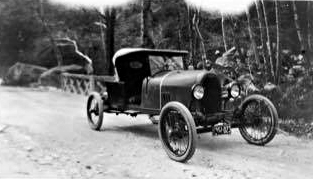
Jack Heyser during his drive proving motorized vehicles could drive mountain dirt roads.
Heyser assembled a crew, with reporter Opie Warner and George Wood, a Riverside mechanic, stripping all unnecessary weight from the vehicle, adding gasoline cans and necessary repair tools. His Aug. 27 route was the approximate route of the future 101-mile Rim of the World Drive which opened in 1915. His actual driving time took 8 hours 17 minutes, although it took over 12 hours since they also stopped and ate. Heyser made the point that a mechanized vehicle could access the mountains and do what a wagon and team could do, in much less time.
In September, the cattle that had grazed all summer at Little Bear Valley were herded down the dusty, rocky Waterman Canyon Road to market by vaqueros from the Los Flores Ranch.
In the fall, the apple harvest began at the many orchards around the mountain, including at James Flat, Dark Canyon and at Thaddeus Lowe’s new Hi-Lowe Ranch, the former Fred Palmer Fruit Ranch behind Strawberry Peak. Even the forest rangers were busy harvesting cones from the Jeffrey and Sugar pine trees. The dried cones produced hundreds of pounds of seeds for future reforestation projects. They even reported, “The acorn crop was large enough to fatten a million hogs.”
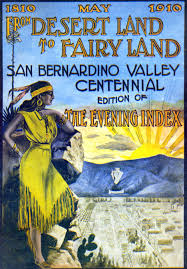
The poster promoting the 1910 San Bernardino centennial.
Lumberman John Suverkrup and his sons fenced off an 80-acre oak tree-covered ridge on Hook Creek Road, behind Camp Comfort, in readiness for John Nish, who arrived on the mountain with a load of brood sows to spend the fall eating acorns.
On Oct. 12, the Tri-County Reforestation Committee met at Pinecrest discussing how to improve the south-slope watersheds. They also toured the dam at Little Bear Reservoir and the Brookings Sawmill, then down City Creek Road to the mouth of the Santa Ana River.
The hunting was great; the deer were fat and the hunters plentiful. The game warden cited Gus Knight for being over his duck limit. The impounded ducks were dressed and sent to restaurants in Los Angeles. Knight argued the ducks were the limit of himself, his sons and three employees and that he had a legal right to pursue market hunting, as it wasn’t illegal.
Two negatives ended 1910. A fire broke out in the storehouse that was also used as sickbay of the ARPC, burning a worker’s blanket and blistering his feet. The fire frightened the firefighters because the building was adjacent to the hay barn and kerosene shed.
As the harvests and profits from the resorts were totaled up, Col. W. J. Vestal, the grocery lessee at Skyland, found himself $1,250 in debt for the groceries for the store. The colonel, a former newsman and political figure, was so humiliated he wrote a letter of apology and put a bullet through his head.
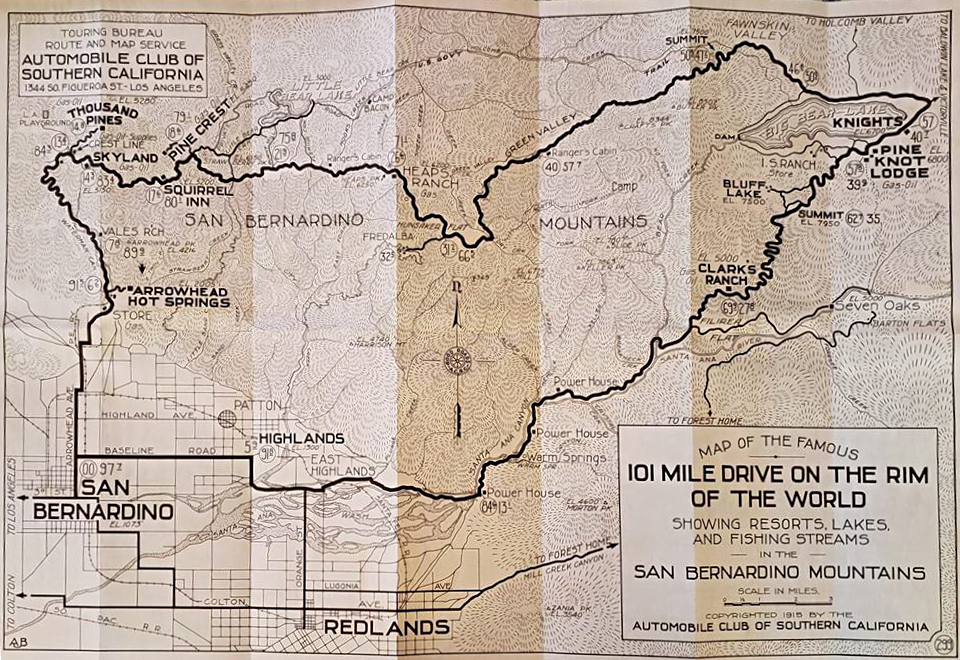
The approximate route Jack Heyser used to win his bet in September 1910.



0 Comments