




By RHEA-FRANCES TETLEY
HISTORIAN
Floods and natural disasters have often impacted Southern California, but the flood of 1938 was a real monster. The deluge wreaked havoc on California from San Luis Obispo to San Diego, plus causing heavy flooding damage in the Mojave Desert. Numerous March storms have brought disasters.
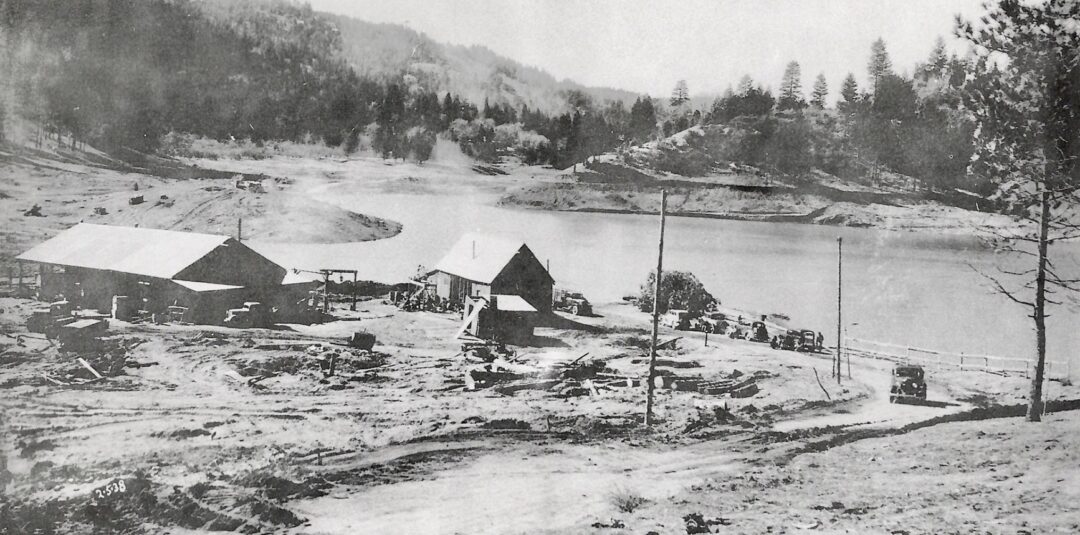
Pre-flooded Lake Gregory, Feb. 5, 1938, looking at Chamber Point.
Very few living residents remember that first week of March 88 years ago in 1938 when Lake Gregory filled up in three days. It was considered a 100-year flood at the time and is only second to the worst flood in California’s history, the catastrophic 1861 Noachian Flood, a “500-year-flood,” which also washed out the Mormon Road in Waterman Canyon.
The 1938 disaster had its roots beginning in late January of 1938, when a pattern of nearly continual and often severe storms drenched Southern California, bringing feet of snow to the mountains. Then from Feb. 27 to March 4, precipitation in the mountain areas added an additional 22.5 inches.
A monster tropical storm arrived with a vengeance on Wednesday morning, March 2, 1938, as a massive slow-moving warm front collided with the mountains, melting the deep snow. The previously saturated ground worsened the problem as streambeds and flood control channels filled, as the snow rapidly melted.
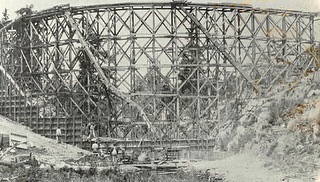
Construction of the Green Valley Lake dam.
On March 2, 15 inches of warm rain fell in Big Bear, melting the snow, raising the lake 20 inches in the seven hours from 10 a.m.to 5 p.m. The dam held, so damage was mostly limited to washed-out roadways.
In Los Angeles County many areas flooded and other areas were isolated. Transportation was nearly cut off and the Academy Award ceremony suffered a rare cancellation on the night of March 2 due to the raging storm with an unbelievable 32.2 inches of rain falling on March 1 and 2.
On Thursday, March 3, the sun finally broke through and rescue crews began surveying the damage and searching for the missing. Most bridges were washed out and, with the swollen rivers and streams, rescue work was treacherous.
The regional effects of heavy rains were amplified since the San Bernardino Valley acts as a huge drainage trough for the local mountains, funneling water into the Santa Ana River. Eight bodies were found washed up at various points within or near the San Bernardino foothills and in Lytle Creek and Cajon Creek canyons. Another 17 were missing. Colton was massively destroyed.
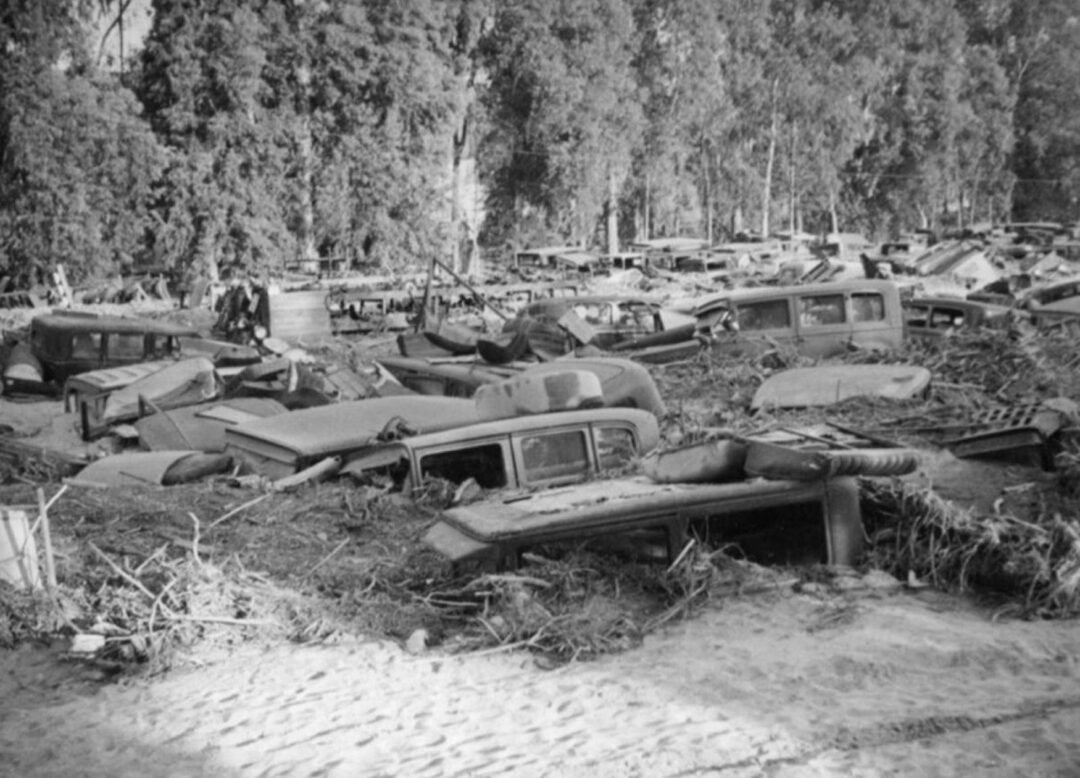
Flooded Colton, 1938.
In the Crestline area, the Works Projects Administration and California Conservation Corps had been building a dam for community water as the wells had been running dry during the 1930s drought. The dam was basically completed in January, with just a few more things to complete when winter set in. It had been estimated it would take three to four years to fill the lake.
However, this March tropical storm melted the snow, filling Lake Gregory in just three days. This kept the Las Flores Ranch downstream in Summit Valley from flooding, adding to the storm damage in the desert areas. The Mojave River raged and burst its banks, flooding many low-lying high-desert areas with several feet of water.
In Green Valley Lake, the mountains’ highest elevation community, the dam built in 1926 had created an 8.5-acre lake. In 1938 this torrential early March tropical storm melted all the snow from the February storms, creating severe flooding conditions, the first real test of the new dam.
Green Valley Lake resident Jim Reid was alone in Green Valley during the storm and heard the roaring water so he went to check the dam. He discovered that 18 inches of water were roaring over the top of the dam, because the dam’s spillway was clogged with debris from large branches and trees that had been washed away in the deluge and were stuck on the spillway, threatening the viability of the dam. At great personal peril, Reid used his hands to remove the debris, saving the dam from destruction and resulting downstream flooding.
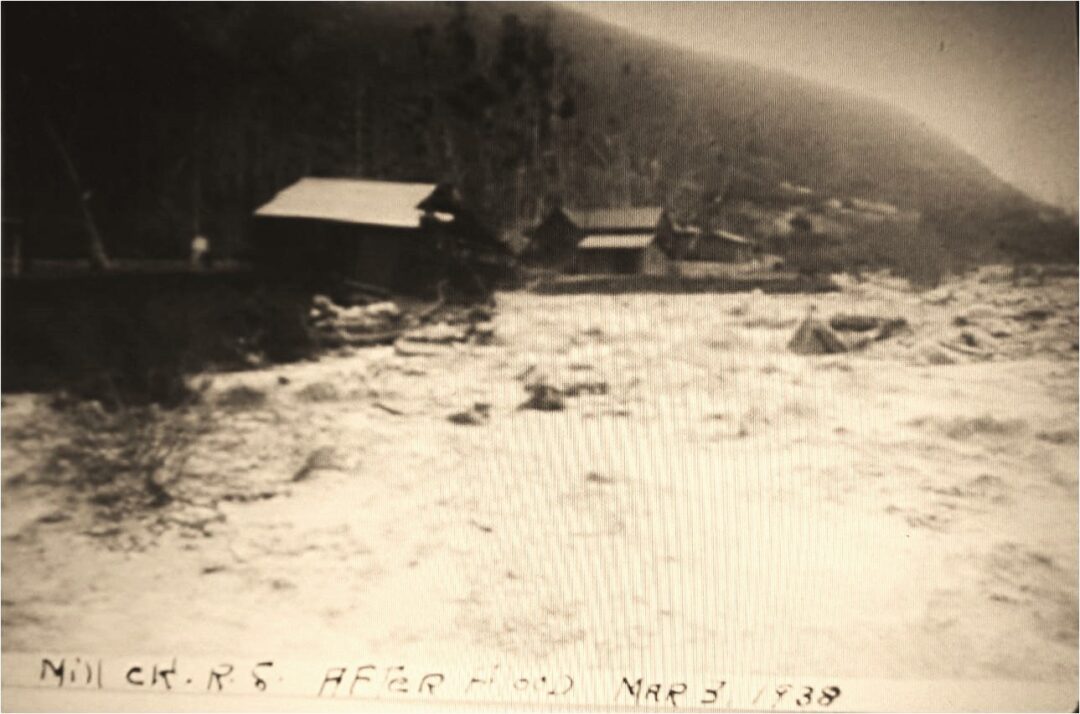
Mill Creek on March 3 after the 1938 storm.
All four mountain dams – Big Bear, Green Valley, Lake Arrowhead and Crestline – held the flooding waters, preventing additional downstream destruction.
Communication and power lines were down all over Southern California and rail travel was impossible on many of the mainline train routes. Tracks through the Cajon Pass were severely damaged. The death toll for the monster storm reached 87 and the total damage was estimated at $79 million.
As a result of the 1938 flood, the Army Corps of Engineers and local flood control agencies began an intense flood control study of Southern California, resulting in the construction of a complex system of dams, channels and levies.



0 Comments