



By RHEA-FRANCES TETLEY
Historian
When the first sawmills were established in the mountains, in the 1850-80s, they were only operated during the good weather months (after the last snow) and closed around harvest time in the valley or at the first snow. Some lumbermen would spend the whole cutting season on the mountains away from their families. Most of the mill operators would have several family events during the cutting season and invite the families up for several days of camping, fun competitions between the lumber mill workers and family time.
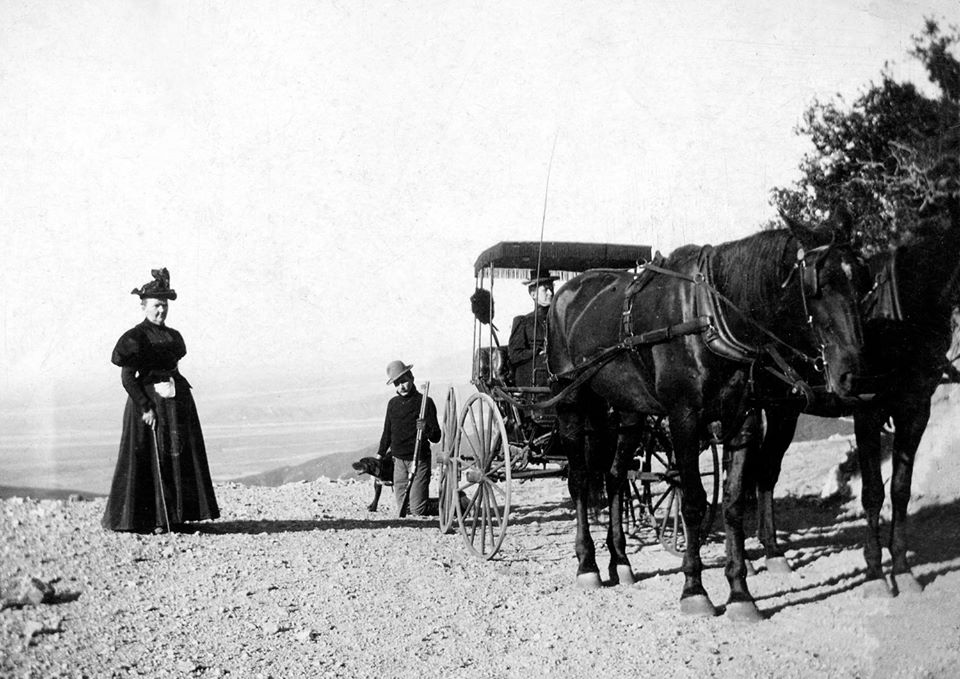
Coming up the mountain in 1910
Those families would come up in a wagon, carrying all their needed supplies, as there were no stores, and they’d camp for a week or more.
The Fourth of July was always a week of festivities and camping. When the triple-digit heat hit the valley below in August or September, often another week of camping would be scheduled.
The lumber mill owners, Guernsey for example, often chose the most scenic spots for the families to camp, and Skyland soon became a favorite camping location. It overlooked the valley, with a clear view out to the ocean. It was treed, near the mills and the campers felt close to the heavens, hence the name for the area.
The National Forest also has allowed camping since its establishment in 1891. Originally, anywhere in the forest was open to camping. As the years have progressed, camping has been encouraged in only the developed campgrounds, for both environment and fire safety concerns.
The Skyland area developed into a popular campground in the 1890s as the people from down the hill communities discovered the beauty of the area, realized the Arrowhead Reservoir Toll Road lead directly there, and that they could even see their homes in the valley from Skyland. A large bonfire would be built on warm summer evenings near the scenic overlook to brag to others they were up there.
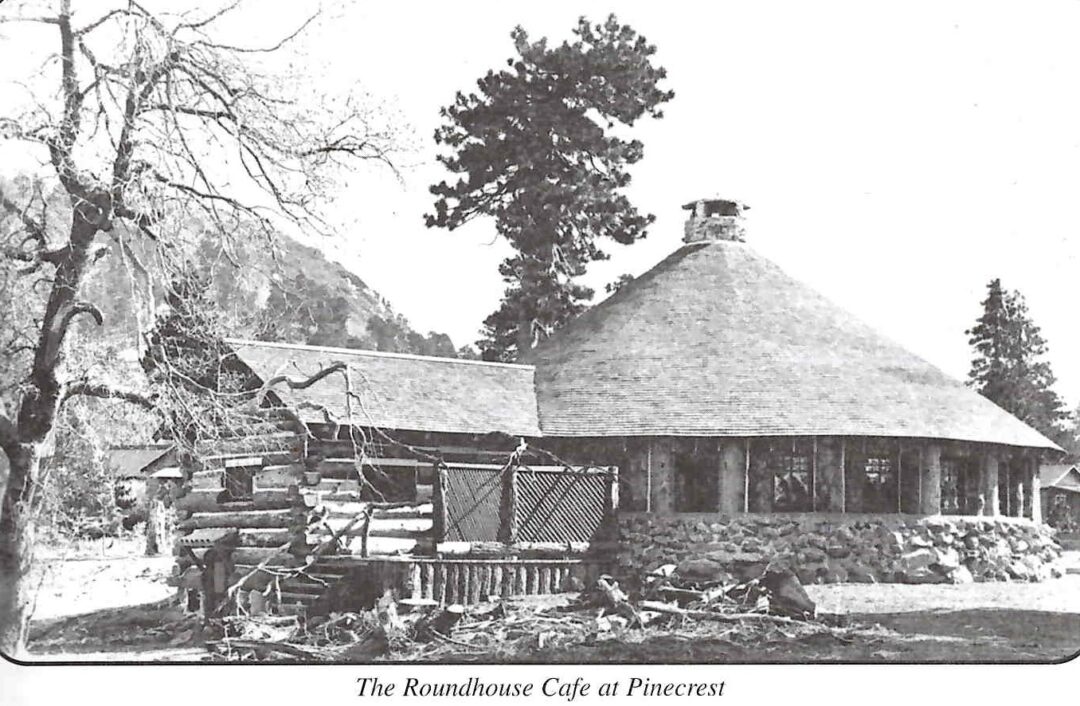
Pinecrest Cafe
Other camping areas sprang up in the 1890s as a “back to nature movement” coincided with toll roads opening up wagon access to the mountains and the creation of the National Forest Preserve, just as many of the sawmills were ceasing operations. The people sought relief from the summer’s heat and would travel all day or more to reach the cool mountain valleys. As the water began to fill Little Bear (Lake Arrowhead) Reservoir in the 1910s, campers came to fish and stay near the water.
The Strawberry Flat Campground, run by the Forest Service, attracted people who wanted to tent camp in the early 1900s (where the Twin Peaks county building is now) and was the main entertainment site of Uncle Billy Stephen, “The Bard of Strawberry Flat,” for many years.
Pinecrest opened in 1908 with cabins available to rent and camping facilities, plus a camp store and dining room. After 1915, as the Rim of the World Road was transformed into an auto road, with auto stages transporting people up the mountain, more vacationers came to visit the established resorts and campgrounds.
Skyland already had a campground, then the incline rail system in 1906 was expected to bring vacationers (as well as cement) up the mountain. In 1906 the Skyland Inn opened as a hotel with a dance pavilion, a post office and weekly activities, such as croquet and, as the years progressed, it developed an auto campground, too. Soon, lots were developed in the Skyland area so people could buy “a piece of heaven” for their own vacation spot in the mountains.
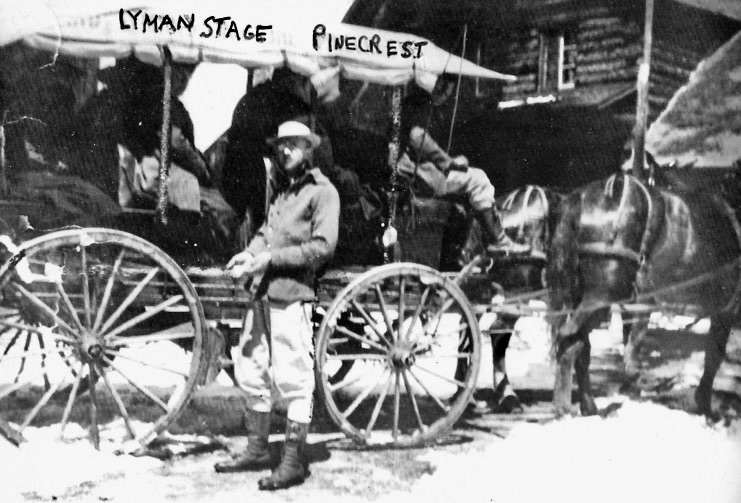
Horse-drawn stage to Pinecrest
Thousand Pines Camp, above Huston Flats (now Lake Gregory) was also an early camping area for lumbermen and their families. Originally known as the Sportsman’s Club, Charlie Brashear began the Thousand Pines Resort in 1913, with a lodge and dance pavilion with tent cabins and 30 log cabins. During the 1930s, it housed the workers who created Lake Gregory. In 1938 its 238 acres were donated by Arthur Gregory to become a Christian camp that is still in operation.
The Horseshoe Bend area began as a Forest Service seasonal campground in 1909. People could rent for the summer a location right on the rim and enjoy the views. These camp sites were so coveted the same family would stay all summer, to escape the valley heat, and the father would come up the mountain for the weekends, year after year. Horseshoe Bend was on the original Crest Road with natural water springs nearby, and was probably a former Indian camp site, since metates were found nearby.
When Little Bear Lake (now Lake Arrowhead) began to fill around 1914, many fishermen who had previously gone stream fishing began fishing in the lake, despite the discouragement of the Little Bear Lake officials who wanted to keep it private.
After 1915 Little Bear Lake had several auto camps along its shore for those who liked to fish. The Orchard Bay Auto Camp was popular for many years. Camping and fishing seemed to go together and Little Bear Lake decided to encouraged both. In 1916 they made an agreement that 1.5 miles of the lake shores would be open to public fishing, so that first year over 2,000 fishermen came to fish opening weekend.
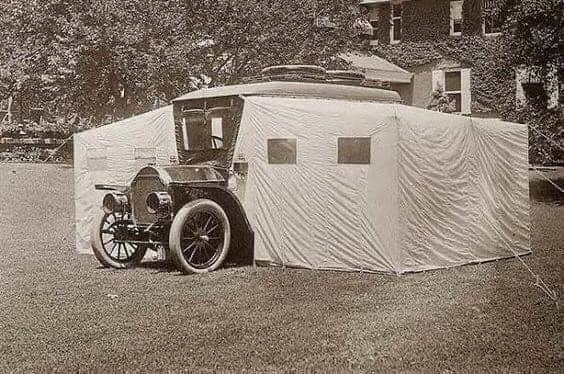
1910 Dumont car tent camping



0 Comments