




By RHEA-FRANCES TETLEY
Historian
The Skyland area of Crestline was a popular place to camp since before the 1890s because of its cliff front location and wonderful views out to the ocean. When the Arrowhead Toll Road became the main route up the mountain, the Skyland Inn, established in 1903 by W. M. Pierson, was the first stop for the horse-drawn stages that brought visitors to the mountains. The Skyland Campground was a popular back-to-nature retreat, away from city living and the sizzling heat of the valley below in the summertime.
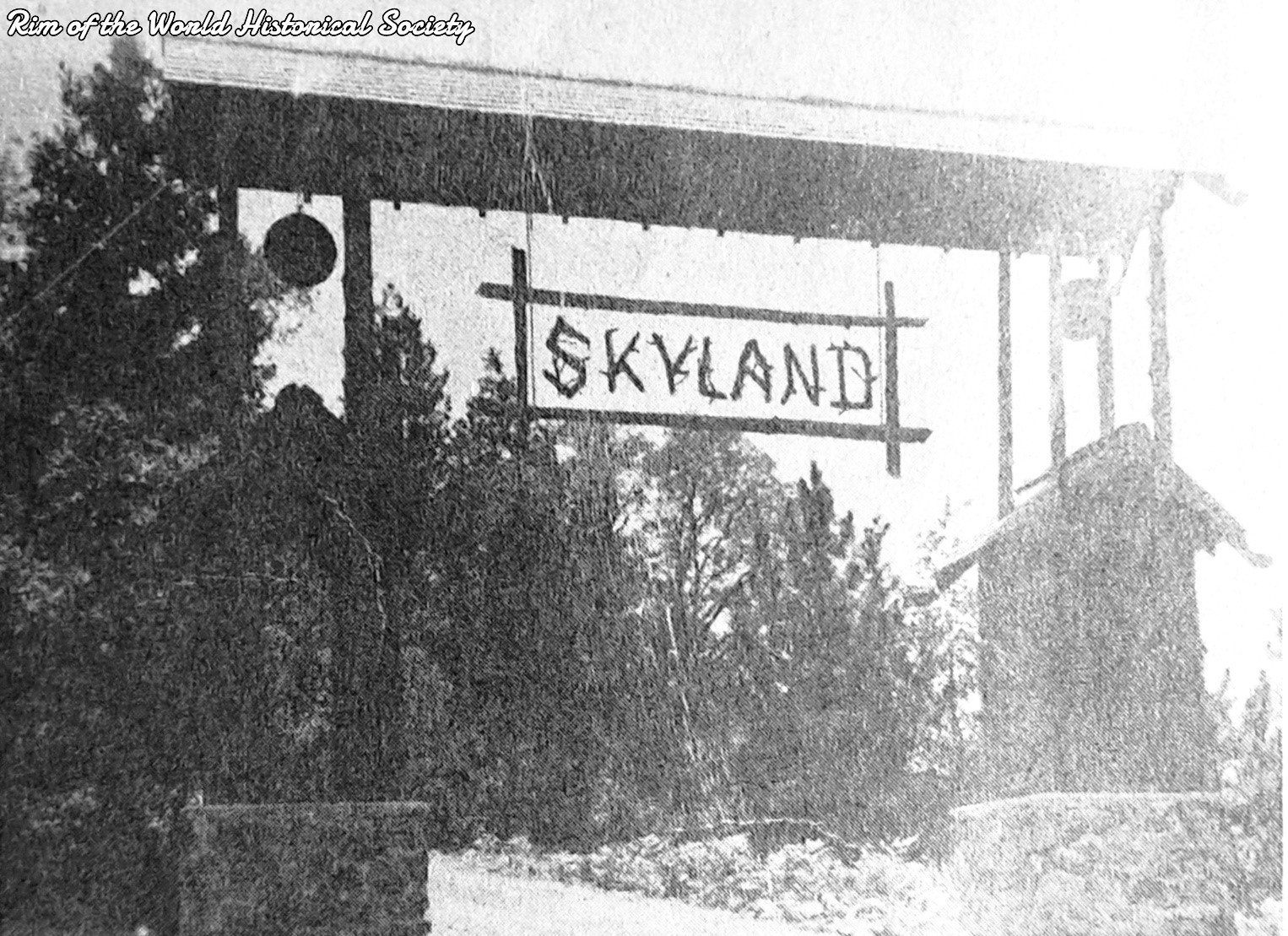
The archway to Skyland.
The incline railroad (built by the Little Bear Reservoir Company) had its upper terminus at Skyland. The first post office for the West End of the mountain area (west of Fredalba) was the Incline post office, located in the Skyland Inn, established in 1907.
A severe fire on the south face of the mountain in 1911 caused the guests from the Skyland Inn & Resort to be quickly evacuated to the safety of Little Bear Meadow. Vacationers returned to a rebuilt Skyland the next year.
The silent movie industry, in 1911, discovered Skyland with its varied terrains, great weather and excellent lodgings. Leo Maloney built his movie studio in Skyland near his home. He built his offices and production work buildings and the western movie set was where Lake Gregory Village is today, near Huston Flat where he staged the horse chase scenes.
When the Rim of the World Highway opened to personal automobile traffic in 1915, the Skyland Inn was successful in competing for guests against the newer resorts that soon developed along the highway. To induce families to visit, Skyland also added more activities, such as a story hour for children.
During the early years of the 20th century, in the days before air conditioning, people felt compelled to leave the blazing heat of the valley, coming to enjoy horseback riding, hiking, stream fishing, croquet and horseshoes to relax in the cool mountain breezes.

Newspaper advertisement for the Skyland Inn.
The Skyland Inn’s rates were $15 per person, per week, which included meals. A furnished housekeeping cabin was $10 per week for two or $20 per month. A tent cabin rented for $7 for two, per week. Because it took so much effort to get to the mountains, the average vacationer came for at least two weeks during the late teens and early 1920s.
It was 1919, when the new Skyland Heights Postmaster Samuel W. Dillin relocated the post office down from Skyland Heights to an empty building he had purchased from the Arrowhead Reservoir Company. It was in the newly developing business area at the new crossroads, on the Rim of the World Drive (now the corner of Highway 138 and Crest Forest Drive, where the Herington Real Estate office is located).
Dillin changed the post office’s name to the one chosen in a contest, sponsored by former Skyland lumbermill owner, H.A. Guernsey, in 1906. Dillin renamed the Skyland Heights post office to match the new location of the post office, which known as “Crestline” since it was on the “Line of the Crest,” as described by the contest winner’s submission by Dr. Wesley Thompson in 1906. (This contest naming the area inspired celebrating the 120th anniversary of the naming of Crestline during the 2026 Jamboree Days celebration.)
W.O. Raub, who also owned the Strawberry Flats campground (in future Twin Peaks) purchased the five acres comprising the Skyland Inn and campground and began a renovation project. A new, direct, auto friendlier road, passing next to the Skyland Inn, was built in 1921.
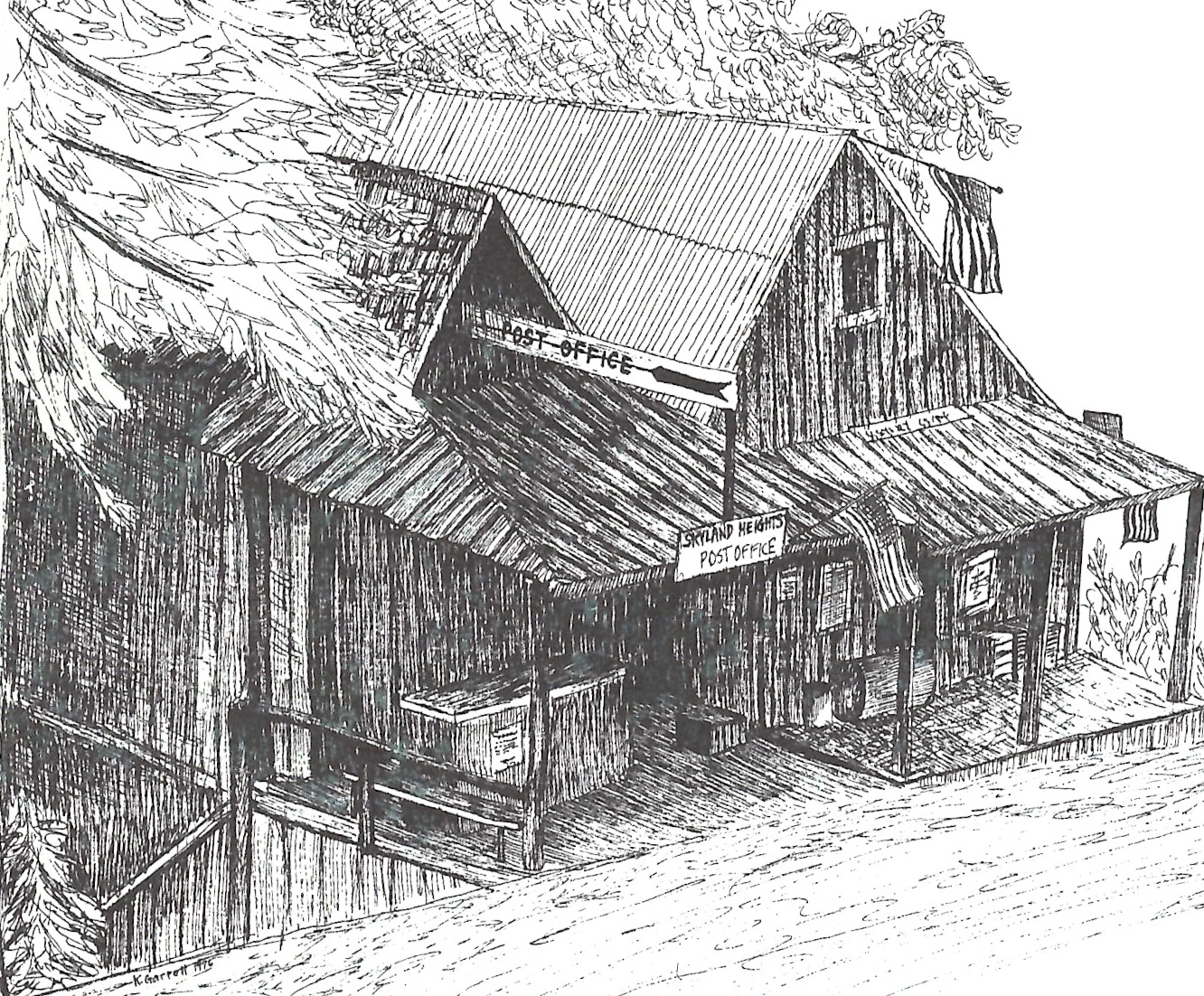
The Skyland Heights post office.
Skyland was subdivided into vacation home sites by Ramsay and Mann in 1923, developing much of the former campground into cabin sites. Timing is everything and the popularity of Skyland, and many of the other older resorts such as Fredalba and Pinecrest, began to suffer with fewer visitors, when the new, modern Lake Arrowhead Resort and Village opened on the shores of Lake Arrowhead, in the mid-1920s. Electricity was already available at Lake Arrowhead Village and Resort, generated by the water in the lake and dam. It was a nice area to vacation in style.
The Skyland area attracted a few summer visitors during the Depression, where they could live without housing and also escape the valley heat. The city-run campgrounds such Los Angeles’ Camp Seeley and San Bernardino’s City Campground at the end of Playground Drive, with cabins, dining rooms and food programs, were more popular for families during the Depression summers.
Electricity did arrive in the mid- to late-1930s to almost all the mountain communities, when Southern California Edison arrived and began to hang wires. Historian Pauliena LaFuze vacationed in the Twin Peaks/Strawberry Flats area in 1934 and moved to the mountain in 1935 when her husband, Cecil, was hired to install the electric grid for the mountain area. Each subdivision and resort highly touted the arrival of electricity to their area. Most communities had electricity before World War II began.
The Skyland Inn of course upgraded and installed electricity. It continued to host vacationers until 1955, when the inn was destroyed by fire. All that now remains of the historic Skyland Inn are the stone steps descending from Skyland Drive.

Stairs that led to the Skyland Inn still exist.



0 Comments