



By RHEA-FRANCES TETLEY
Historian
The stop of this Highway 18 tour of historical monuments is at the curve of Highway 18 and Highway 330. This location, easily identified by a totem pole, flagpole and a lumber wagon, is zoomed past daily by drivers headed elsewhere.
This very public intersection in the center of Running Springs has raised many questions to those driving by: Why is it there and what is it? Stop by; there is a narrow spot to park off the road in front of the park on the curve going out of town. Through easy investigation, the proud history of the Running Springs area quickly comes to light.
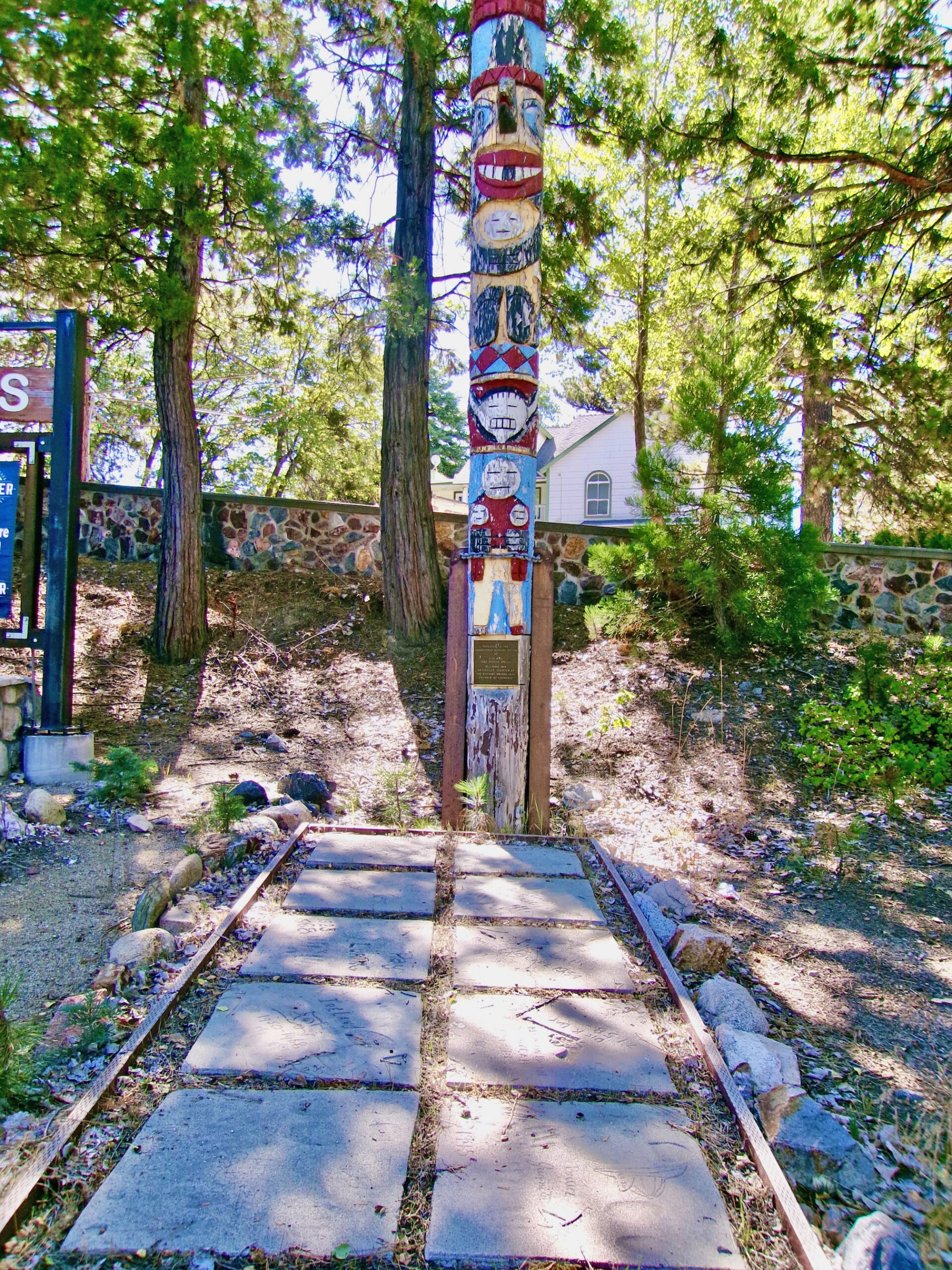
The totem pole behind the walk of fame with names and handprints in cement. (Photos By Rhea-Frances Tetley)
There used to be a wooden sign with an antique automobile stating, “Running Springs – Visitors Welcomed Since 1924.” The year 1924 was when B. L. Smith acquired title to the land and changed the name of the area from Hunsaker Flats to Running Springs Park. As was common for the era, the post office thought the name “Running Springs Park” too long and only used the name Running Springs for its official name. Now a “Discover Running Springs” sign and a moveable letter box all-weather sign with upcoming events meets the eye.
The town exhibits pride in its heritage of being a vacation and tourist destination, but also is proud of its earlier logging and Native American/Serrano past. Although the Serrano never used totem poles, local resident Gene Wall enjoyed making them after being inspired in Alaska, so there is a plaque at the base of the totem pole Gene Wall made and donated in 1984, 42 years ago, naming this corner “Fort Running Springs.” By the way, there are other totem poles in Running Springs made by Wall also to be discovered – just look around.
On a rock at the foot of a tree is another plaque stating, “In loving memory of Bill ‘Pop’ Miller, 1905-1950, A Builder of Stone, the Passing of an Era.” In the middle of the property is a series of what look like stepping stones but, in reality, are cement slabs with signatures – a mini “walk of fame” with hand and shoe prints memorializing many prominent community members, including Ray Luring, Bob McColl and John Elvrum.
Ray Luring’s handprint was made in the 1960s. Luring was a longtime resident and developer of the area. He built Lake Luring in 1925, just west of Running Springs, as part of a resort, and it became a popular location for swimming and fishing. The Luring Pines Lodge was a location known for its Saturday night dances.
During the devastating winter of 1938 with floods resulting from the massive snow- and rainstorms, the Luring Lake Dam was severely damaged. That same storm filled Lake Gregory in three days and almost destroyed the 1926 Green Valley Lake dam and flooded much of Los Angeles and Orange counties. After numerous attempted fixes to the dam and lake, Luring decided it was beyond repair and, in the mid-1950s, drained the lake and subdivided the land. With the newly completed (1950s) City Creek Road (aka Highway 330), the area was easily assessable from the valley below. The new Luring Pines subdivision had a wonderful clubhouse (now Calvary Chapel) and pool (now a parking lot). It became a good location for permanent residents, who helped to create the community of Running Springs.
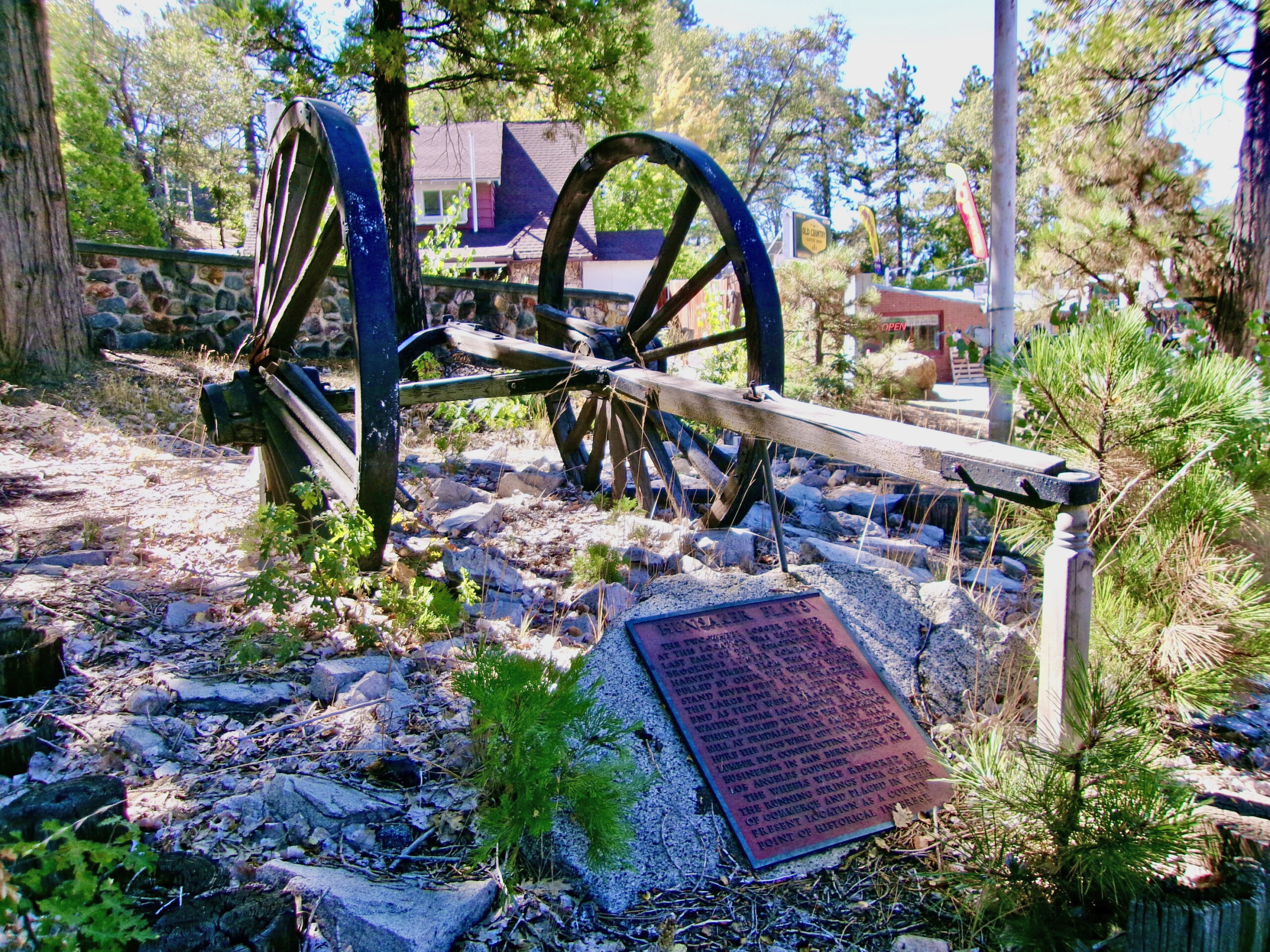
The logging wheel dominates the corner of Highways 18 and 330 in Running Springs.
John Elvrum has his signature from the 1960s on another block of cement. Elvrum was a United States ski jump champion, hired by the Lake Arrowhead Resort to promote skiing in the San Bernardino Mountains in the 1930s. In 1941, he purchased the Snow Valley Ski Area, where he had been working. He developed the area into an internationally recognized ski area by installing chair lifts and manufactured snowmaking equipment, the first of its kind in Southern California. The manmade snow gave his ski hill an advantage in low snowfall years. He was a hands-on owner who was involved in the community, even offering Running Springs School students PE classes on the slopes, a favorite childhood memory of many old-timers.
The logging wheel celebrates the early years of the sawmill era. The plaque on the wagon states “Hunsaker Flats.” The two-wheel logger placed at this location was used in the last part of the 19th century by the Danaher Brothers Sawmill; it became the Brookings Logging Company, which harvested timber from this mid-range area of the mountain.
Pulled by oxen, the wheels, which stand over seven feet tall, straddled the large pine logs, lifting one end, and they were dragged by horse, mule or oxen power to the mill or waiting steam locomotive engines, which carried them to the mill that became the Brookings Lumbermill at Fredalba near Smiley Park. There the logs were cut into building lumber for constructing homes and businesses in San Bernardino and Los Angeles counties and citrus packing crates for the valley grove owners. The wheels were restored by the Running Springs Area Chamber of Commerce and placed in their present location as a point of historical interest.
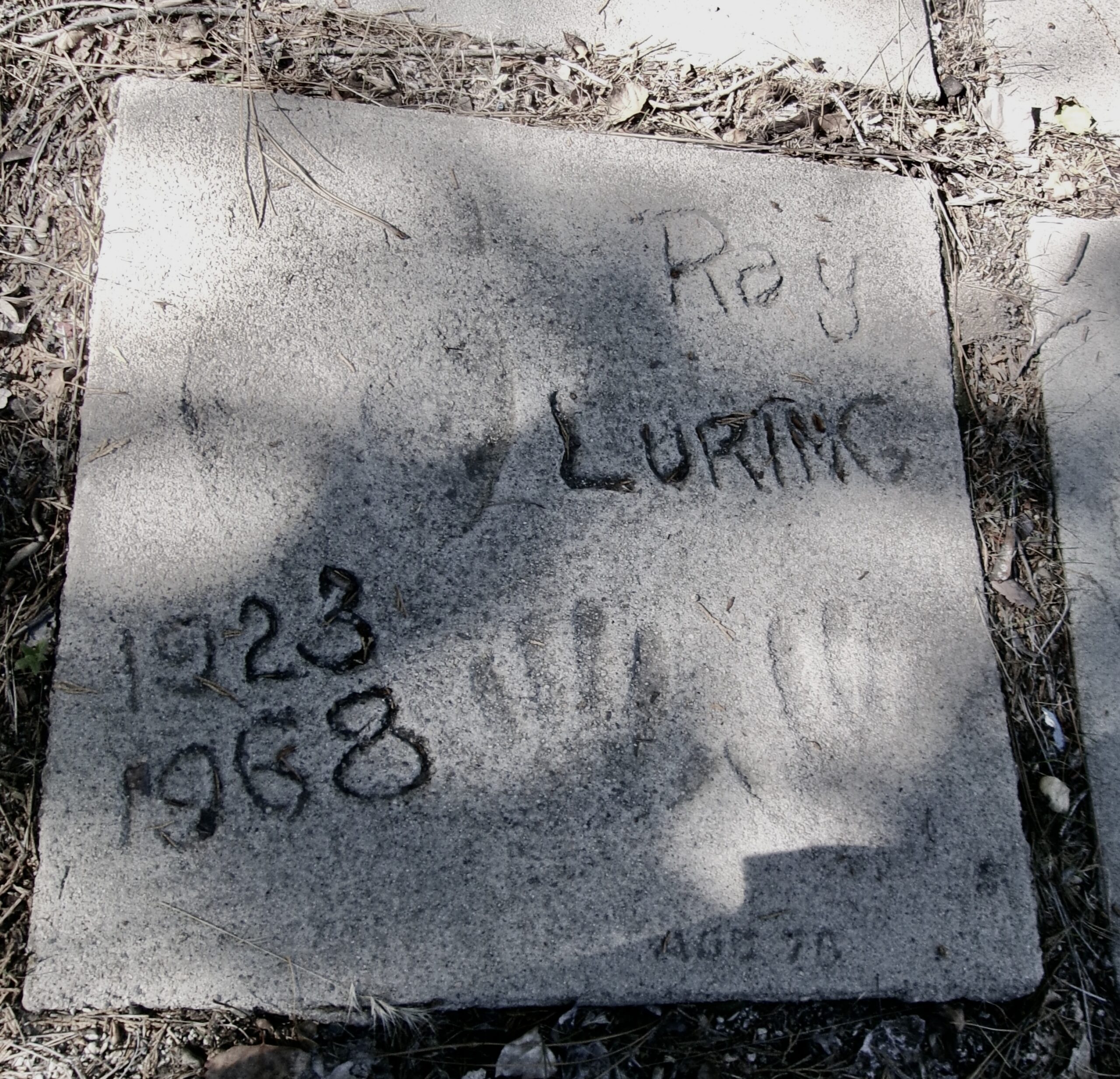
Ray Luring’s walk of fame cement square.


0 Comments