




By RHEA-FRANCES TETLEY
Historian
The decision to build Papoose Lake and Dam was not easy. Contention between residents and Boise Cascade was spirited and time was of the essence as the California Department of Safety of Dams (DSOD) was threatening to begin draining Lake Arrowhead in September 1974.

The Chalet in old Lake Arrowhead Village
Things began to happen quickly in June 1974 as the DSOD pressed forward in its demands to drain the lake to repair the dam or otherwise fix the potential problem of a dam liquification possibility in the case of a 6.5 earthquake. On June 6, the DSOD restated that satisfactory progress was not occurring on the dam’s safety issues, so the water level of Lake Arrowhead would be lowered, effective Sept. 1, 1974. The plan was that the water would be released at a rate of two feet per month until it reached the level of 70 feet below the spillway. At this rate, even the lowering of the water level before repairs could begin would be a longtime process.
This resulted in the Lake Arrowhead Property Owners Association, the Hamiltair Property Owners Association and Boise Cascade signing an agreement on June 7, providing for the transfer of ownership of Lake Arrowhead, including the dam and another real property, to a new corporation composed of the property owners. Boise Cascade would only agree if all aspects of the lake proposal, including funding and building, went in Boise Cascade’s favor. They had previously been ordered to divest themselves of this property and numerous others of their properties, which is why they had sold the lake three years before.
A community meeting was held at Mary Putnam Henck Intermediate School on June 8, 1974, for all concerned – all of the various property owners’ associations, plus Meadow Bay and a new group called The Friends of Lake Arrowhead. The Lake Arrowhead Chamber of Commerce, many local realtors, numerous San Bernardino County officials and, of course, representatives from Boise Cascade were in attendance to express their concern and views on the issue. The Arrowhead Woods Property Owners wanted to ensure that Lake Arrowhead would remain private, with enough beautiful water to retain their property values.
The stated goal for that June 8 meeting was to “protect Lake Arrowhead for the integrity of both its uniqueness and its property value.” A proposal of building a downstream dam to make a lake that would create equal pressure on both sides of the old dam was suggested. At the meeting, Legislative Council George Murphy issued an opinion that a new dam constructed with taxes from the proposed bond issued would create “no new rights of public access or use of Lake Arrowhead, as long as the water in the new downstream lake was not commingled with Lake Arrowhead’s water.”
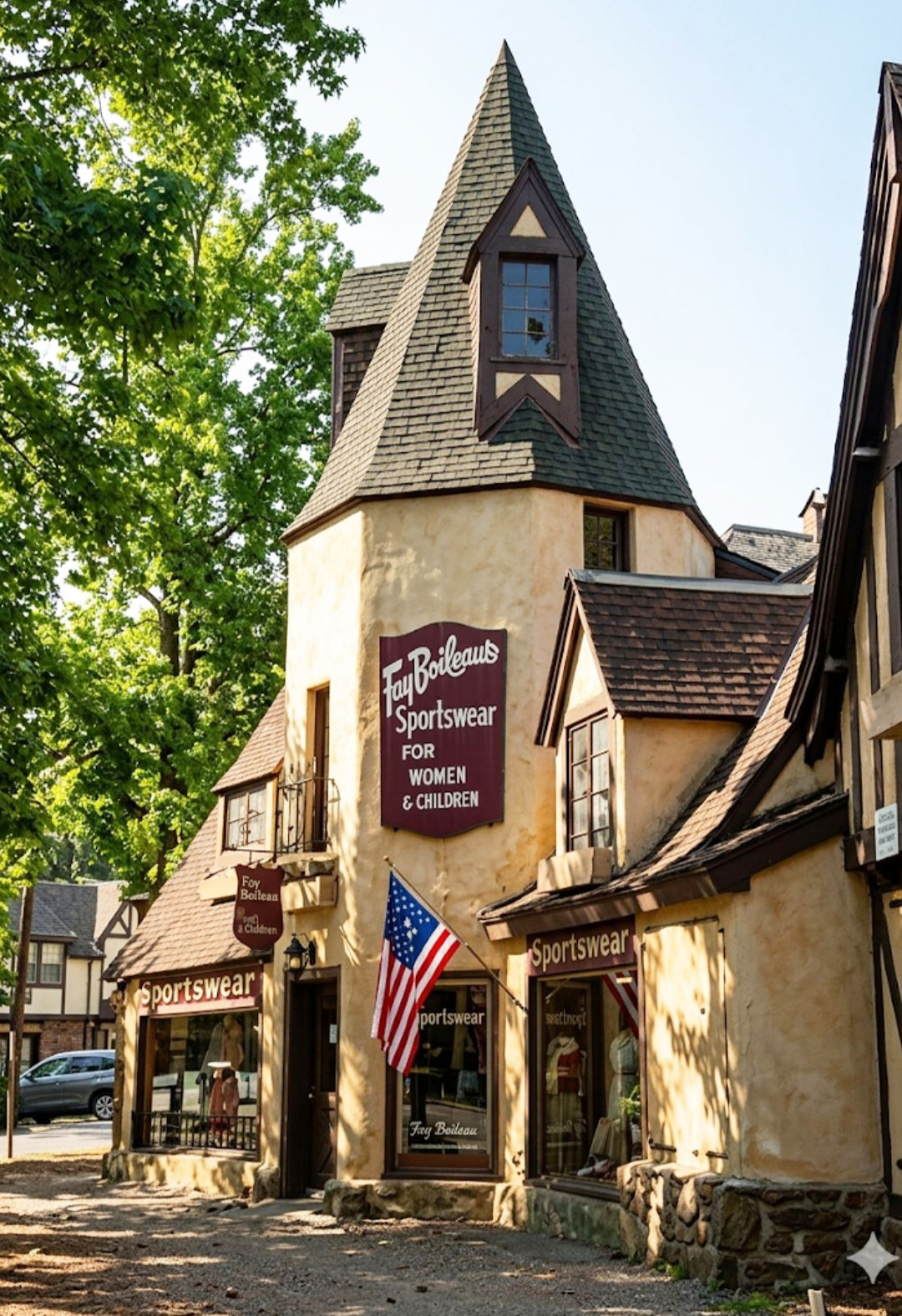
Fae Boileau’s Sportswear shop in Lake Arrowhead village.
A hearing was scheduled at the San Bernardino County Board of Supervisors meeting on June 11 to discuss “the consideration of the formation of an improvement zone in County Area Number 70 for the purpose of repair of the dam.” The supervisors approved the creation of the service area and empowered it to finance the construction of a new dam downstream from the older dam, and to conduct an election for the bond indebtedness. The design of the dam would guarantee that water from the new downstream lake would not comingle with the private waters in Lake Arrowhead.
Things were happening quickly; on July 5, 1974, Senate Bill 2141 was hand-carried for expediency through the legislature by Assemblyman Jerry Lewis and it was passed in just three days. This speed was needed due to the pressure caused by the DSOD to get a resolution to the situation before its demand to drain the lake beginning in September. The bill put the issue on the November ballot and it was signed by Governor Reagan. By the way, Ronald Reagan was familiar with the Lake Arrowhead area as he had previously visited it many times when his then-wife, Jane Wyman, was filming the movie, Magnificent Obsession.
Measure G on the November ballot would create an “indebtedness of $7,000,000 for improvements in zone D-1 of county service area number 70 for flood protection.” Then, in addition, Measure H would set the tax rate for the same zone not to exceed 10 cents per $100 of assessed real property value to be used for the maintenance of the flood protection facilities. Both measures would require the high bar of a two-thirds majority to pass.
The county board of supervisors voted on Aug. 16 to designate boundaries of zone D-1 within new Service Area 70 with that $7 million of indebtedness to include all the areas of the Arrowhead Woods with lake rights, but they excluded the older Lakewood Tract A and B on Kuffel Canyon Road.
The DSOD stated on Aug. 23 that, since the issue was on the November ballot, it would postpone lowering the lake’s water level until after the election in November.
However, the Arrowhead community was not united behind this new dam plan, as it was very expensive, so naturally there was strong vocal opposition. A full-blown election campaign began. The challenge was to fully inform everyone of all the major issues so the voters would fully understand the plan, its implications and the stated “dire results” if the measure did not pass in the election.
All non-full-time resident property owners were encouraged to change their voting registration to become a local voter so they would be able to vote on this major issue. The voting registration was indeed changed by many but then fear arose that those part-timers would vote against raising their own taxes to pay for the $7 million new dam.

The public beach was very popular in Lake Arrowhead.



0 Comments