


By Mary-Justine Lanyon
Hypertension – heart attacks – strokes – diabetes.
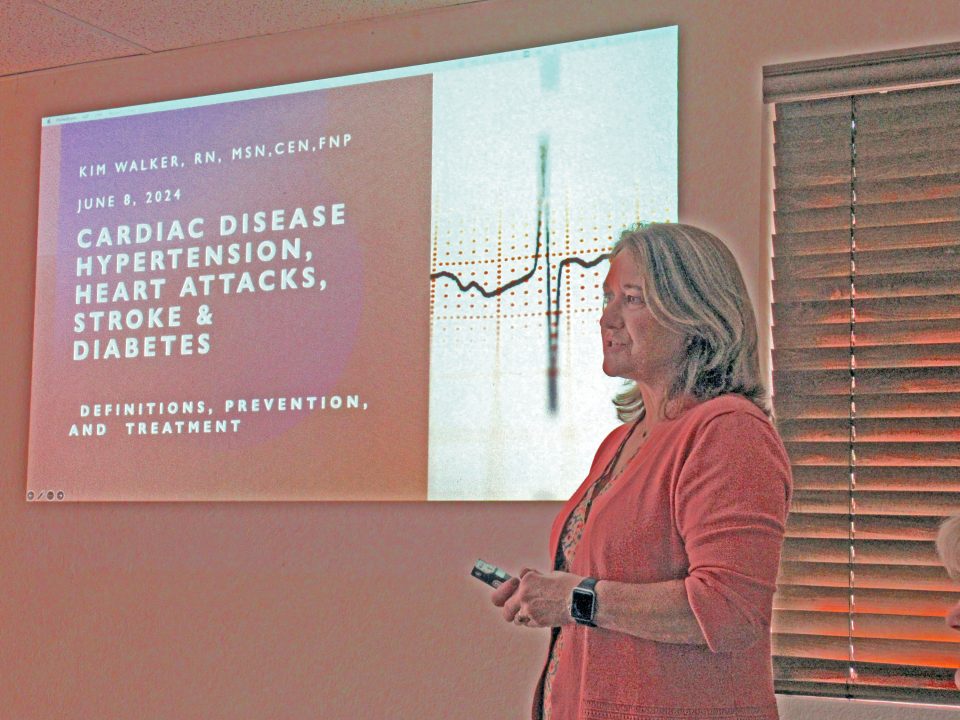
At the fourth health and wellness seminar put on by Soroptimist International of Rim of the World with the help of a grant from the San Manuel Band of Mission Indians, Nurse Practitioner Kim Walker defined the various diseases that together make up cardiac disease.
In the U.S., Walker said, 48 percent of the population – 119.9 million people – have hypertension. Normal blood pressure is considered to be less than 120 mmHg systolic and less than 80 mmHg diastolic.
Of those whose blood pressure is high, 20.9 percent are able to control it with lifestyle modifications – nutrition, exercise, destressing, getting sufficient sleep. The rest must add medication to those lifestyle changes.
The symptoms are usually silent, Walker said; by the time a person experiences symptoms, they usually have severe hypertension. Those symptoms can include blurry vision, headache, nosebleed, dizziness and stroke-like symptoms.
Risk factors include age, family history, being overweight, lack of exercise, tobacco use or vaping, too much salt, low potassium levels, drinking too much alcohol, stress, pregnancy and chronic conditions like kidney disease, diabetes and sleep apnea.
There are two types of stroke, Walker explained: ischemic and hemorrhagic.
Ischemic causes damage to the brain by blocking blood vessels and interrupting the blood supply; they account for just over 82 percent of all strokes. In a hemorrhagic stroke, a blood vessel bursts and bleeds into the brain.
Early intervention, she stressed, is key to minimize the damage caused by a stroke and to optimize recovery.
There are about 446 deaths from stroke every day in the U.S. Each year 795,000 people experience a new or recurrent stroke; approximately 610,000 of those are first attacks and 57 percent of them are women.
To determine if someone is having a stroke, think FAST: Is their face drooping to one side? Are they demonstrating arm weakness; does one arm drift when they hold it out? Are they having speech difficulties? And, finally, time – which is of the essence.
Other symptoms may include sudden weakness of numbness on one side of the body, including legs, hands or feet. They may have sudden blurred vision or loss of sight in one or both eyes. They may have sudden memory loss or confusion. They may have a sudden, severe headache.
When asked if Mountains Community Hospital can deal with a stroke, Walker’s answer was they can. The goal, she said, is for the patient to have a CAT scan done in 10 minutes. Then they can call for transportation to get the patient to a higher level of care. “We work hard as a staff to get you to the next most appropriate facility,” she said.
Medications are available for ischemic (blood clot) type strokes. The patient needs to get that medication within a window of three hours. It’s important, Walker said, to note the time when symptoms start. Hemorrhagic strokes may be treated with surgery.
The heart, Walker said, is a muscle. It required blood flow to keep pumping. A person has a heart attack when the vessels that supply blood to the heart muscle are blocked.
Each year in the U.S. there are about 605,000 new heart attacks and 200,000 recurrent attacks. It is estimated, Walker said, that 170,000 of those heart attacks are silent, without significant symptoms. The average age for a first heart attack is 65.6 years for males and 72 for females.
Classic symptoms of a heart attack are midsternal chest pain, shortness of breath, pain radiating down the arm or up the neck, feeling like an elephant is sitting on your chest.
Women, however, may have flulike symptoms – they may feel extreme fatigue and not want to get out of bed. They may feel a squeezing of the chest but their symptoms may be more vague than in a man. And their symptoms may be confused with indigestion, anxiety or the flu.
How can you prevent a heart attack? Manage any chronic diseases – hypertension, diabetes, obesity, excess alcohol consumption. Take any medication as prescribed. Get annual check-ups or more often as recommended by your doctor.
Why are we talking about diabetes in a presentation on cardiac disease? asked Walker. “In the end, diabetes is a cardiovascular problem when it is not kept in check. It wreaks havoc on vascular health.”
Type 1 diabetes – where the person produces no insulin on their own – is considered an autoimmune disease. Type 2 generally has a later onset and can be trigger by lifestyle and genetics.
In 2021, 38.4 million Americans, or 11.6 percent of the population, had diabetes. Of those, two million had Type 1 diabetes.
Symptoms of diabetes include elevated blood sugar, excessive thirst, excessive urination, unexplained weight loss, fatigue, blurry vision.
Unmanaged diabetes can lead to kidney dialysis, retinal damage, peripheral neuropathy and slower wound healing.
“Nutrition is medicine,” Walker said. “Food is the No. 1 medication. This applies to everything we have talked about. It’s hard to make good choices but your plate should be half vegetables, a quarter carbohydrates (including fruit) and a quarter protein.”
In the end, Walker said, “you have to be your best advocate. Show up at doctor appointments with your blood pressure log, a list of your medications, a list of surgeries you have had, any hospitalizations and vaccinations.”
She outlined vaccination options including tetanus-diptheria, shingles, RSV, COVID, flu and pneumonia.
An annual checkup should include a physical exam, lab work, a mammogram, bone density exam, colonoscopy, depression assessment, sleep assessment.
And keep in mind, Walker said, “Exercise is your friend.”




0 Comments