



By DOUGLAS W. MOTLEY
Senior Writer
What firefighters initially called the Southern California Postfire BAER (Burned Area Emergency Response) 2024, got its start around 6:42 a.m. on Thursday, Sept. 26 in the inaccessible Bear Creek Drainage area of the San Bernardino National Forest.
In actuality, it was a continuation of the Line Fire, which ignited on Sept. 5 and had already destroyed over 30,000 acres of the San Bernardino National Forest.
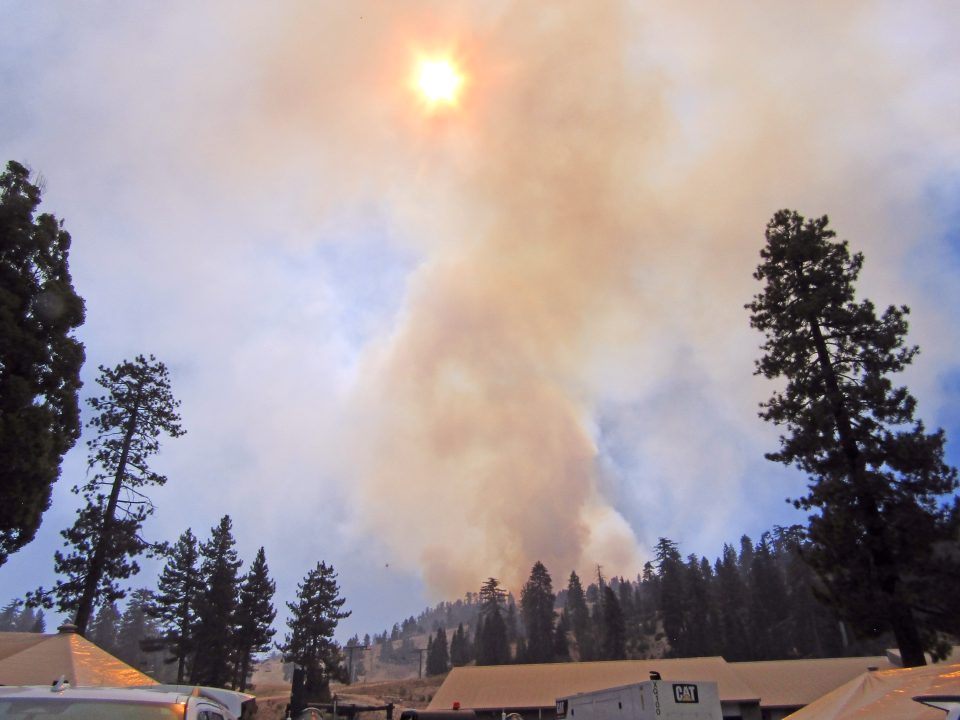
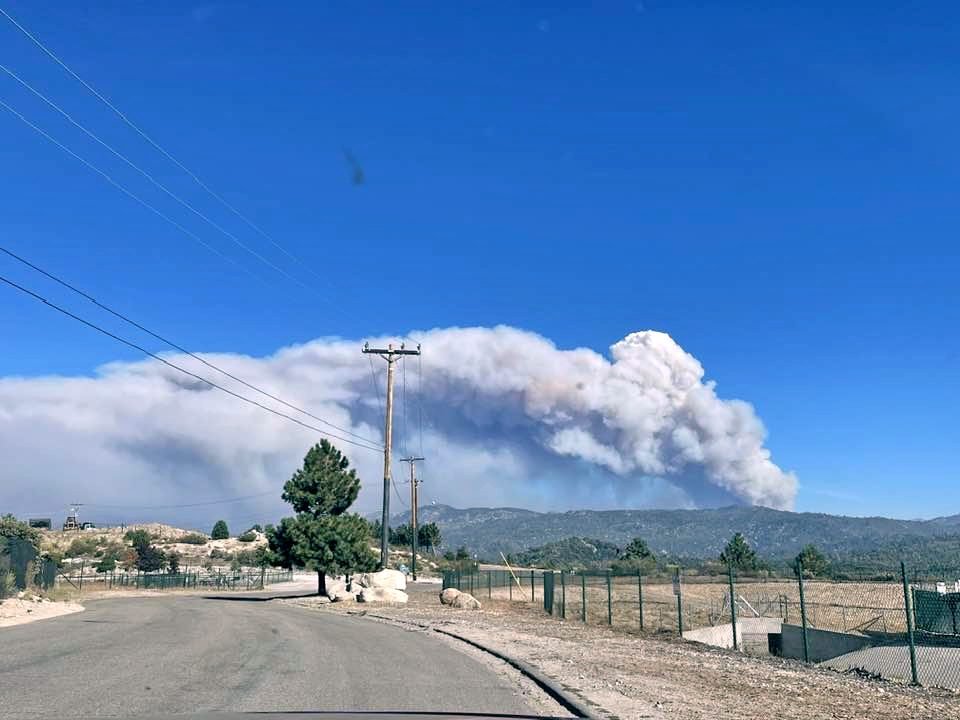
A plume of smoke rises some 10,000 feet above the ridgeline. (Photos by Douglas W. Motley)
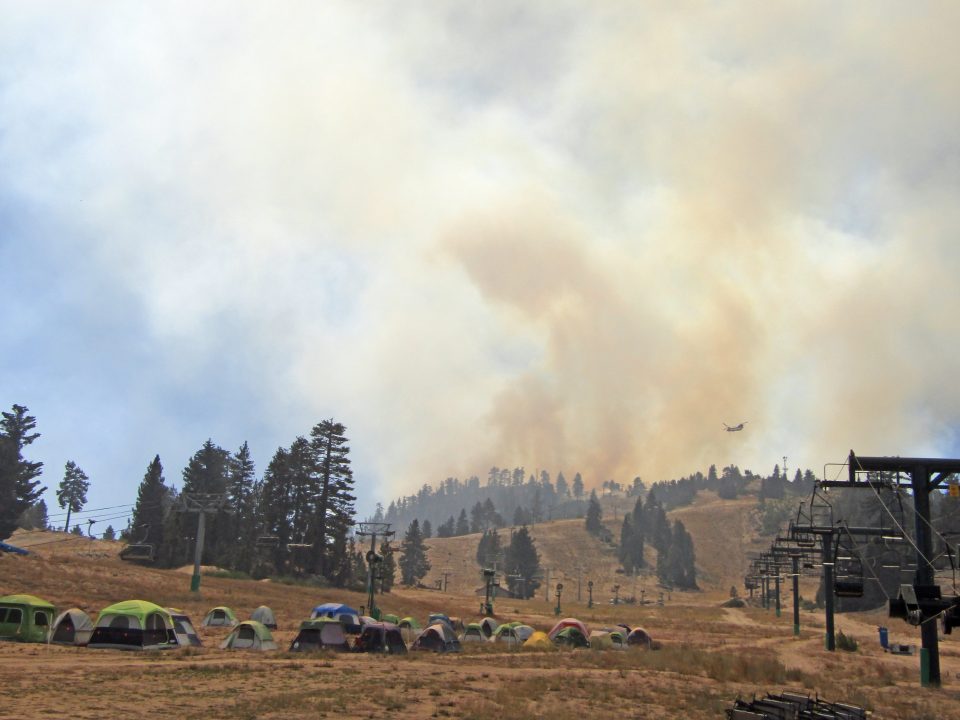
A steady column of smoke was seen rising some 10,000 feet above Snow Valley on Thursday morning, with a constant procession of helicopters and fixed-wing aircraft dropping water onto the flames. A firefighter at Snow Valley said the copters began drawing water from Big Bear Lake early on Thursday morning.
Sources told the Alpine Mountaineer that the blaze got its start from a flareup of the smoldering Line Fine, northeast of Highland. A Cal Fire advisory on Thursday warned anyone near and downstream from the burned areas to remain alert and to stay updated on weather conditions that may result in heavy rain and increased water runoff, leading to flash flooding that may occur quickly during heavy rain events.
Late in the day on Thursday the fire flared up and made some strong runs out of the Bear Creek Drainage, burning up to the ridgetop at Snow Valley, but was holding at the ridge. Firefighters at Slide Peak laid a few thousand feet of hose to wrap a large patch of green brush that had fire creeping around it. After surrounding the greenery, they began setting back fires in an attempt to slow its advance toward Snow Valley.
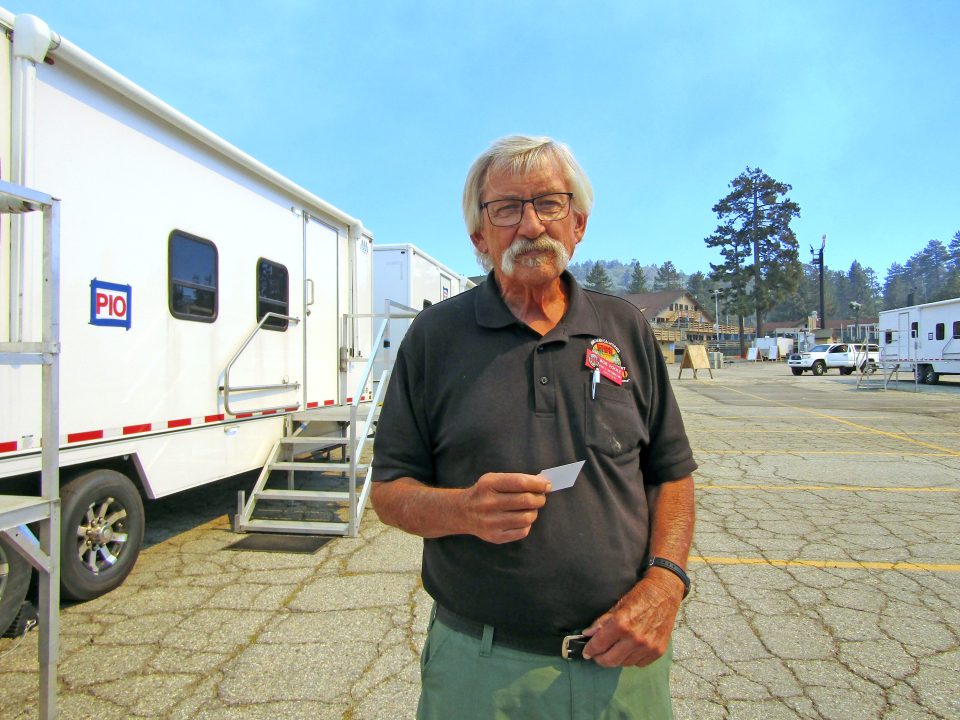
Retired U.S. Forest Service PIO Bob Poole returned to help out where needed.
At the end of the day, retired U.S. Forest Service Public Information Officer Bob Poole told the Alpine Mountaineer that people can expect to see smoke from flare ups from time to time over the next few days, until they can get a dozer to contour the landscape.
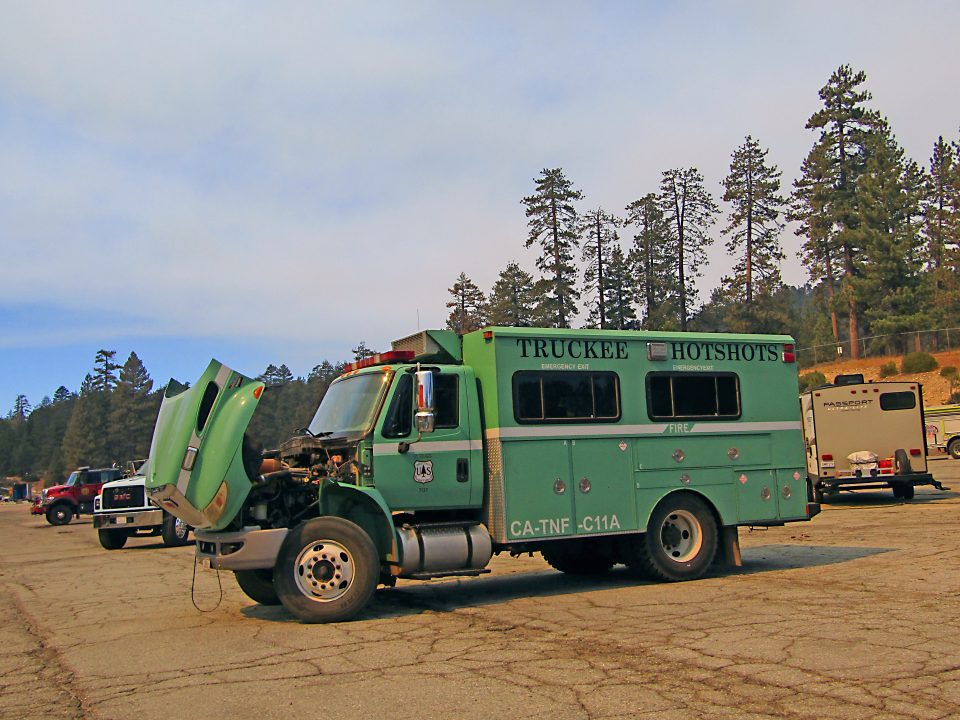
Fire units from throughout California arrived to lend a hand to local firefighters.
On Sunday, Sept. 29, Poole reported that firefighting resources include 52 engines, 23 crews, 13 water tenders, 23 bulldozers, 11 helicopters and 41 other pieces of equipment. Total personnel working the fire, which has now spread to over 39,000 acres, amounts to 1,195 firefighters. So far, he said, four structures have been damaged and one more destroyed and that four firefighter injuries had been reported.
“The fire burned actively in the Santa Ana River drainage and produced most of the smoke on Saturday (Sept. 28). Firefighters are directing the fire down to the Santa Ana River, where burning material is rolling downhill to the drainage and burning back upslope to the blackened area,” Poole said, adding that crews and aircraft are focused on this area.
The second area with active fire, Poole said, is the Bear and Siberia Creek drainages. This area has been a challenge due to the extremely steep terrain. A heli-spot is being built which will allow firefighters to be inserted to build line and access the fire when possible.
The above-average temperatures in the fire area, said Poole, will drop one to three degrees compared to Saturday, Sept 28 but still remain above average. Humidity continues to decrease and the weather in the fire area will continue to become warmer and drier; however, no significant wind events are expected into the middle of next week. To monitor smoke impacts on air quality, please check https://fire.airnow.gov.
The next phase will be the restoration of damages to soil in order to prevent soil erosion. Then crews will need to start mulching, seeding and installing erosion and water runoff control structures and temporary barriers to protect recovering areas. Also, warning signs may be necessary to prevent permanent loss of habitat for threatened and endangered species and to prevent the spread of noxious weeds.
Smoke from the Line Fire’s flare up as seen from Mountains Community Hospital on Sept. 29. (Photo: Facebook/Lauralea Hopper)
Late on Sunday, Sept. 29, containment of the stubborn blaze stood at 83 percent. However, at 9 p.m. the office of State Senator Ochoa Bogh, in an effort to keep the public informed, announced a mandatory evacuation order had been issued for the community of Seven Oaks. “This is an immediate threat to life; this is an order by law enforcement to leave immediately. The area is lawfully closed to public access,” the announcement stated.
At the same time, the U.S. Forest Service issued evacuation warnings for Angeles Oaks and the Boulder Bay area of Big Bear, from the dam east to Wildrose Lane.
Those who require additional time to evacuate and those with pets and livestock should leave immediately. An evacuation shelter is available at the San Bernardino County Fairgrounds, Building 6 at 14800 Seventh Street in Victorville, as well as Immanuel Baptist Church at 28335 Baseline Street in Highland. Small and large animals may be taken to the Devore Animal Shelter, located at 19777 Shelter Way in San Bernardino. The shelter’s phone number is (909) 386-9820.
On Monday, Sept. 30, the evacuation warning for Angeles Oaks was upgraded to an order and containment of the Line Fire was reduced to 80 percent with 43,251 acres affected.
Line Fire – Issue Sept.12, 2024
Line Fire grows to 27,974 acres – Running Springs, Arrowbear under mandatory evacuation





0 Comments