



By RHEA-FRANCES TETLEY
Staff Writer
Crestline resident Kristin McKay is making a significant difference in the lives of the many people she knows, and thousands more she will never meet. She is a trailblazing advocate for those who are affected by Hunter Syndrome, a genetic disorder that affects males only, but can be transmitted by women who have the genetic marker.
She is doing this by leading Project Alive as it moves forward. She was recently recognized for her “Transformative Leadership in Rare Disease Advocacy” during Women’s History Month. “Under Kristin McKay’s leadership, Project Alive has become a beacon of hope for families affected by Hunter syndrome,” (wric.com.)
Hunter Syndrome is a progressively debilitating and life-shortening disease and, at this time, has no cure. Those who have it traditionally have a short stature and a larger head with prominent facial features and stiff joints. It enlarges their internal organs and is degenerative, removing as they live those life functions they have acquired, such as speech and body movements.
McKay joined the Project Alive Board of Directors in 2020, was made the Executive Director in 2022, and through her own life and experiences is giving a focused dedication and public awareness to the rare disease community. It is through her actions and dedication to those who are affected by this and other rare genetic syndromes that lives are being changed and medical research is advancing. She is trying to bring focus and public awareness to the topic of rare genetic disorders, and through this public awareness hopes more research will be funded and more testing will be possible to allow carriers to be aware of their condition, thus allowing more breakthrough discoveries to occur.
One of the improvements that McKay is very proud is that Project Alive succeeded, in 2024, in getting a new law passed that all babies born in California are screened at birth for Hunter Syndrome. If positively identified, those born with the disorder will be able to begin immediate treatment, because effects of the syndrome, if not treated immediately, will get worse because they cannot be reversed. Affected infants may receive new enzyme infusion treatments and stem cell transplants that can reduce the damage the syndrome causes. With early knowledge of having the syndrome, lives can be extended and symptoms reduced.
Project Alive is currently pushing for therapies that will save lives, including new gene therapies and enzyme replacements that will cross into the brain. They are awaiting FDA approval, which is anticipated later this year. The Center for Biological Research has been given approval for the gene therapy, and the center from Drug Evaluation and Review is currently studying the results thus far, which are very promising, McKay said.
Through Project Alive, McKay has been spearheading some groundbreaking initiatives, which include funding innovative gene therapy research and ensuring that affected families have access to crucial resources, fewer insurance problems and counseling support for families and siblings, as well as financial support for those in clinical trials.
The new once-a-week enzyme infusions delay symptoms and seem to prevent some of the neurological damage and cognitive decline. This is a breakthrough for those families.
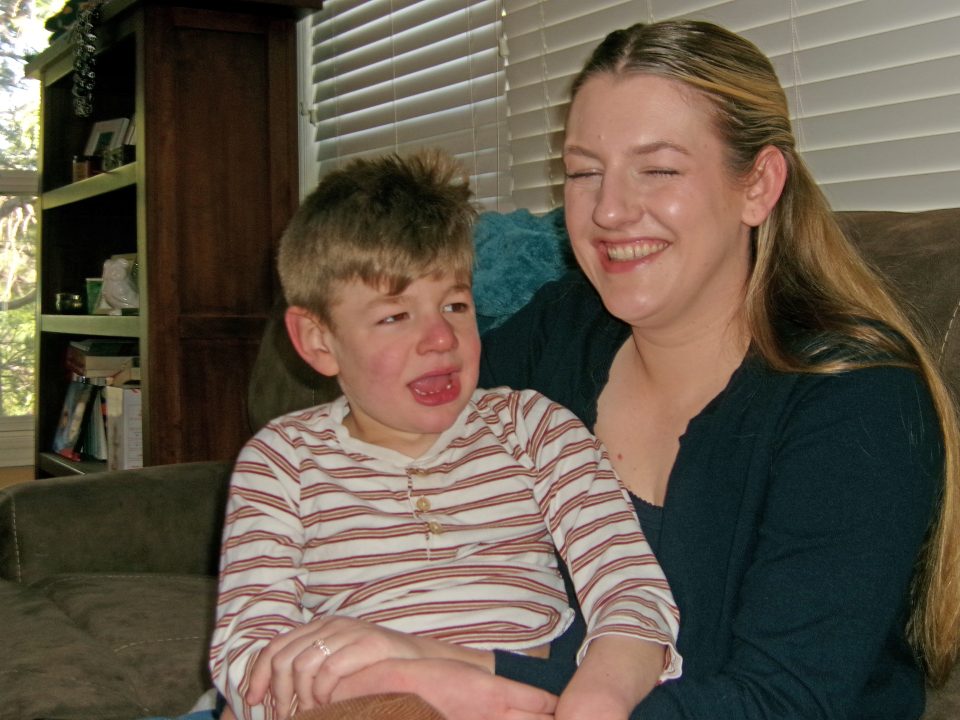
McKay has a couple of personal connections to Hunter Syndrome. Her younger brother was born with Hunter Syndrome and, through the innovations made in his lifetime, she saw improvements to his life and his longevity. He was not diagnosed until he was ten years old, but he lived many years longer due to the treatments he did receive, dying at age 19.
Boys diagnosed at birth and put into treatment after only one to three years are seeing significant differences, such as less hearing loss, keeping speech longer, more standard growth and major changes in the progression of the disease. Biomarkers and lab testing are being used to document improvements. Those in the programs are showing remarkable progress.
From research and testing, it has been discovered that the build-up of Heparin Sulfate in the brain defines Hunter Syndrome, and by reducing that, and hopefully in the future treating it neo-natally, it will lead to a cure of the syndrome.
McKay took the genetic testing when she was pregnant since her brother had been affected. She and her husband, Mathew McKay, who is a Mountain High School graduate from the class of 2011, knew before Charlie’s birth that he would possibly have the syndrome. Upon birth, Charlie was tested and was found positive for Hunter Syndrome, so he was immediately put into the program, receiving stem cell transplants at Children’s Hospital of Orange County (CHOC) for the first two years of his life.
He now shows few, if any, symptoms of Hunter Syndrome. However, at this point, no one is sure how long those treatments are effective. The stem cells are not a cure, but are an effective treatment. During a subsequent operation to install a port for the treatments, Charlie suffered a medical emergency and some brain damage. It is because of that setback he is now enrolled in special education classes at school.
Because of Charlie’s situation, Kristin is also an advocate for parents of special needs students at the school, and pushing for inclusion in activities to the best of their abilities. She is very positive about the special education programs being offered in Rim Schools. “The teachers and the principal at VOE and the aides are wonderful, the community is generous and it seems to look out for our special children. The school staff were involved in the Rotary Polar Bear Plunge last month, raising funds for Project Alive to help give Charlie a chance to survive.” Kristin is interested in getting involved in the Rotary clubs locally, too, as her mother-in-law was a past president of the Lake Arrowhead Rotary Club.
Under McKay’s leadership, Project Alive has become a beacon of hope for families that have been affected by Hunter Syndrome. Her commitment to advocating for patients, her use of her skills to raise critical funds for research and her ability to foster a supportive community has positioned her as a powerful force in the fight against rare diseases. Project Alive has curated a wealth of resources and tools to help families along the way. They offer support in education, healthcare, federal resources and knowing their rights.
Currently, there is a new clinical trial of a stem cell treatment program that is currently being tested at the University of California San Francisco that looks very promising for those with Hunter Syndrome. Although Charlie does not qualify for this study, he will probably benefit from the knowledge gained from it.
McKay was recognized for her leadership and determination and unwavering dedication to the rare disease community that is changing lives and advancing medical research. “Her tireless energy continues to advance the goal of solving and eliminating Hunter Syndrome.”
For more information about Project Alive and how you can support its mission, visit Projectalive.org.





0 Comments