



By RHEA-FRANCES TETLEY
Historian
Part 1 of 3
Francis (Frank) Lebaron Talmadge first saw the San Bernardino Mountains in 1853 after many months on the trail. A noted hunter, Talmadge had supplied the westward wagon train with fresh meat shot by “Foxsong,” his unusual two-barrel muzzle-loading rifle.
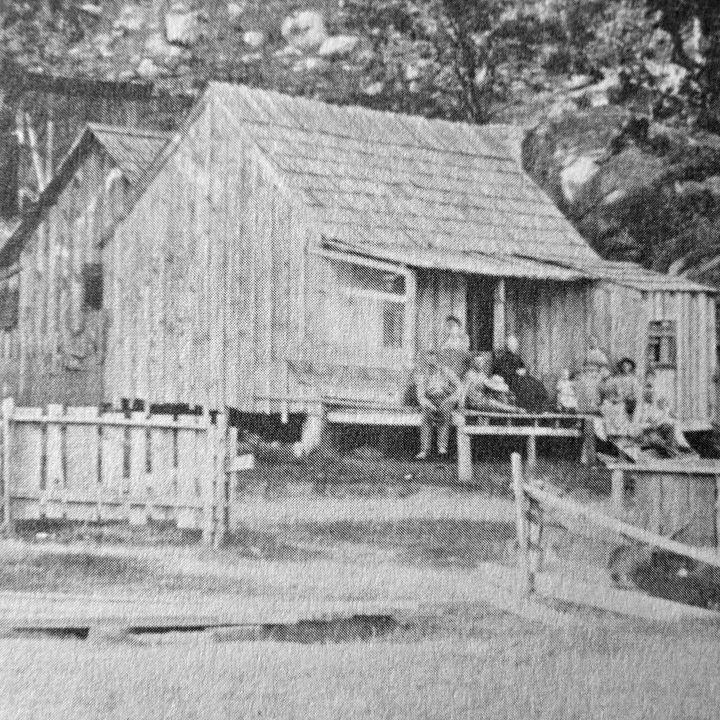
The Talmadge cabin where Francis Talmadge’s second son, John, was born, the first white child to be born in Little Bear Valley.
Talmadge worked at the Seely Sawmill in current day Valley of Enchantment, before moving to El Monte. While there, Talmadge farmed and moved freight and married Firnetta Jane Strong (Nettie), a recently widowed woman with three children, whom he’d met on one of the wagon trains he had led westward to Sacramento, years before.
In 1862, after the birth of his first son, Will, Talmadge moved his whole family up to the San Bernardino Mountains, getting himself involved in the lumber industry. He became a significant figure in the Little Bear Valley history over the next 25 years. He arrived after the horrible 1862 Noachian Flood had washed out parts of the old Mormon Road and destroyed several sawmills, including David Seely’s sawmill, where he had previously worked.
Talmadge began hauling lumber down the mountain for the James-Rowland Steam Sawmill, located on James Flat, later known as Huston Flat, now flooded by Lake Gregory. He helped Jerome Benson and Sam Pine construct the first sawmill (Benson-Pine) in Little Bear Valley. Talmadge’s second son, John, was born in 1864, becoming the first white child to be born in Little Bear Valley. (Mountain life must have agreed with young John because he grew up and worked as a cowboy in the local mountains until his death at age 91.)
Frank Talmadge also helped build the large Caley Mill, near present day Blue Jay in 1865. Two years later, he filed timber claims on 320 acres of forestland on the west side of Little Bear Valley and built his own sawmill.
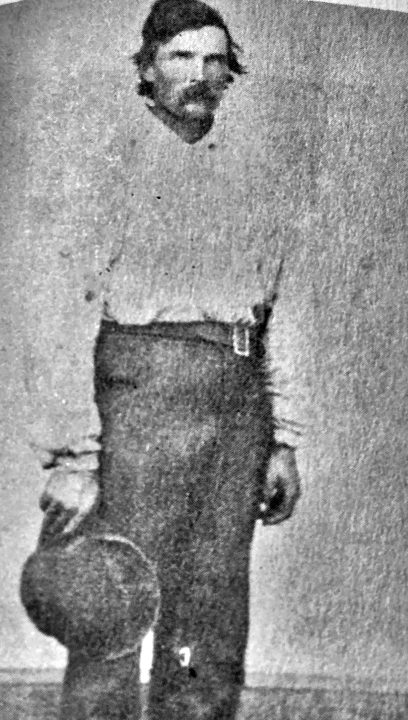
Frank Talmadge, age 25.
Since Talmadge lived year-round in Little Bear Valley, he kept a watch over the other mills in the winter when they were not operating. In January 1867, at the Caley Sawmill, he noticed that things were “missing.” Those losses were thefts by a hunting party of Paiute Indians that had entered the area through Little Bear Gorge from the desert side of the mountain. The loggers were unaware that the Little Bear Valley area was the Paiutes’ traditional hunting grounds. The Paiutes did not intend on permitting the lumbermen and their loud equipment to remain on “Indian land,” scaring away the game.
Another January day, while Bill Caine was making repairs at the Caley Sawmill, the Paiutes found Caine’s cabin and looted it of all of its food, provisions, blankets, his rifle and burned it to the ground. Then, they took his cattle and drove them back down the gorge, through the snowdrifts.
As the Paiutes drove the cattle past the closed Benson-Pine water-powered sawmill, they also looted and burned that mill to the ground. The name “Burnt Mill” comes from this 1867 episode in history.
Will the Paiutes successfully drive the lumbermen out of Little Bear Valley or, whoever wins, will the battle be between them? Read Part 2 next week.



0 Comments