



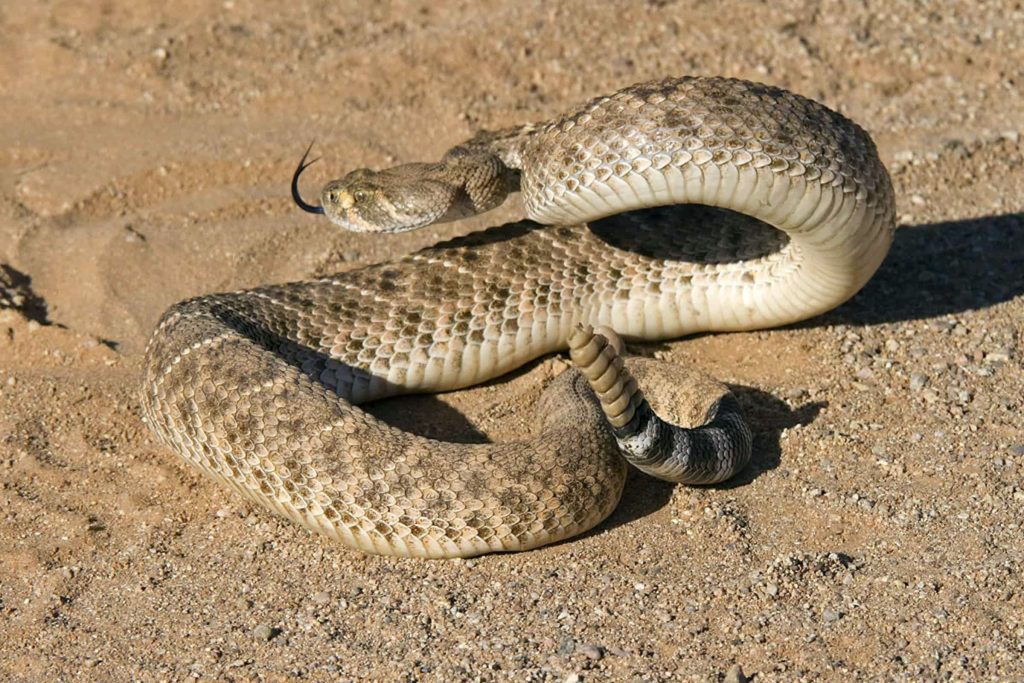
As temperatures rise in the mountains, it’s important to watch out for snakes. To avoid snakebites, stay vigilant while outdoors and seek immediate treatment if bitten.
In your yard: Look for snakes before picking up rocks, sticks and firewood. Rattlesnakes often hide in rock piles, shrubs, tall grass and logs. Never touch or disturb a snake, even if it appears dead, as snakes can strike quickly. Be cautious around fire pits, where snakes may camouflage themselves in ash and debris. If you kill a venomous snake, step away quickly, as it may still be able to strike.
Hiking and camping: Wear long pants and boots to block venom if a snake strikes. Stay on trails and avoid tall grass and overgrown bushes. If you see a snake, stop and go the other way. Be aware of snake noises but remember that rattlesnakes do not always use their rattles. Use the buddy system to ensure help is available if you are bitten. Teach children to respect snakes and avoid picking them up.
If bitten: Seek immediate medical attention by calling 911. Do not apply a constricting band, ice or try to suck out the venom. Remain calm and keep the bite area below the level of your heart until you reach a medical facility.
Mountains Community Hospital snakebite treatment capabilities
Mountains Community Hospital is prepared to treat moderate to severe rattlesnake bites with CroFab antivenom. Here’s what patients should know:
• MCH stocks six one-gram vials of CroFab, which is generally enough for an initial dose (typically four to six vials).
• CroFab is administered intravenously with close monitoring for allergic reactions.
• Not every snakebite requires antivenom. Treatment is reserved for moderate to severe envenomation.
• If CroFab is given, patients must be transferred to another hospital for further observation and potential additional doses.
• MCH provides stabilization, pain control and airway management as needed before transport.
• Patients requiring antivenom are typically monitored for 18 to 24 hours in a hospital setting after initial symptoms are controlled.
“Our goal is to provide critical care immediately after a bite, stabilize the patient and ensure they get the continuing care they may need,” said Julie Davis, director of Acute Care Nursing.
Being aware and prepared is the best defense against snakebites. Mountains Community Hospital is here to help when the unexpected happens.



0 Comments