



By RHEA-FRANCES TETLEY
Historian
The Danaher brothers of Michigan purchased one of the last areas of uncut forest from the aging David Seely, who had opened with his brother the first sawmill in the mountains in 1853. They paid $24,000 for 1,600 acres of pristine forest land and chose Long Point, on the crest near the east fork of City Creek (near the present-day intersection of Highway 330 and Fredalba Road in Running Springs), as the location to build their Highland Sawmill.
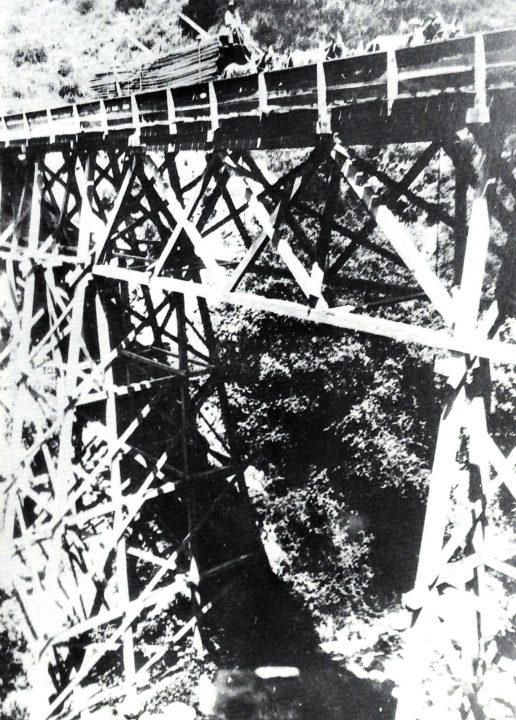
The Danaher brothers completed the City Creek Bridge in 1891, eliminating the need for the shoofly to move equipment over the gorge.
The brothers were anxious to begin cutting but needed a road up from the valley completed first, so the men and equipment could be transported up to the mill and the wood could be transported to the train station in Highland. Only then could they begin cutting and move the profitable lumber out.
The mid-crest area trees had been untouched despite over 40 years of lumbering in the western San Bernardino mountains, because of the inaccessibility of this area. The canyons and hillsides were very steep and a road would be difficult to construct. In 1878, the county supervisors had decided against building a road into the area when the estimate exceeded their $20,000 maximum for road construction.
The Danahers hired 100 men to construct the road up to their Highland Mill location. C.D. Danaher was company president and his brother, James E. Danaher, was the vice president of the Highland Box and Lumber Company, which was incorporated in July 1890. They negotiated with the landowners in Highland for a right of way through their groves to their road. They hoped to install tracks with a 10-percent grade to transport their lumber, by rail, to Highland and on to major markets. A train could also provide passenger service into the mountains.
The progress on the 10-percent grade road was not fast enough to satisfy the brothers, as construction stretched from June 1890 and into the summer of 1891.
The Danahers kept purchasing more timber tracts in the area, soon owning the forested ridges and valleys from Heaps Peak in the west to Green Valley in the east. They were heavily financially invested in the future success of the mill.
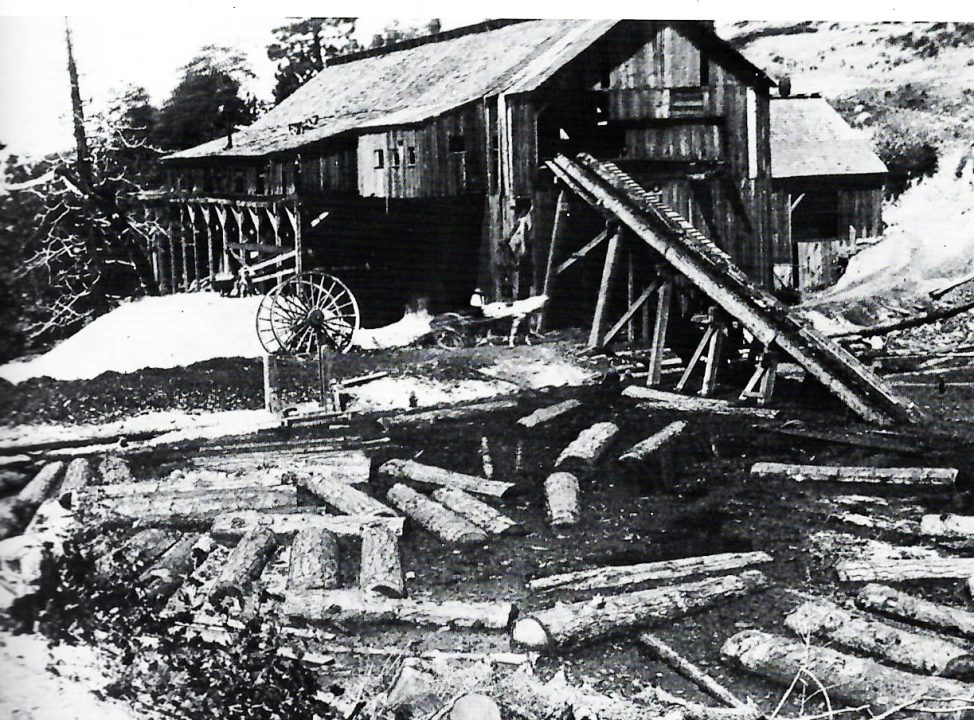
The Danaher sawmill.
In June 1891, the road construction crew, under orders to speed completion of the road, gave up the 10-percent grade route with tunnels and bridges (as originally designed by Thomas McFarlane) and quickly cut steep switchbacks up the remaining slope, creating a road with some 25-percent inclines. Wagon drivers needed to have nerves of steel to drive that steep narrow upper road. The road cost $50,000 to build and was completed just in time for the autumn of 1891.
The Highland Mill purchased the most modern machinery available. The heavy logging equipment was hauled up the road by oxen. The $50,000, 260-horsepower engine was used to power the bandsaws and other equipment that was capable of cutting 60,000 feet of lumber per day. The first wood cut was used to enclose the mill, in September of 1891. They expected to cut over one million board feet of lumber by December 1891.
When City Creek Road first opened, there was a “shoofly” crossing at the fork of City Creek. A shoofly was a device like a derrick, which would attach to a loaded lumber wagon and swing it over the steep gorge to the other side of the canyon. This block-and-tackle type device made it possible to transport the modern lumbering equipment, so the mill could open. The shoofly was a problem as it significantly slowed down the transportation of the lumber. Wood from the second cut from the mill built a bridge in January 1892, over the deep City Creek Gorge.
Next week: The rest of the Danahers’ Highland sawmill story.



0 Comments