



By Mary-Justine Lanyon
Editor
A patient in need of an EKG or a breathing treatment need look no further than the cardiopulmonary department at Mountains Community Hospital.
There the respiratory therapists are available 24 hours a day, seven days a week to provide services on both an inpatient and outpatient basis.
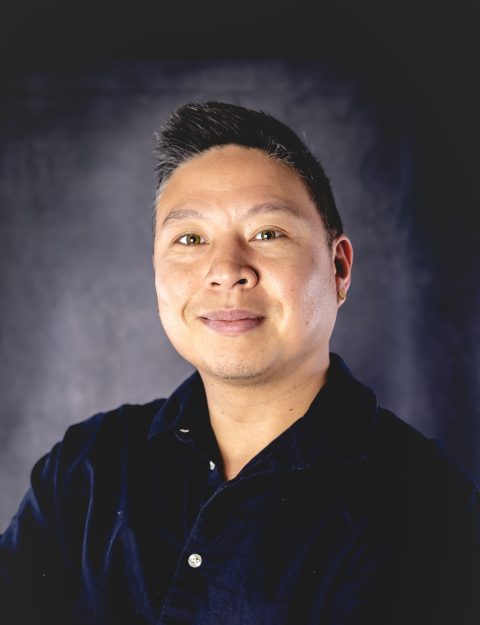
Manny Manalo heads up that department as the manager. While he always wanted to be involved in some way in the medical field, he didn’t know there was such a thing as a respiratory therapist.
“When I was a teen,” Manalo said, “I thought the hospital was just the doctors and nurses. When I got into healthcare, I found out there are so many other disciplines that are part of the patient care team.”
He had been planning to go into nursing until a cousin suggested he look into respiratory therapy. “I didn’t know what I was getting into,” Manalo said, “but as soon as I got into the course and learned about the therapy, I fell in love with it.
“I love taking care of people – part of my personality is nurturing, compassion and care. I like helping people feel better even if they’re not sick.”
After getting his degree with a focus on respiratory therapy, it took Manalo two years to get a job. “Many hospitals,” he said, “aren’t open to the idea of new graduates.” He had earned a bachelor’s degree in science and is about to start earning his master’s degree in healthcare administration.
“I love both aspects – administration and patient care,” Manalo said. That’s why he wears scrubs – so he can jump into patient care. “My heart is always at a patient’s bedside. I love taking care of patients, making them feel better.”
Manalo most recently had worked at Cedar Sinai Medical Center and Kindred Hospital La Mirada. Previously, he had spent eight years at Sherman Oaks Hospital, where he learned basic administration duties. The respiratory department there, he noted, was like a family. “I became so close to them they made me godfather to their kids; we traveled together.”
And he feels those same values at MCH, where he began work in February 2024. With the respiratory department small as well as the hospital, “we create core relationships among our colleagues.”
The respiratory therapists have six key responsibilities:
- Assessment and evaluation: Finding out what is causing a breathing difficulty – Is it asthma, allergies, a fluid buildup in the heart? They will listen to a patient in the ER, determining if they need nebulizer treatment.
- Treatment and management: Is the problem chronic or has it come on suddenly? The majority of their responsibilities are EKGs and breathing treatments but they also have more complex ones. If a patient’s heart stops, the respiratory therapist is the first on the scene, performing CPR. They are in charge of assisting the doctors put patients on life support. “That machine is our bread and butter,” Manalo said. “No one touches it but us.”
- Monitoring and documentation: They have eight residents in the Skilled Nursing Facility who are on oxygen and are monitored daily. If a patient comes in with asthma and gets breathing treatments, those can increase their heart rate so their vitals have to be monitored.
- Patient education: When a patient is discharged on oxygen, they have to be taught how to replace it, how to maintain it. And they work with post-op patients on their breathing.
- Collaboration: The respiratory therapists work closely with the nurses. They have daily “huddle” meetings. And they attend meetings with the doctors in the morning, giving their opinions when asked.
- Emergency response: The therapists are on call at all hours of the day and night, ready to respond to emergencies that present in the emergency department or in a hospitalized patient.
During Covid, Manalo said, “We were referred to as the unsung heroes. Every patient who deteriorated due to Covid ended up on life support. We’re in charge of airway management – we get the machine and the supplies and intubate the patient. We hook you up on life support and manage that machine.”
The lesson Manalo took out of Covid is just how precious life is.
In the cardiopulmonary department at MCH Manalo is joined by Stephen Nagy, who has 10 years of experience as a respiratory therapist. Asked what he likes about working at MCH, Nagy said, “I enjoy serving the community I grew up in while working beside people I grew up with as well.”
Charlie Anderson has 34 years of experience, with the last 28 at MCH. “I love working at Mountains Community because you get to know everybody in every department,” Anderson said, adding that in a large hospital you only get to know the people in your department.
They are joined by Raul Cazares, a per-diem therapist who has been a respiratory therapist for 32 years. “I really enjoy the feel of a smaller facility,” Cazares said. “I treat every patient that comes my way with the utmost respect and compassion as this is the way I would like to be treated some day when I require medical attention.”
Last spring, Manalo saw a lot of children come in with asthma whose parents were not educated on how to prevent a bad asthma attack. Because of that, he has been studying for his asthma education certification, a test he is about to take.
When he’s not treating patients or studying for his certification, Manalo enjoys being outdoors. He loves going hiking and to the beach and goes to the gym daily. He calls himself a “huge family guy” – he’s very close with his siblings and his cousins.
“At a bigger hospital,” he said, “I felt like an abandoned child. Here, everyone helps one another. There’s family love – that’s one thing I love about working here.”




0 Comments