



By Mary-Justine Lanyon
The Friends of the Library is presenting a special senior concerns lecture series at the Lake Arrowhead branch. The series offers valuable information and resources for older adults, caregivers and families navigating the challenges of aging, healthcare and planning for the future.
The series is led by Jacqueline Lauder, MSG, a respected gerontologist with a master’s degree in gerontology from California State University Fullerton. With years of experience in senior services and education, Lauder brings insight and clarity to important topics that affect individuals and families alike.
Lauder’s presentation on Aug. 20 focused on aging dynamics and the impact on what is called the “sandwich generation” – adults caring for both aging parents and dependent children.
These caregivers often face emotional stress and financial challenges while juggling work, caregiving and family commitments.
With the aging “boomer” population, Lauder said, the sandwich generation is becoming more diverse, with rising numbers. In the last 30 years, the population of those age 65 and older has increased by 50 percent. The first baby boomers turned 65 in 2011; the last will turn 65 in 2029.
It is projected that the population of people 65 and older will be 83.7 million in 2050. As boomers age, their numbers and needs will be felt intensely in the healthcare and social service sectors.
The fastest growing segment of the total population is made up of those 85 and older – it will double by 2036 and triple by 2049, Lauder said.
Steps for caregivers
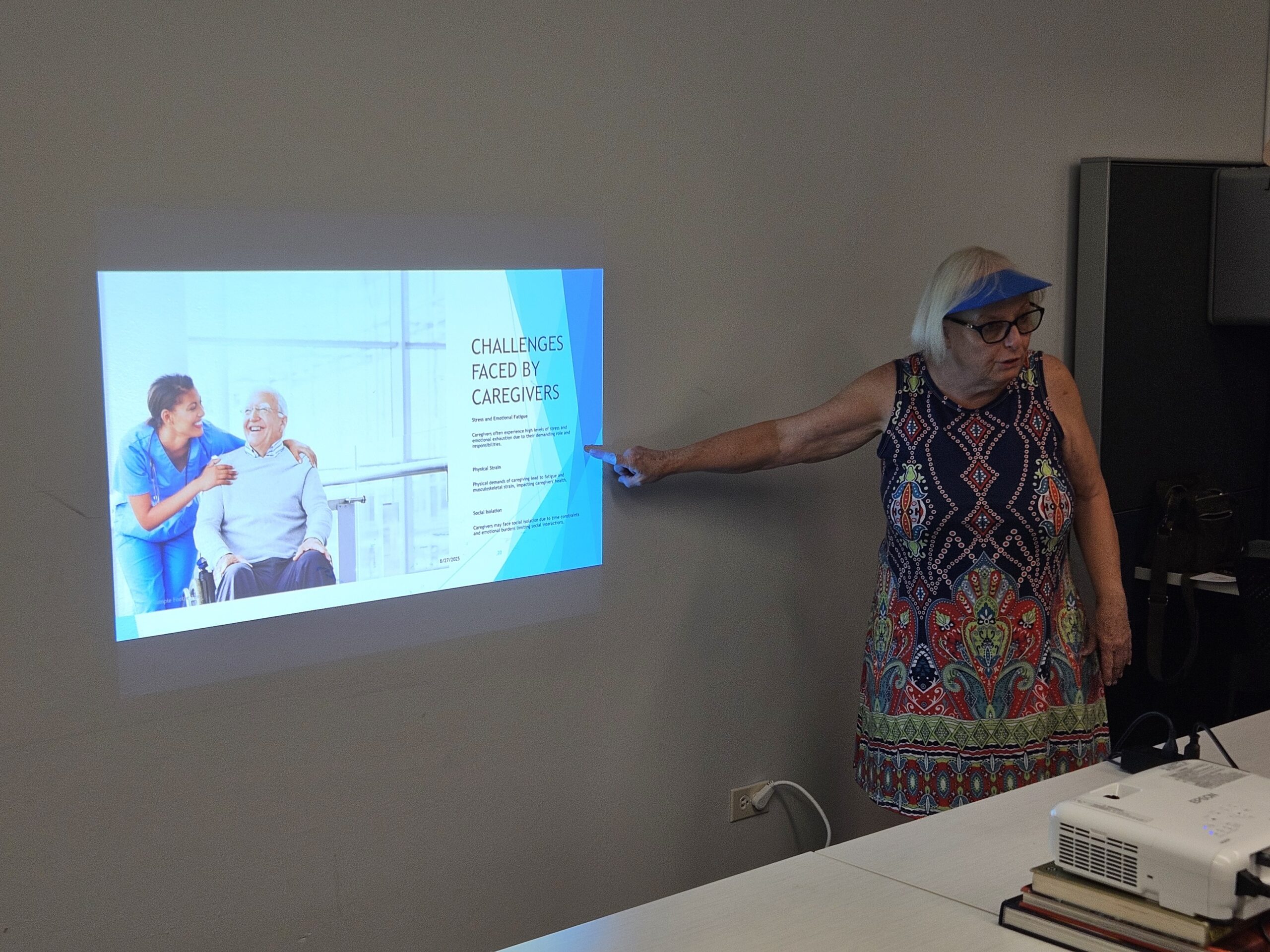
Lauder’s second presentation, on Aug. 27, outlined tools and strategies for becoming an effective caregiver.
“Who needs this information?” she asked. The answer: Everyone. Being prepared can help avoid uncomfortable issues and what she called the caregiving crisis.
Currently 30 million people are providing care for an adult over the age of 50. That number, Lauder said, is expected to double over the next 25 years.
Most people tend to think about the physical aspect of caregiving, Lauder said, but the financial aspect is huge. Many of those 30 million people have little or no support.
“There have been conversations about how to support caregiving but nothing has happened,” she said. “We haven’t done a good job in our culture.”
The total aggregate financial loss for caregivers nationwide is estimated at $3 trillion, affecting their wages, pension benefits and retirement savings.
Caregiving maintains the quality of life of the person being cared for, allowing them to live safely in their own home. But no one is coming to the rescue – the care and cost fall on individual family members.
Caregiving can include managing the person’s medications, helping with personal hygiene – which can be problematic for a man caring for a woman – coordinating appointments and transportation and managing household chores.
Lauder urges everyone to have the caregiving conversation with their adult children – something they don’t want to talk about. At the same time, she said, no parent wants to admit they may need help someday.
Above all, she said, always include the person to be cared for in every conversation. Do not make a plan or intervene without their knowledge or consent.
In approaching this difficult topic, keep several ground rules in mind: All feelings are respected. All viewpoints are heard. Avoid preconceived ideas. Listen rather than tell. Leave the conversation open.
Make a plan – form your team – have a meeting.
Have a general conversation with the person who will be cared for about their goals and wishes. As you form your team, don’t leave anyone out – include that difficult family members who may be of help later on.
As you assemble the team, the person who will be receiving care should play the most significant role. One person should be designated the team leader – not the dictator.
Lauder urges everyone not to overlook the professional help that is available, such as referral services.
When a crisis happens – and it will – it helps to have the tools in place to deal with complications.
What are some of the challenges caregivers will face? Lauder pointed to stress, emotional fatigue, physical strain and social isolation. She recommends the caregivers find a support group and enlist respite care so they can recharge, even if it’s just getting out to the grocery store or for walk in the park.
There are several options for long-term care. Home health workers come to the person’s home. But if the person needs more care than that, there are assisted living facilities and nursing facilities. The family should make sure they are aware of any insurance policies the person has taken out that may cover some of these costs.
Communication throughout the process is key, Lauder said. Knowing what everyone is thinking and what they want can help ensure better decision making.
The keys to empowering family caregivers start with understanding the emotional and physical challenges faced by family caregivers. Effective organization and planning will help caregivers manage responsibilities and reduce their stress. Guiding caregivers to available resources can help them provide quality care. And supporting caregiver well-being is vital to sustaining their role.
“We have to talk to people about this,” Lauder said. By talking, establishing a plan, outlining what resources and financial help are available will make it so much better down the road.
Lauder will have two more presentations:
- Sept. 10: Advance Directives and the Five Wishes: Legal and emotional aspects of end-of-life planning.
- Sept. 24: Medicare 101: What you need to know about coverage, enrollment and changes.
All lectures are free and open to the public. The Lake Arrowhead branch library is located at 27235 Highway 189 in Blue Jay.





0 Comments