


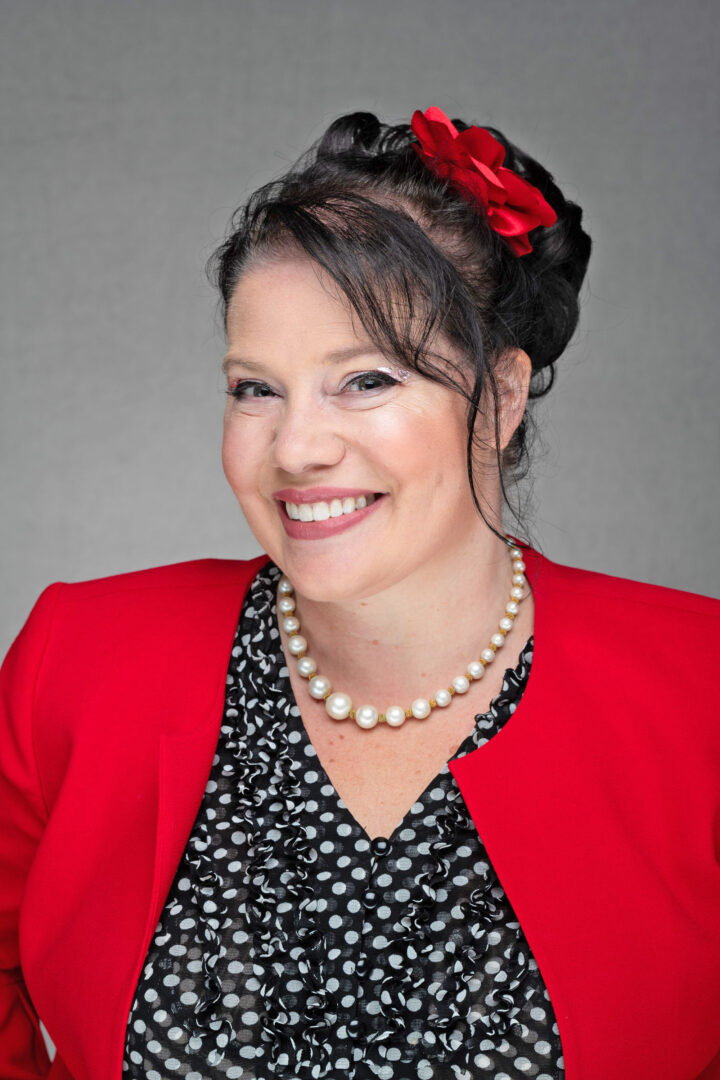
By Mary-Justine Lanyon
Washing your hands – simple hand hygiene – can help prevent infections.
“Hand hygiene is critical,” says Emily Barnard, the infection prevention manager at Mountains Community Hospital (MCH).
Her job is to ensure the hospital environment is clean and sanitary. Bacteria, she said, are very creative. “They can double every 20 minutes. Our research is not moving at that pace for drug manufacturing to address the potential for a post-antifungal and antibiotic era from the growing concerns of emerging multi-drug-resistant pathogens.”
She conducts workshops with the MCH staff on how to prevent infection. She has done audits on sterilization and is creating a streamlined process to sterilize endoscopes so they can adjust the time it takes to process them.
Barnard is currently working with vendors to look at improving vascular dressing that provides enhanced patient protection and would work better for the nurses. The one they currently have, she said, is not as good as it could be. The new one she is considering has a locking mechanism for better securement and prevents pathogens from entering the body from the outside, reducing the risk for bloodstream infections.
In the six months she has been at MCH, Barnard said, she has asked questions, investigated, identified opportunities and implemented new processes, building trust in stakeholders and staff members. Staff members feel safe engaging in open conversations about process and practices with Barnard. One staff member came to her asking about the laundry bins they use; they were potentially an infection control issue as they are tall and hard to clean. Smaller, easier-to-clean single-resident laundry bins may be safer. That is one way staff are utilizing Barnard’s expertise to address staff workflow and infection prevention concerns in the Skilled Nursing Facility (SNF).
It always comes back to hand hygiene. MCH was using the guidelines from the World Health Organization, which had confusing guidelines for hand sanitation from 15 to 60 seconds. Barnard identified an opportunity to implement guidelines from the Centers for Disease Control and Prevention (CDC) with a standardized approach, with at least 20 seconds of soap and water or alcohol-based hand sanitizer. Additionally, she implemented a direct audit hand hygiene compliance program, a small change with significant impacts to improve the organization’s survey readiness and reduce the risk of patient harm from pathogens in the environment or on healthcare workers’ hands. Barnard noted that friction and time remove pathogens.
In demonstrating proper hand washing with the SNF staff, Barnard applied paint to their hands and personal protective equipment (gowns) to better understand gaps during hand hygiene and close contact patient interactions associated with transferring the unseen pathogens that can remain on hands when not thoroughly cleaned or resident to staff transfer. The paint revealed where hands were not “cleansed” and how activities of daily living, such as repositioning a resident, may transfer pathogens from one person to another.
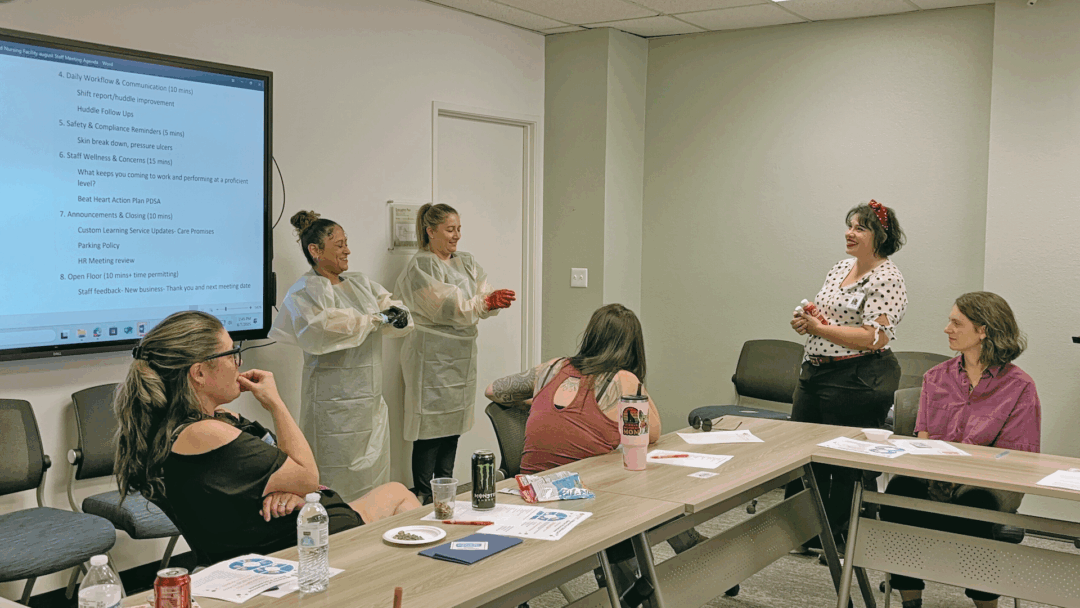
Emily Barnard (right) used paint to demonstrate proper hand-washing techniques with the SNF staff. (Photo courtesy of Emily Barnard)
This exercise supported the implementation of enhanced barrier precautions recommended by the Department of Public Health – new guidelines in the SNF for bathing and toileting and any time the staff comes in close contact with a resident. The goal, she said, was to “find ways to interact with residents that keep everyone safe.”
Should a patient present with an infection, Barnard will be called in to consult with the nurse and develop the best course of action. “We have developed a protocol,” she said. “You must assess how we are doing things in our space. What pathogens are we seeing? Are we hitting our hand hygiene thresholds of at least 80-percent compliance to reduce the risk for healthcare-associated infections?”
Barnard’s work takes her into the kitchen, ensuring the patients’ food is kept at the proper temperatures.
It doesn’t stop there. The construction activities in healthcare are a cause for concern. “People don’t realize there’s a lot of health risks associated with construction dust – dust that can be disturbed. You must know the air flow and how things move on the air currents. You must ensure the dust is controlled and has less opportunity to move throughout the hospital.”
Construction dust is a mixture of airborne particles generated from various building materials during construction activities like cutting, sanding and drilling. It includes harmful substances like silica, wood dust, volatile organic compounds, lead and asbestos, which can cause serious health problems when inhaled.
Barnard’s reach extends out into the community. She is working with HAFDRA on their health fair, which will take place next year. She has started a podcast called “Mitigate This.” It’s no surprise that one episode is about hand hygiene. Another episode addresses poorly written instructions essential for cleaning, disinfecting and sterilizing medical devices. And, she said, “there is a fun one about bats and rabies.” She breaks down complex concepts to bring them to various audiences.
She also writes abstracts for national presentations and professional publications. One addresses how to do and write up research and how to write a publication-worthy paper. And she just had one accepted on endoscope hang time, extending endoscope reprocessing time, going beyond the current seven-day standard after safe practices are validated for cleaning and disinfection.
“We need to look past the seven-day hang time,” she said, “as frequent processing can damage them and contribute to wasted time and costly chemicals.” Barnard added that they have a lot of innovative technology, like a borescope that can look inside the endoscope for any fluid or damage. An endoscope drying device can also purge any droplets left in an endoscope. The risk with hanging scopes for a long time is that there may be retained droplets that could be an opportunistic site for microbial growth and patient harm downstream. She is excited for MCH to safely move past the seven-day endoscope hang time.
Back to those hands – Barnard addressed nail safety, saying, “Our hands are a big source of transmitting pathogens. Many hospitals don’t have a nail or a policy about removing gel nails.” Therefore, she is working with leaders to assess risk in the healthcare environment.
Barnard originally hails from Northern California. She has worked at academic medical centers, trauma centers, behavioral health settings and critical access hospitals, overseeing infection prevention efforts in acute and long-term care settings. She had her own consulting company but wanted to get back into a traditional workplace for a sustained impact; that is when she found MCH.
She is currently completing a PhD in Public Health, focusing on innovative research in infection prevention. She is certified in infection control and epidemiology, endoscope reprocessing and healthcare accreditation and compliance.
“I am passionate about patient safety and quality improvement,” Barnard said. “I continually strive to drive innovation in infection prevention and healthcare excellence.”





0 Comments