



Adolph Koebig, San Bernardino’s city engineer, was envious of the Bear Valley Reservoir and Irrigation Company, which had built a $75,000 dam in Big Bear Valley in 1884, securing a year-round steady supply of water, allowing the Redlands agriculture industry to flourish.
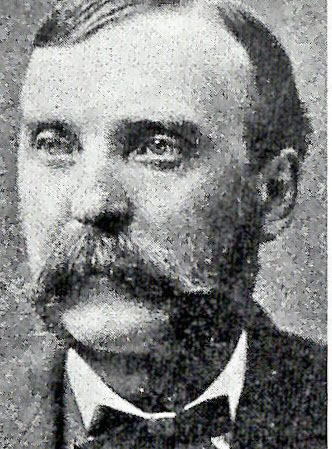
Adolph Wood was the first man to suggest a road along the crest of the mountains for scenic and recreational travel. This idea was later championed by Dr. John Baylis into the Rim of the World Road, which opened to automobile traffic in 1915.
Koebig and local newspaper editor, L.H. Holt, examined the mountains north of San Bernardino, finding several locations that would be excellent for dam projects to send water down to the fertile San Bernardino Valley. Finding no local funding sources, Koebig traveled to Ohio in the spring of 1890 and met successfully with some financiers, including Adolph Wood.
Adolph Wood quickly formed the Arrowhead Reservoir Company (ARC), before arriving in San Bernardino in May of 1891, and then began to purchase mountain water rights. The announcement of the reservoir project was made by Holt in his newspaper, The San Bernardino Times-Index, on June 5, 1891. The article stated, “The system will consist of several reservoirs, one of which will be located in Little Bear Valley, one in Green Valley (Grass Valley) and one in Huston Flat (Crestline), with possibly other reservoirs.
“These reservoirs will be filled by a large canal to carry winter water from Deep Creek. The reservoirs are each in a separate watershed, but when all connected together, they can all be drained into the San Bernardino Valley through a tunnel at the head of Waterman Canyon… the capacity of the system will irrigate 120,000 acres of land.”
San Bernardino enthusiastically embraced the irrigation concept and held a banquet in Wood’s honor on June 12, 1891. In the final part of his speech, Wood challenged the 200 prominent men in attendance to be forward thinking about the future of San Bernardino.
Wood said, “I believe you have within your reach an attraction which could prove to be unique, peculiar only to your city, the most superb inland view to be obtained in Southern California.
“Suppose you were to choose to construct a good mountain road to the foothills, double track, of good grade, to the top of the mountain – which our company will build, if permitted – through Waterman Canyon, or ‘Arrowhead Canyon,’ if you will.
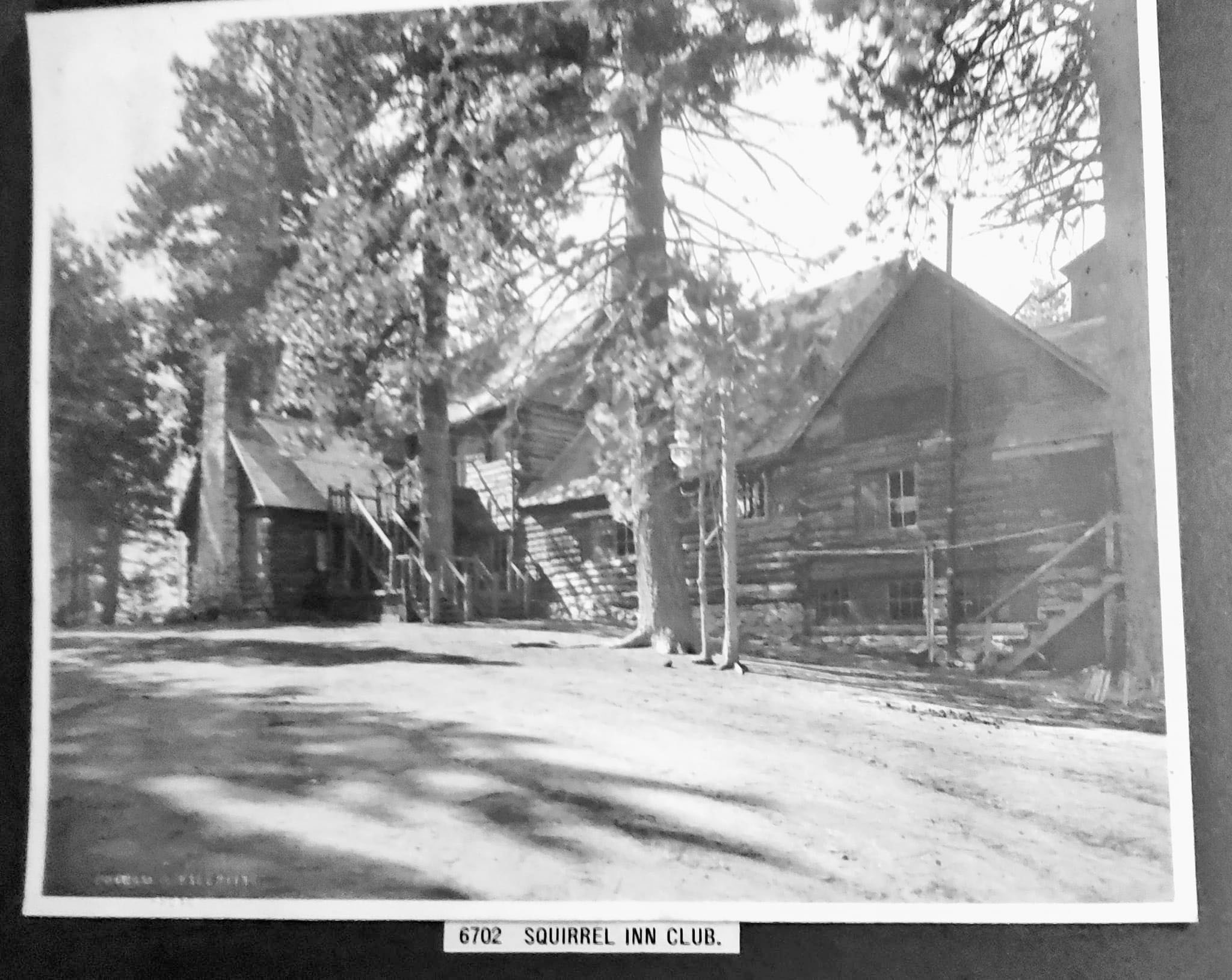
The resort that Wood suggested should be built on the mountain’s crest opened in 1892 as the Squirrel Inn, with many ARC investors as members.
“Mayhap, someone would build a small house of entertainment on the mountaintop (Squirrel Inn) where the night might be spent by tourists, and where one might gaze at leisure at what is destined to be the most lively valley in the world when filled, as well it will be, with orchards and vineyards and peaceful villages.
“Now I come to a question of more material interest to the growth of this city. Fuel is costly here. Fuel is heat, heat is power. It happens that our company, in the prosecution of its park, will have the means of developing an enormous amount of power. You will see there may be developed, without detriment to our original purpose, a great manufacturing power. If we harness this power, can it be used to your advantage?”
On June 13, the day after Wood’s speech, the ARC completed a land sale with lumberman Peter B. Guernsey and two days later the last deal with John Suverkrup for his lands. The ARC now held title to 4,360 acres of mountain land. They were prepared to proceed and divert the direction of the mountain streams from the Mojave River watershed to the San Bernardino Valley where they predicted they could send 80,000-acre feet of water yearly.
Perhaps, if the project had been built according to those original specifications, all would have gone well, but the ARC expanded the three-dam/lake project to include seven lakes and tunnels. Their $1 million capitalization could not fund this grander vision. Then, the mid-1890s economic depression came, along with construction delays and the lawsuits from the communities on the desert side.
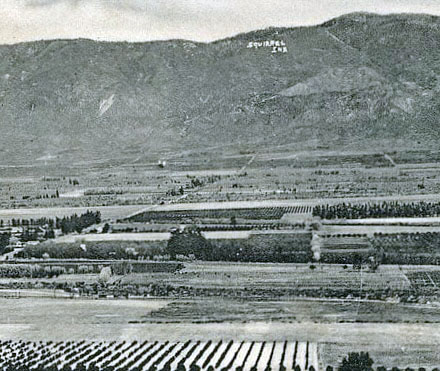
The Squirrel Inn on the crest of the mountain had a sign that could be seen from the valley.



0 Comments