

RHEA-FRANCES TETLEY
Historian
People always have enjoyed treating themselves with tasty snacks. One of the reasons the Serrano Indians stayed in the mountains through the fall was the autumn harvesting of pinyon nuts. They’d return to the desert for the winter, carrying the tasty nuts in conical baskets on their backs. Pinyon nuts are the seeds of the pinyon trees, a scrubby gray tree with small sticky seed cones, which grew on the desert side of Big Bear. They were considered a special treat because they did not develop well every year, growing best after a wet winter and spring, so a great harvest only occurred every 4-to-7-years. Pinyon nuts are appreciated for their buttery, mildly sweet flavor. Pinyon (Spanish spelling Pinon) nuts are about 1/2 inch long and brown in color when ripe.
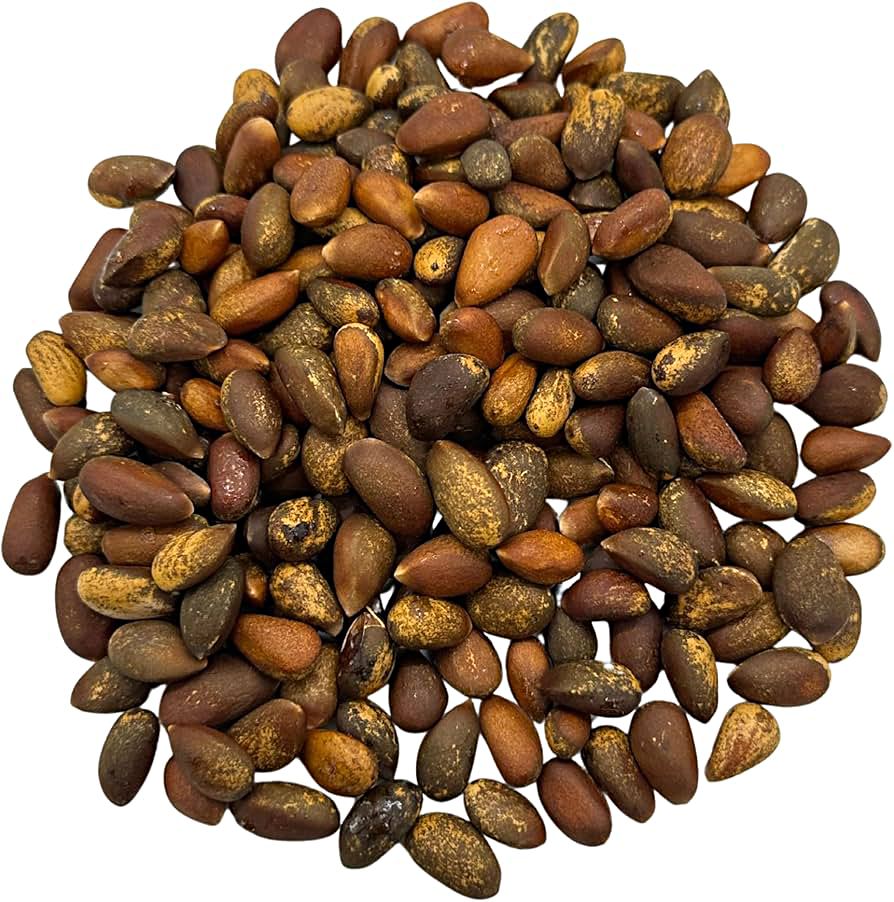
Pinyon nuts have been a delicious attraction for mountain residents since the Indian era.
Pinyon nuts also appealed to the taste buds of the early mountain settlers. “They were a delicious snack, but not available in stores,” said Julia Dexter, who moved to Twin Peaks as a young bride in 1920. “They’re especially enjoyable when roasted on a cold winter’s night.”
The few who lived on the mountain in the early 1920s felt like one big family and often did adventures together; such an activity was pinyon nut gathering. The men would scout the best places to find the cones weeks in advance. Usually 12 to 15 people would go together for a good harvest day. They’d leave early in the morning, traveling in several cars, often up to the desert side of Big Bear Valley.
They’d seek a place with a large flat area since the nuts needed to sun dry, because naturally dried nuts had the sweetest flavor. The men would spread out a canvas on the ground, under the pinyon tree, with the ripened cones.
This was a family affair; men, women and children would wear their oldest clothes for the workday. “If the trees weren’t too tall, long sticks would knock off the cones, but if they were tall, someone would climb the tree and knock the cones off with an ax handle,” said Dexter. “When the ripe cones that were ready to shed had fallen onto the canvas, the women and children would start to remove the nuts from the cones.”
Using forked sticks, they loosened the nuts from the tightly closed cones. It was a dirty, sticky job because the cones were filled with pitch. They’d throw the empty cones off the canvas so all that remained after hours of work were thousands of pinyon nuts. These would be poured into gunnysacks.
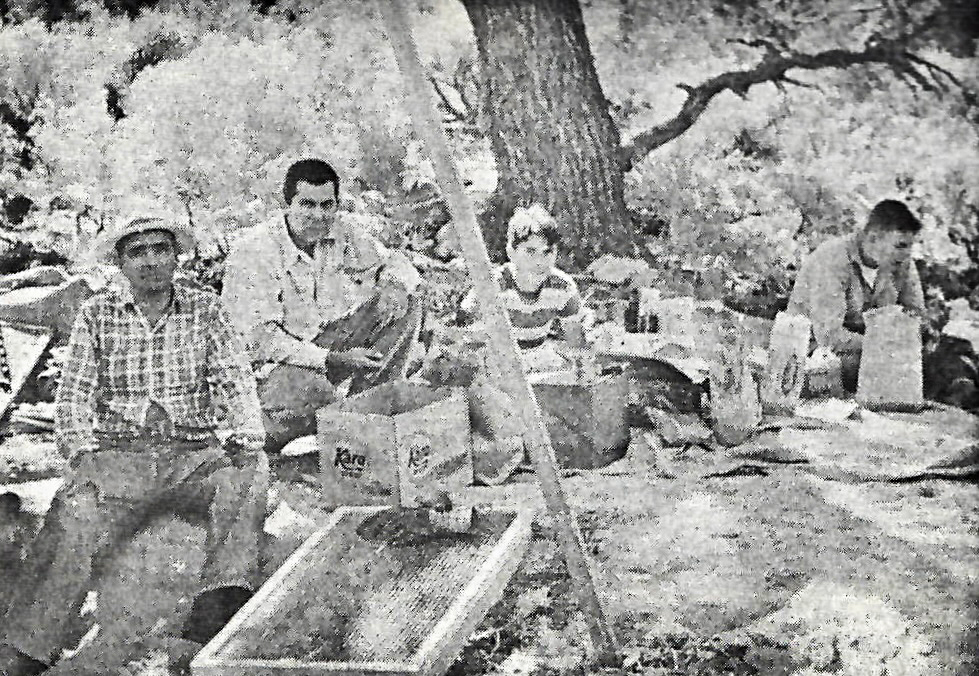
Bud Dexter, Bush Metcalf and son and Jim McLean sorting pinyon nuts near Barton Flats.
Lunch would be eaten about half-way through the day, presenting an excellent excuse to clean their hands. The best way to cut the pitch was by rubbing their hands in sand. It was more difficult to work with gloves, but it was better for the skin.
After lunch, the children played for an hour or so before getting back to work. It was hard work, but a productive way to spend fun time together.
The gunnysacks of nuts were then taken to a water troth to be sorted. The ‘duds’ floated, while the good ones sank to the bottom. They quickly scooped up the good non-floaters so the nuts didn’t get waterlogged.
After the sorting, they would sun-dry the nuts as long as possible. “It made them sweeter,” Dexter said. They were divided evenly between the workers when they got home. Afterwards, everyone was tired, but satisfied having procured a tasty treat to enjoy all winter long.
The nuts were placed in porous sacks in small quantities and hung behind the pipe of their wood stove to dry. On cold winter nights, they’d be roasted in the oven and then eaten while still warm. The downside of pinyon nut harvesting was that pitch from the cones was impossible to remove from clothes, which was the reason they wore old clothes when pinyon nut harvesting. They’d burn those old, pitchy clothes for warmth during the winter.



0 Comments