

By RHEA-FRANCES TETLEY
Historian
The winter of 1908-1909 started out with a foot of snow in December and then seven inches of rain on Jan. 21, with snowfall after snowfall for weeks afterward.
Two hundred families in Redlands already owned automobiles in 1909. Dr. John Baylis, owner of the newly opened Pinecrest Resort in Twin Peaks, petitioned the county board of supervisors on April 26 to open the county-owned Mountain Crest Wagon Road to automobile traffic certain days of the week. To persuade them completely, he offered them an invitation to drive the beautiful route, which was immediately accepted.
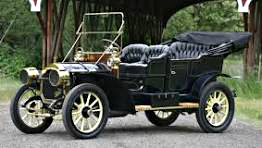
1909 Packard Runabout
With three officials (and a driver and mechanic) in each of seven cars, the supervisors left San Bernardino City Hall at 7:30 a.m. on April 28, following Little Bear Dam contractor Andrew Drew’s Oldsmobile. Drew already drove the formerly private Arrowhead Reservoir Road to the dam project about four times a month. Unfortunately, it was foggy, with only a 40-foot visibility, so the fabulous valley views had to be imagined.
The caravan of autos included a Packard, a Stanley Steamer, a Northern, a two-cylinder Reo, a Stevens, a Duryea and a Tourist. The cars passed several horse-drawn wagons along the road, but no animals were spooked. All autos safely traveled up the mountain, except for the Northern, carrying Senator Willis, which broke down at the head of Waterman Canyon. Willis quickly jumped into another car because he wasn’t going to miss this trip.
They arrived at the north end of the dam at 11:00 a.m. where the sky was clear. They swarmed the Arrowhead Reservoir Company’s site they’d heard so much about, with cement mixers, steam shovels, locomotives and other construction equipment. They saw the 195-foot-tall outlet tower that had been dedicated the previous July and were told of the 1,100-foot-long tunnel below it, running out to Willow Creek, designed to transport irrigation water to San Bernardino.
The officials were treated to a luncheon delight of “beef à la mode” with brown gravy, mashed potatoes, stewed corn, lima beans and homemade bread and butter, topped off with pie at Baylis’ Pine Crest Resort.
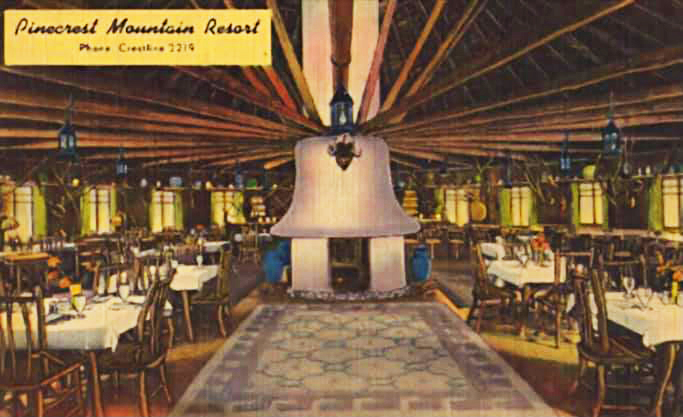
Pine Crest where the supervisors were hosted by Dr. John Baylis.
The officials were greatly impressed by the journey, the road, dam site, the delicious food and even the beautiful, smiling waitresses. They hoped the Little Bear Dam workers enjoyed similar hardy meals.
The auto trip worked. Four days later, the supervisors voted to open the Mountain Crest Road to motorized traffic, beginning on May 15. Autos were permitted to drive up the mountain on Wednesdays from noon to midnight and from noon on Saturdays to noon on Sundays. To eliminate the possibility of head-on collisions, downhill traffic was restricted from noon on Sundays to noon on Mondays. However, motorized traffic was limited to well-graded roads.
This is when auto challenges began, as not all roads were connected nor well-graded. Jack Heyser was challenged to drive his White Steamer Runabout on a one-day round-trip from the valley to Big Bear Lake, across the mountain to the Little Bear Dam area and back in 1910. His well-publicized trip got the news out that the roads were travelable.
With the reality of motorized travel permitted into the San Bernardino Mountains, fishermen, tourists, campers and others could visit the mountains more easily than by slow wagon, which had been the only way to get to “The Heights” just five years before. The Pine Crest Resort began thriving.
Fishermen flocked to the creeks and, as the Little Bear Dam was hopefully nearing completion, they were eyeing the location of the future lake with great anticipation, because those roads were good and graded.
The Fish and Game Association stocked the streams and imported grouse and wild turkeys for the fishermen and hunters. Camping and fishing became so popular that the local game warden had to stop all the poaching and began enforcing each fisherman’s 50 trout per day limit taken out of Little Bear Creek near Camp Blue Jay.
Motorized transportation was going to change the face and future of the area.
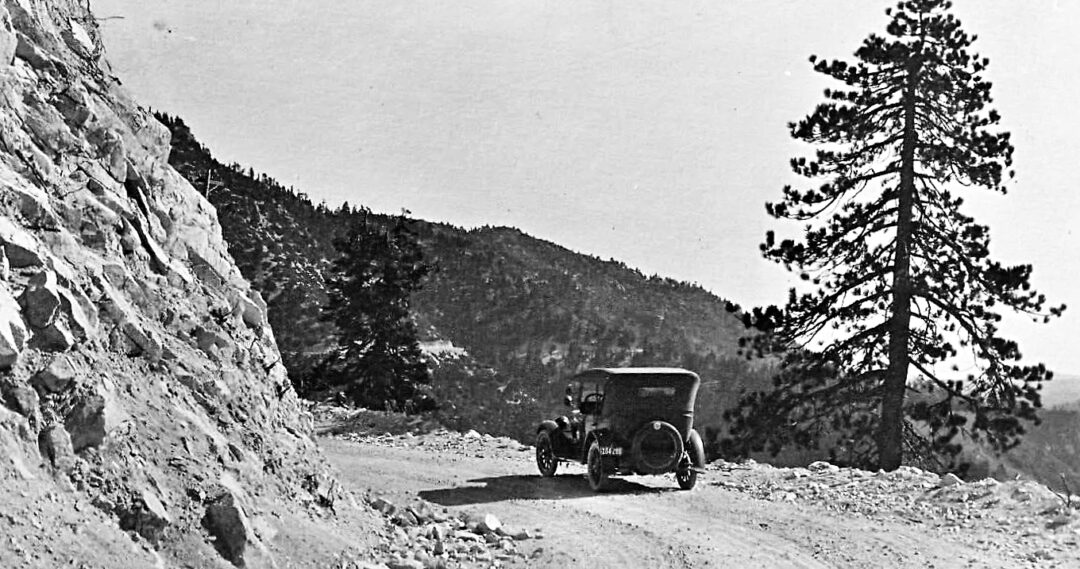
Rim of the World Drive Road was dirt until the 1920s.



0 Comments