



By RHEA-FRANCES TETLEY
Historian
Around the time William Stephen was entertaining the camping tourists in the mountains during the summers, there were changes occurring, redirecting the developed plans for its future
The end of 1909 saw the Arrowhead Reservoir and Power Company (ARPC) in Little Bear Valley closing up most of its operations for the year, which included rounding up the cattle, halting the delivery of cement hauled up Waterman Canyon on the now public former Arrowhead Reservoir Road by oxen and mules to the dam site and rearranging the earth-filling equipment as the dam’s core wall grew. This would allow the winter weather to fill part of the now developing lake, behind the partially built dam.
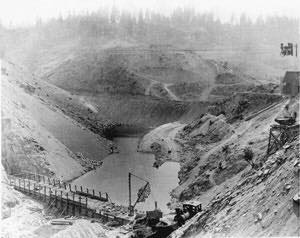
Building the dam that created Lake Arrowhead.
Over 100 men were sent home for the winter, leaving only a few caretakers at the dam site, with guns to shoot ducks for meat and some supplies to last the winter.
The first of the year brought rain and snowfall so heavy it stalled the trains in the Cajon Pass from debris slides that washed out the tracks. It was even reported that the upper Santa Ana River had cut a new channel. The valley areas had bridges washed out and their electricity knocked out for over a week, forcing the county board of supervisors to spend over $7,000 for immediate road repairs.
The county supervisors purchased the 19-year-old (Knight-Metcalf) Wagon Toll Road in April. The Snowslide section went through Green Valley to Fawnskin and along the north side of the mountain peaks; it was the best route to Big Bear Lake. It was in poor condition but was repairable for continued wagon usage.
The purchase of this dirt road, which was to be added to the other free public roads owned by the county, inspired Pinecrest Resort owner Dr. John Baylis, to step up promoting his desire to see a public road across the mountaintop. “Now we can have that long awaited Crest Boulevard! No such drive exists in all America as that, 40 miles east of Skyland, looking out over the San Bernardino Valley to the sea,” stated Baylis.
On April 8, 1910, the Big Bear Valley Mutual Water Company approved a contract for $53,000 with engineer J. S. Eastwood to build a dam 150 feet downstream from the rock dam constructed in 1881. By being 15 feet higher, it was estimated that Big Bear Lake would double its capacity.
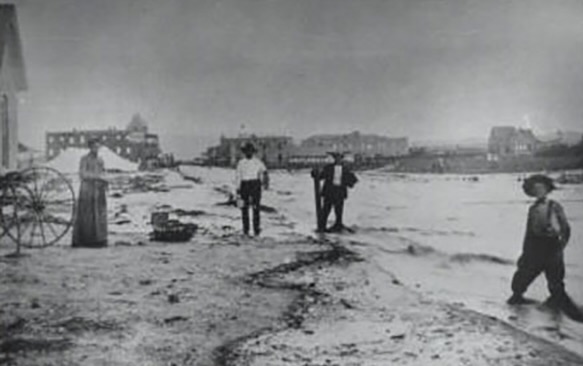
Flooding in San Bernardino, which washed out roads and bridges.
The snows had melted enough by April that 150 men went back to work at the Brookings Sawmill next to Fredalba and others went to the Deer Creek logging camp four miles to its east.
However, no workers returned to the Arrowhead Reservoir Dam site in April due to the problems created by lawsuits from the San Francisco-owned Mojave Water and Power, claiming water rights to the Arrowhead basin water (now being partially retained) needed to be resolved.
In May, big problems were discovered at the Little Bear Valley’s Arrowhead Reservoir dam site. Several less than one-inch-wide cracks had been found through the core wall and the wall was bulging out a foot from the weight of the water that was filling up the lake.
On May 6, Engineer Walter Hy Brown and his assistant James Valentine quit. Brown had deep dissatisfaction with consulting ARPC engineers Finkle and Trask, who were recommending what he considered inadequate repairs to the core wall.
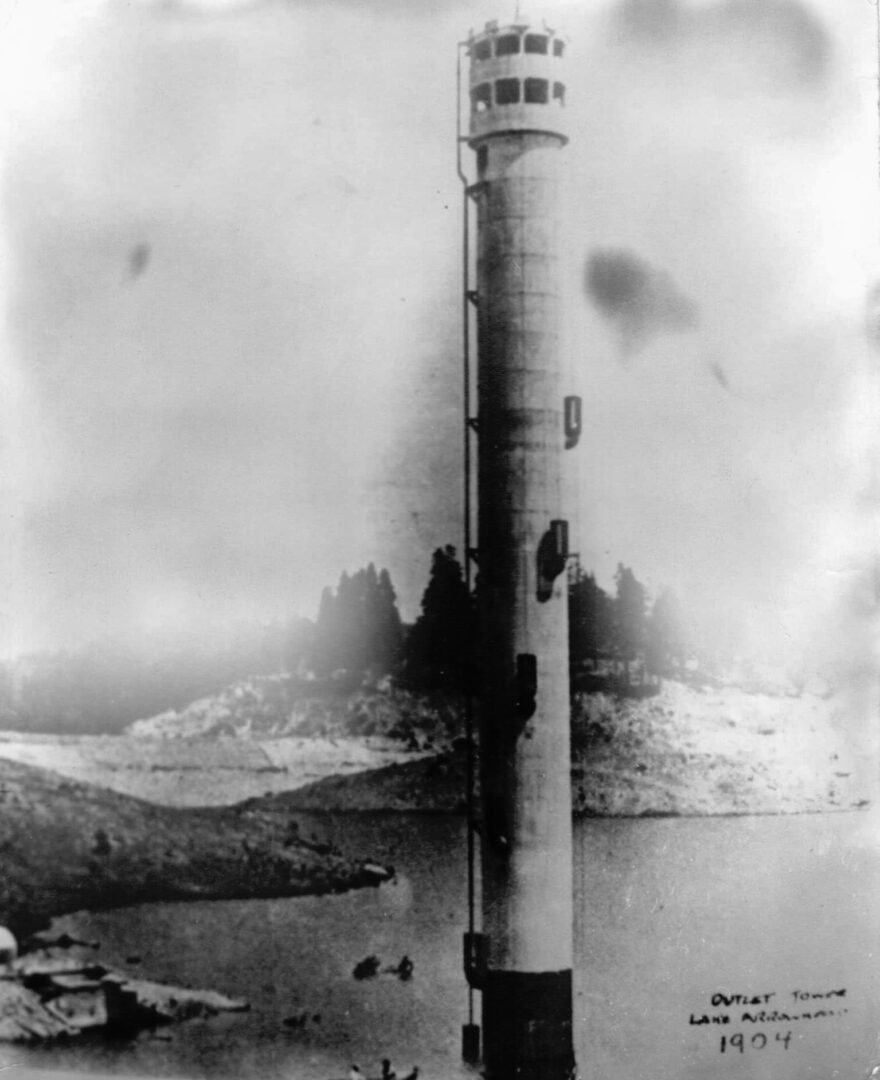
They had recommended just releasing six to 12 inches of water daily out through the outlet tower into the Willow Creek Tunnel and then some remedial action would be “considered.” Brown said, “I am not willing to risk my integrity as an engineer in its application.”
Brown himself hired an engineer to figure out a solution. Brown’s engineer stated the reason for the leakage was “the poor quality and shattered condition of the rocks upon which the dam was built, not from any failure of Brown’s work…. A slip in the earth’s crust caused the wall also to be thrown out of line,” stated the engineering report paid for by Brown.
Contractor Arthur Drew said he would make the ARPC’s recommended repairs but wanted to not be held liable if they didn’t work after he had followed ARPC’s engineer’s recommendations. Finally, Drew sent his 30 men, wagons, teams and a steam shovel to begin work while the lawyers began to square off in court in San Bernardino.



0 Comments