




People first came to camp at Skyland (on the peak, on the crest east of current day Crestline) during the lumbermill days beginning in the 1850s because of its beauty and views to the ocean. When the Arrowhead Toll Road opened in the 1890s, the beautiful views, breezes and “the new relative ease” of using the graded wagon road made getting to the Skyland summit more pleasant, making the camping area popular.
By 1902, an observation deck was built on the cliff, to view both the valley below and the heavens above, which was reflected in the area getting the nickname of Skyland.
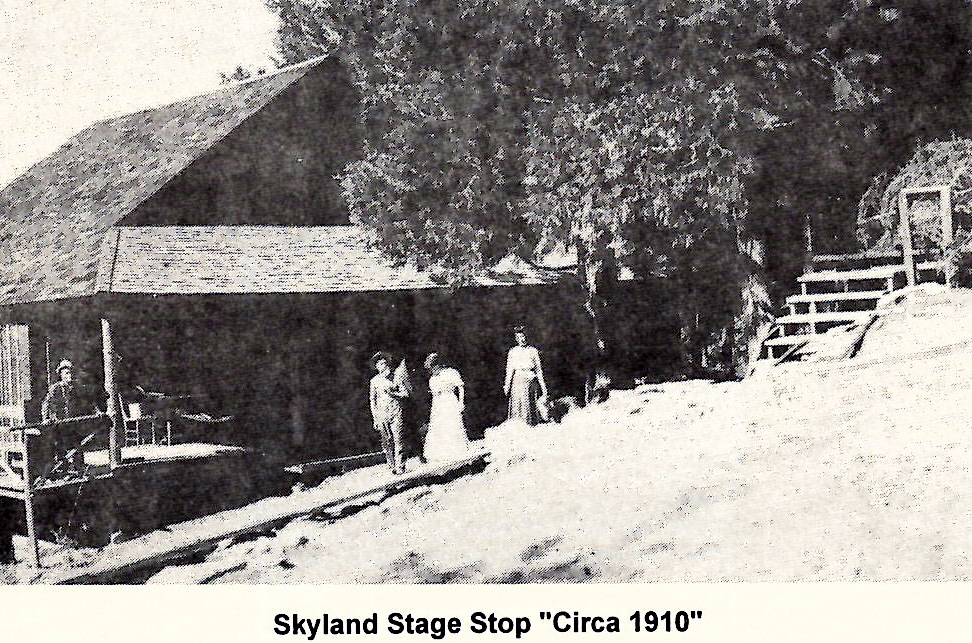
The Skyland stage stop at the Skyland Inn in 1910.
When the Arrowhead Road became a free county road in 1905, business at the resorts really picked up. It now “only” took four hours for a four-horse wagon to make it to the Skyland summit. It was also the first resort stop for the Mountain Stage Line.
The first post office in the mountains, west of Fredalba (which had an active sawmill community) was opened in the Skyland Inn by John Hansen in June 1907. He named it “Incline” because of its location so close at the upper terminus of the new Incline Railroad cable car system which was completed by the Arrowhead Reservoir Company in 1906. They anticipated it to become as popular as the Lowe Railway up Mt. Lowe above Los Angeles.
In attracting vacationers, there was a lot of friendly competition between the fashionable Squirrel Inn and the Skyland Inn. Skyland scheduled balls and musicales (and Uncle Billy with his concertina), so regularly Skyland had 150 guests between the Inn and the campground. Visitors could relax playing billiards, horseshoes, croquet, hiking and listening to the phonograph. The Emericks opened the Valley View Grocery for the convenience of those camping.
In 1907, the two-year-old Pavilion at Skyland burned down, “toasting” the piano. The rental tents for the campground and Inn and camping bedding were also a total loss. Despite the Pavilion fire, the Skyland Heights area continued to be popular.
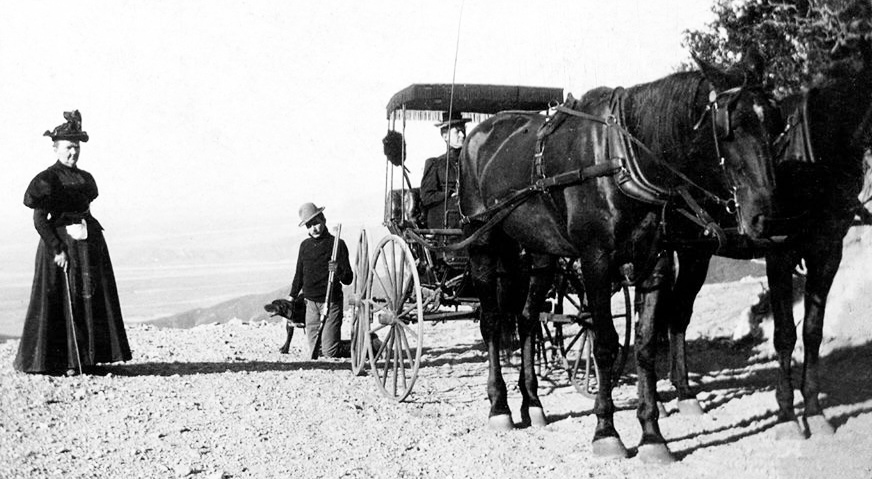
Visitors coming up the mountain in a buggy at Panorama Point.
After the Incline fell into disuse (due to a construction error), new Postmaster Jerimiah Hattery in 1910 changed the name of the Incline Post Office to Skyland Heights. It was located in the “Pinecrest area,” according to the postal location records Hattery sent to Washington, D.C.
The Skyland Inn and Camp had its own water supply, stable and produce. Staples were available at the Skyland General Store and Post Office which were in the same building as the Skyland Resorts office. The resort now also had cabins for rent. The Skyland Inn charged $2.50 a day for lodging and food. Even hot or cold baths were available at what was a very popular resort at the time.
Then, on Tuesday, July 25, 1911, at 1 p.m., on a very hot 100-plus degree summer day, a fire “somehow” began in Waterman Canyon. Hot summer blustery winds caught those flames and swept them up through the thick mountainside chaparral. It crossed the Crest Road in several locations, threatening Skyland.
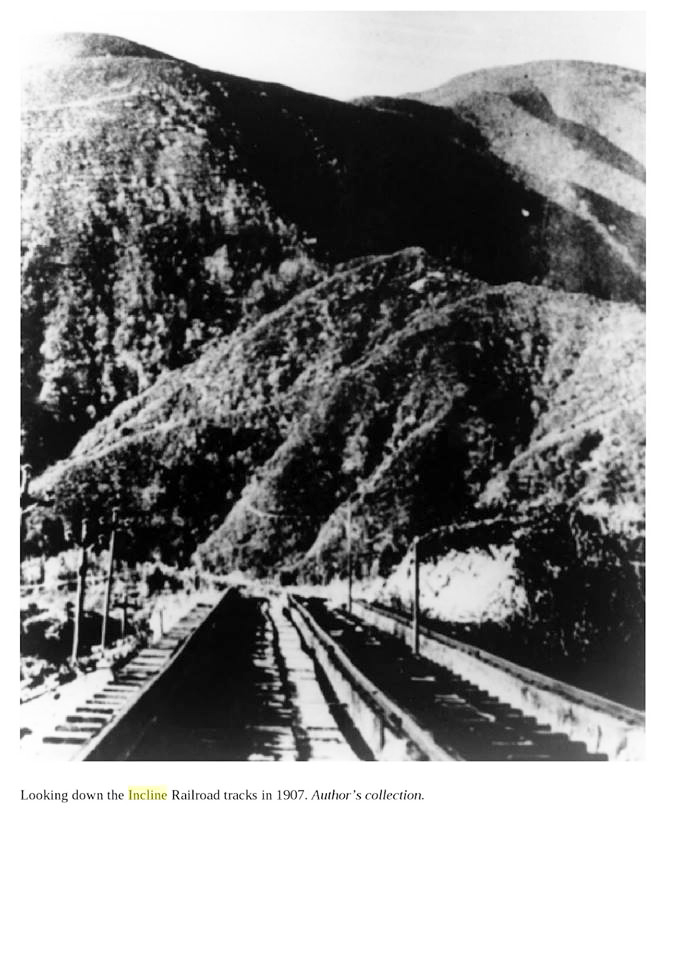
Looking down the Incline before the 1911 fire.
The women, children and older vacationers who had been in Skyland safely escaped to Little Bear Meadow (future bottom of Lake Arrowhead) several miles away. Most of the men volunteered to stay behind to fight the fire. The fire grew to three miles wide and one mile long across the mountain front but stayed below the crest. Those volunteers believed by Saturday evening they had saved their campgrounds and favorite resort.
Suddenly, at 3 p.m. on Sunday, amid new wind and ash and smoke, the fire again began to attack Skyland. Some of the outer tent cabins were destroyed, but the hardworking firefighters, who had come up the mountain to help the volunteers, saved the Inn, cabins and the Incline Rail tracks.
By 3:30 a.m., Monday, July 31, winds continued whipping the flames; they were leaping up to 200 feet high into the sky, but still stayed below the Crest Road. The fire had been burning for seven days, and the firefighters were exhausted from the continuing 100+ degree weather, while fighting the fire and making firebreaks with hand shovels. Wherever possible, they fought the fire with water from fire trucks.
On Tuesday, Aug. 1, sudden gusts of strong wind blew the fire quickly up to the Skyland crest, and the Incline Rail tracks and trestles were destroyed. Both Clifton Heights (on the crest west of Waterman Canyon) and Skyland were ablaze! The Skyland Inn was saved, but singed. Three private cabins were destroyed, including the lovely family home of pioneer lumbermill owner Henry Guernsey, which devastated him.
Finally, by Sunday, Aug. 6, 13 days after it started, the fire was finally under control. Over 12,900 acres had been burned. The total cost for suppressing the fire was about $17,000 for labor and supplies. The value of the Incline Railroad and the buildings destroyed was not included in that figure. Skyland suffered burned cabins, houses, tents, trees and the loss of the Incline Rail system.
A new industry came that fall of 1911 to the Skyland area. “Lights, camera, action” is the hint for next week’s Skyland story.
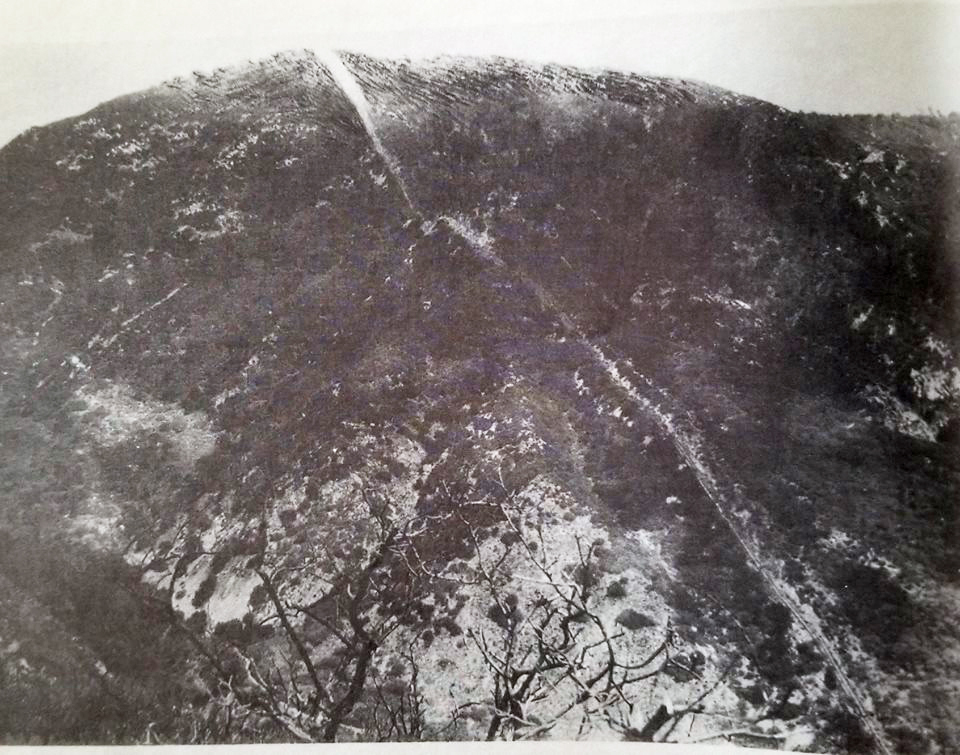
The Incline Rail system with its construction dip in the rails on the front side of the mountain after the fire.



0 Comments